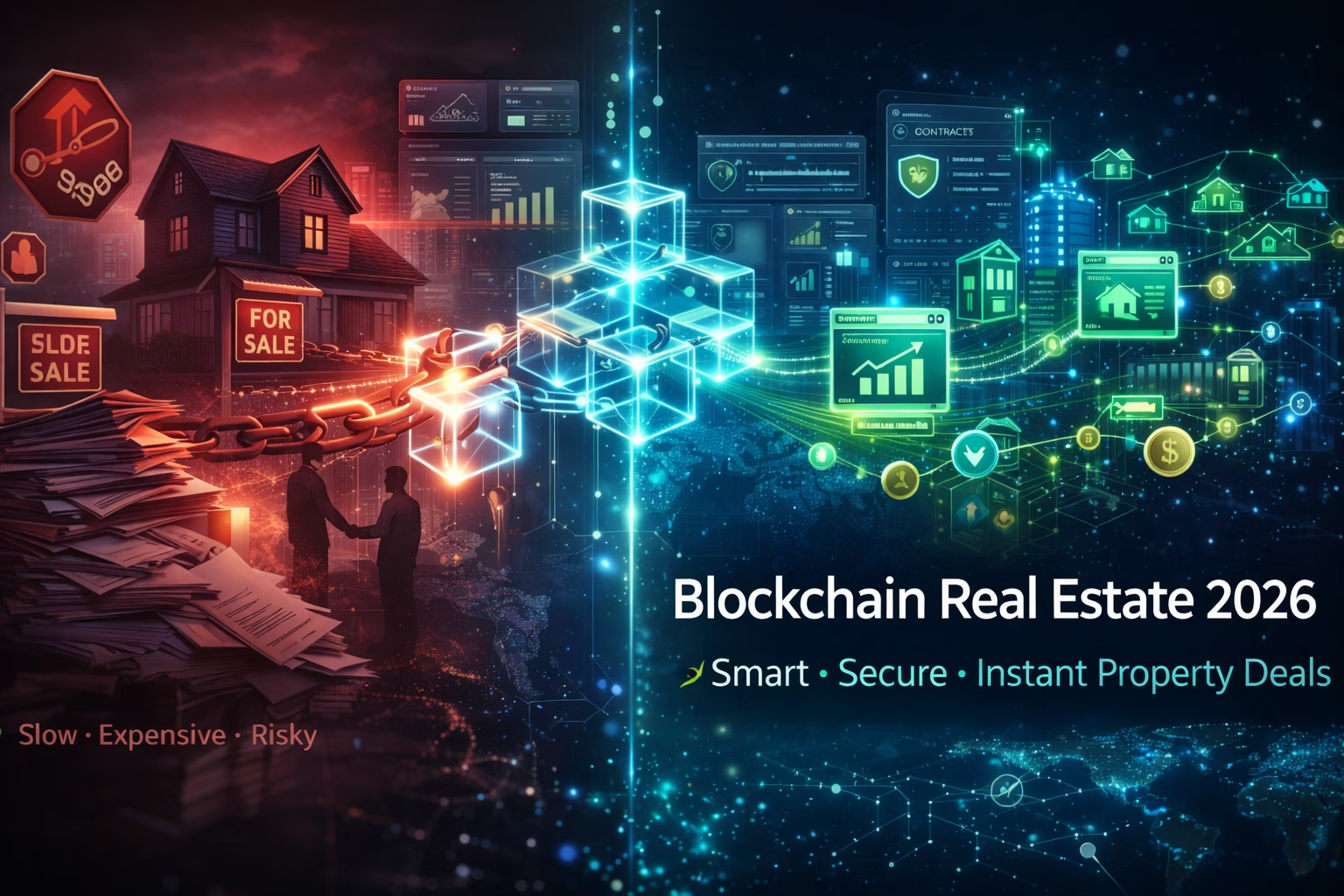
Blockchain in Real Estate: The Future of Property Transactions (2026 Guide)

Discover how blockchain in real estate is transforming property transactions in 2026. Learn about smart contracts, tokenization, fractional ownership, and the future of digital property deals. A complete guide for US buyers and investors
What is Blockchain? (Simple Explanation)
Before we dive into real estate, let us quickly define blockchain in plain English.
A blockchain is a digital ledger that records transactions across a network of computers. Unlike a traditional database owned by one company or bank, a blockchain is decentralized—meaning no single person or organization controls it.
Think of it like a shared Google Doc that everyone can see, but no one can edit or delete past entries. Every transaction is:
-
Transparent: Anyone with permission can view it.
-
Immutable: Once recorded, it cannot be changed or erased.
-
Secure: Cryptography protects every entry.
For secure property transactions, this technology is revolutionary. It eliminates the need for trusted third parties like banks, title companies, and lawyers to verify ownership—because the blockchain does it automatically.
Traditional Real Estate Problems (Why Change is Needed)
The US real estate market is broken in several predictable ways. Blockchain solves most of them.
The Current Pain Points:
| Problem | Impact |
|---|---|
| Title fraud | Criminals forge deeds; homeowners lose property |
| Slow closings | Average 50+ days from offer to keys |
| Hidden fees | 5-6% in agent commissions + closing costs |
| Paperwork overload | Hundreds of pages per transaction |
| Lack of transparency | Buyers cannot verify property history easily |
| High barrier to entry | Need 20% down payment; no fractional ownership |
A 2025 study by the American Land Title Association found that 1 in 3 property transactions in the US experiences a title issue—ranging from undisclosed liens to outright forgery. These issues cost buyers and sellers billions annually.Blockchain in real estate directly addresses every single one of these problems.
How Blockchain is Transforming Real Estate (CORE SECTION)
Here is the heart of the article. Let us break down exactly how property transactions blockchain technology works in practice.
a) Smart Contracts (Automated Agreements)
A smart contract is a self-executing agreement written in code. When predefined conditions are met, the contract executes automatically—no lawyer, no notary, no waiting.
How it works in real estate:
-
Buyer and seller agree on price and terms.
-
Those terms are written into a smart contract on the blockchain.
-
Buyer deposits funds into an escrow smart contract.
-
When the seller transfers the deed, the funds release automatically.
-
If conditions are not met, funds return to the buyer.
Keyword: Smart contracts real estate is already being used by platforms like Propy and Ubitquity.
Real-world example: In 2025, a home in Austin, Texas sold entirely via smart contract. The buyer submitted an offer online. The smart contract verified funds, checked title, and transferred ownership in 72 hours—compared to the local average of 45 days.
b) Property Tokenization (Fractional Ownership)
Tokenization of real estate means converting a physical property into digital tokens on a blockchain. Each token represents a fraction of ownership.
Why this matters:
-
Investors can buy $500 worth of a $1 million commercial building.
-
Property owners can raise capital without selling entirely.
-
Tokens trade 24/7 on digital exchanges, creating liquidity.
Example: A luxury apartment building in Miami was tokenized in early 2026. 10,000 tokens were issued at $1,000 each. Investors from 15 countries bought fractions. The building sold six months later, and token holders received their proportional share automatically via smart contract.
c) Transparent Transactions (Reduced Fraud)
Every transaction on a blockchain is visible to all participants. Title history, liens, easements, and ownership records cannot be altered secretly.
How this helps US property buyers:
-
No more forged deeds (the blockchain proves true ownership).
-
No hidden liens (they would appear on the ledger).
-
No duplicate sales (the ledger shows the true owner).
Secure property transactions become the default, not an expensive add-on.
d) Faster Property Transfers (Instant Verification)
Digital real estate transactions eliminate the title search, which currently takes 2-4 weeks. On a blockchain, title history is stored permanently and verified in seconds.
The new workflow:
-
Buyer finds property on a blockchain platform.
-
System instantly verifies ownership and title history.
-
Smart contract manages offer, inspection, and closing conditions.
-
Digital deed transfers automatically upon payment.
-
Total time: 2-7 days instead of 30-60 days.
Real-Life Examples of Blockchain in Real Estate
Blockchain real estate platforms are no longer experimental. Here are real examples working today in 2026.
1. Propy (Global + US)
Propy is the leading blockchain real estate platform. It enables entire property transactions on-chain, from offer to deed transfer. In 2025, Propy facilitated over $500 million in US property sales.
2. RealT (Fractional Ownership)
RealT tokenizes residential properties in the US, allowing investors to buy fractional shares for as little as $50. Investors receive rental income distributed automatically via smart contract.
3. Ubitquity (Title Records)
Ubitquity works with county recorders in Ohio and Colorado to put property titles on blockchain. This makes title searches instant and eliminates deed fraud.
4. Vairt (Global Real Estate Investing)
Vairt allows US investors to buy tokenized shares in international properties. A single dashboard tracks dividends, property performance, and exit options.
5. Roofstock on Chain
Roofstock, a major US real estate investment platform, now offers blockchain-powered transactions for single-family rentals. Investors can buy and sell leased homes without traditional closings.
Benefits of Blockchain in Real Estate
Why should property buyers and investors care? The benefits of blockchain in property transactions are substantial.
✅ Security: Immutable records eliminate title fraud and forgery.
✅ Speed: Transactions close in days, not months.
✅ Cost Reduction: No agents, title insurers, or bank fees. Savings of 2-5% per transaction.
✅ Transparency: Every party sees the same verified data.
✅ Liquidity: Tokenized properties can be sold in fractions, not whole units.
✅ Accessibility: Investors with $100 can participate in high-value real estate.
✅ Global Reach: A buyer in Japan can purchase a tokenized condo in Texas seamlessly.
A 2026 report by Deloitte estimates that blockchain adoption in real estate could save the US market $10 billion annually in title insurance, escrow fees, and administrative costs.
Challenges & Limitations (Balanced Perspective)
Blockchain is powerful, but it is not magic. There are real challenges to adoption.
⚠️ Legal and Regulatory Issues: US property laws vary by state. Blockchain deeds are not yet legally recognized everywhere. The Uniform Law Commission is working on model legislation, but adoption is slow.
⚠️ Adoption Barriers: Most real estate agents, title companies, and buyers have never used blockchain. Education is a major hurdle.
⚠️ Technical Complexity: Setting up digital wallets, managing private keys, and understanding gas fees is intimidating for average homebuyers.
⚠️ Lack of Awareness: A 2025 survey found that 68% of US property buyers had never heard of blockchain real estate transactions.
⚠️ Market Volatility: If tokenized properties trade on open markets, prices could fluctuate like stocks—which may not suit traditional buy-and-hold investors.
The bottom line: Blockchain is not replacing traditional real estate overnight. But it is growing fast, and early adopters will have a significant advantage.
Step-by-Step: How Blockchain Property Transactions Work
For a typical US home buyer using a property transactions blockchain platform like Propy, here is the exact workflow.
Step 1: Property Listed on Blockchain
Seller lists property with all verified data—title history, inspections, liens, photos—stored on-chain.
Step 2: Buyer Verifies Details
Buyer views the immutable blockchain record. No surprises. No hidden issues.
Step 3: Smart Contract Created
Offer terms are coded into a smart contract: price, closing date, contingencies (inspection, financing).
Step 4: Buyer Funds Escrow
Buyer deposits funds (or stablecoins like USDC) into the smart contract escrow.
Step 5: Conditions Met
Inspection passes. Financing clears. Both parties approve.
Step 6: Ownership Transferred
Smart contract automatically transfers digital deed to buyer and funds to seller.
Step 7: Public Record Updated
County recorder updates official records (some counties now accept blockchain proof directly).
Total elapsed time: 3-10 days. Cost savings: 30-50% vs traditional closing.
Future of Blockchain in Real Estate (2026 & Beyond)
What does the next five years look like? The future of real estate technology is bright.
Fully Digital Property Markets
By 2028, experts predict that 15-20% of US residential transactions will involve blockchain in some form. Entire real estate markets will exist digitally, with properties bought, sold, and traded like stocks.
Global Real Estate Investments
Tokenization will unlock cross-border investing. A retiree in Florida can own a fraction of an apartment building in Dubai, earning rental income in stablecoins. Geographic barriers disappear.
Integration with AI & PropTech
AI will analyze blockchain property data to predict market trends, identify undervalued assets, and automate investment strategies. Combined with blockchain, AI will create truly intelligent real estate markets.
DAO-Owned Real Estate
Decentralized Autonomous Organizations (DAOs) will collectively own apartment buildings, shopping centers, and office towers. Members vote on property management decisions via token holdings.
NFT-Based Property Titles
Property deeds as NFTs (non-fungible tokens) will become standard. Transferring ownership becomes as simple as sending a digital asset to a wallet address.
Pro Tips for Investors & Agents
If you want to get ahead of this trend, here is practical advice for 2026.
💡 Use Trusted Platforms: Stick with established platforms like Propy, RealT, or Roofstock on Chain. Avoid unknown projects promising unrealistic returns.
💡 Understand Legal Rules: Blockchain real estate is still new. Consult an attorney who understands digital property law in your state.
💡 Start Small: Invest $100-500 in tokenized real estate before buying a whole property on-chain. Learn the mechanics with minimal risk.
💡 Secure Your Wallet: Use a hardware wallet (Ledger or Trezor) for significant holdings. Never share private keys.
💡 Stay Educated: Follow platforms like Blockchain Real Estate Association and attend PropTech conferences. This space changes fast.
💡 For Real Estate Agents: Learn blockchain basics now. Clients will soon ask about it. Being the "blockchain agent" in your market is a massive differentiator.
Conclusion
Blockchain in real estate is not a distant promise—it is happening right now in 2026. From smart contracts that automate closings to tokenization that democratizes investment, blockchain is solving the oldest problems in property transactions: fraud, delays, high costs, and lack of access.
The US real estate market is beginning its digital transformation. Early adopters—whether buyers, sellers, or investors—will benefit from faster transactions, lower fees, and greater transparency.
The question is no longer if blockchain will change real estate. The question is how quickly you will adapt.
Start exploring blockchain-powered real estate today. Open an account on Propy. Buy $100 of tokenized property on RealT. Read one blockchain real estate article per week. The future of property ownership is digital, decentralized, and democratic. Do not get left behind.
FAQ: Blockchain in Real Estate
Q1: What is blockchain in real estate?
Blockchain in real estate refers to using distributed ledger technology to record property ownership, automate transactions via smart contracts, and enable fractional ownership through tokenization. It eliminates many traditional middlemen and reduces fraud.
Q2: How does blockchain improve property transactions?
Blockchain improves property transactions by providing instant title verification, automated smart contract closings, transparent ownership history, and reduced fees. A typical 50-day closing can shrink to 3-7 days.
Q3: Is blockchain safe for real estate deals?
Yes, blockchain is extremely safe for real estate deals when using reputable platforms. Blockchain records are immutable and encrypted, making title fraud nearly impossible. However, users must secure their private wallet keys.
Q4: Can blockchain replace real estate agents?
Not completely. Blockchain can automate paperwork, title searches, and payment escrow. But human agents still provide value in negotiations, market knowledge, property showings, and client relationships. The role will evolve, not disappear.
Q5: What are examples of blockchain in real estate?
Examples include Propy (full transaction platform), RealT (fractional residential ownership), Ubitquity (title records), and Roofstock on Chain (single-family rental investments). Several US counties now also record property deeds on blockchain.
Q6: How does tokenization of real estate work?
Tokenization converts a property into digital tokens on a blockchain. Each token represents fractional ownership. Investors can buy tokens for as little as $50, receive proportional rental income, and trade tokens on secondary markets.
Q7: Is blockchain real estate legal in the US?
Yes, but legal recognition varies by state. Some states (like Colorado and Ohio) accept blockchain property records. Others do not yet have clear laws. Always consult a local attorney before completing an on-chain purchase.
Comparison Table: Traditional vs Blockchain Real Estate (2026)
| Factor | Traditional Real Estate | Blockchain-Powered Real Estate |
|---|---|---|
| Closing time | 30-60 days | 2-10 days |
| Title search | 2-4 weeks, $500-1,500 | Instant, built into platform |
| Transaction fees | 5-6% (agent commissions) + closing costs | 1-2% platform fee |
| Title insurance | Required (~0.5% of purchase price) | Often optional (blockchain proves title) |
| Minimum investment | 10-20% down payment ($30k+) | $50-500 (tokenized fractions) |
| Fraud risk | Moderate (forged deeds, hidden liens) | Very low (immutable ledger) |
| Paperwork volume | Hundreds of pages | Digital contract only |
| Geographic access | Local buyers typically | Global buyers welcome |
| Liquidity | Low (months to sell) | Medium (tokens trade faster) |
| Legal recognition | Full in all 50 states | Varies by state |
Statistics to Know (Source: 2025-2026 Reports)
| Statistic | Value |
|---|---|
| Global real estate tokenization market by 2027 | $16 trillion (projected) |
| US title fraud cases annually | ~10,000 |
| Average cost of a US real estate closing | $6,000+ |
| Blockchain real estate adoption growth (2024-2026) | 340% |
| Real estate professionals familiar with blockchain | Only 22% |
| Reduction in closing time using smart contracts | 80-90% |
| Potential annual savings for US market | $10 billion |