How Custom Software Development Services Solve Business Problems and Challenges

custom software development services, custom software solutions, software development services, business software solutions, business process automation, software integration, custom business software, software scalability, business challenges
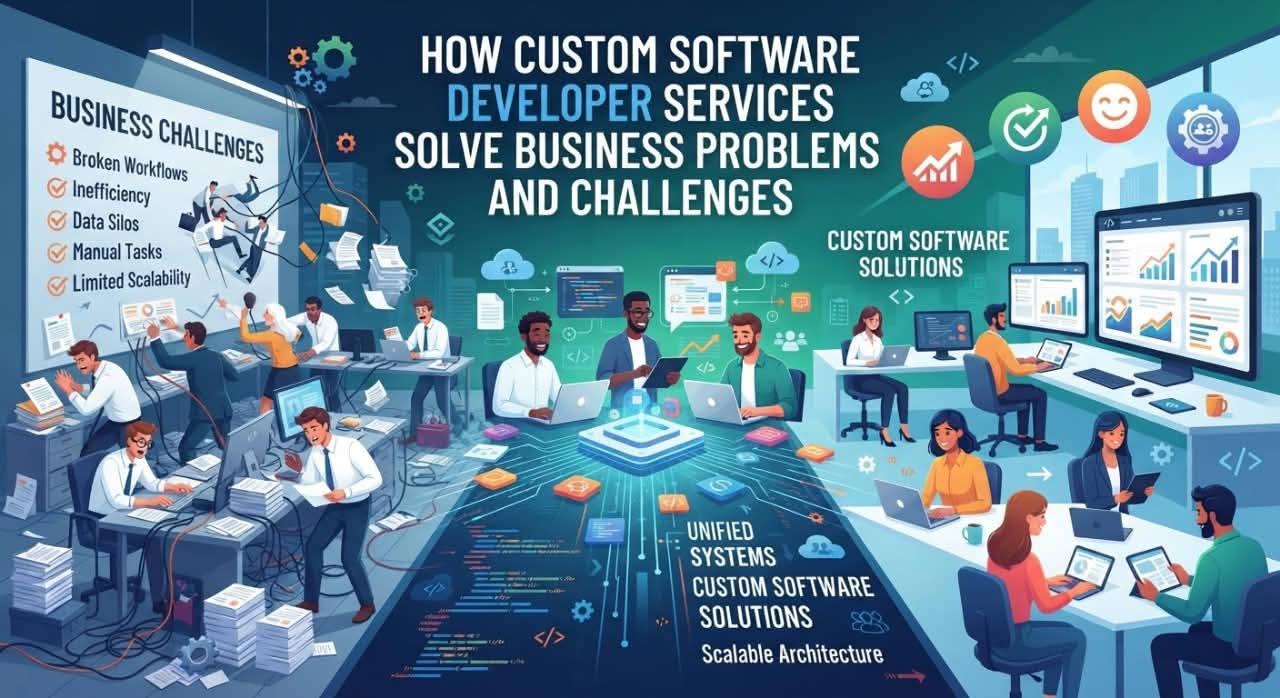
Every business has its own way of working, but many companies face similar problems as they grow. Managing repetitive tasks, keeping customer information organized, connecting different tools, and handling increasing workloads can become difficult when a business depends on systems that were not designed for its specific needs.
This is where custom software development services can make a practical difference. Instead of changing the business process to fit an existing application, custom software is built around the company’s actual requirements. It can help businesses simplify daily operations, improve efficiency, and create smoother workflows.
Custom software is not only about adding new technology. The real goal is to solve specific business challenges with a solution that fits the way a company operates. From automating routine work to improving data management, the right software can support better decision-making and help teams focus on more valuable tasks.
What Common Problems Do Businesses Face With Standard Software?
As a business grows, its software needs can change. A tool that works well for a small team may not be enough when the company has more employees, customers, data, and daily operations. Businesses may start facing limitations that affect productivity and make routine work more complicated.
Limited Features and Flexibility
Ready-made software is designed to serve a broad range of users, so its features may not match every business process. A company might need a specific dashboard, approval process, reporting feature, or workflow that the software does not support. Employees may then have to adjust their work around the system instead of having the system support the way they work.
Repetitive Manual Tasks
Many businesses still depend on employees for tasks such as entering information, updating records, preparing reports, or transferring data between platforms. When these activities are repeated every day, they can consume valuable working hours. Manual processes can also lead to small errors that become difficult to identify when they occur across large amounts of data.
Poor System Integration
Businesses often use separate tools for sales, accounting, customer management, inventory, communication, and other functions. If these systems cannot share information properly, employees may need to switch between platforms or enter the same details multiple times. This can create delays and make it harder for teams to access accurate information when they need it.
Difficulty Scaling
A growing business usually handles more users, customers, transactions, and data over time. Software that cannot adapt to these changes may eventually slow down operations or require businesses to find additional tools. This can create more complexity instead of supporting growth.
These challenges show why some businesses look beyond standard software and consider solutions designed around their specific requirements.
How Custom Software Development Services Solve These Problems?
Custom software is built around the specific needs of a business rather than forcing the business to follow a fixed system. This allows companies to address existing workflow problems and create processes that are easier for their teams to manage.
Automating Repetitive Work
Custom software can automate routine activities such as data entry, notifications, report generation, order processing, and task assignments. This reduces the amount of time employees spend on repetitive work and allows them to focus on tasks that require more attention.
Creating Workflows That Fit the Business
Every company has its own way of handling tasks. Custom solutions can be designed around those processes, whether it involves customer approvals, internal requests, inventory management, or service delivery. Employees can follow a workflow that matches how the business actually operates.
Connecting Different Systems
Custom software can help connect information from different business tools and databases. Instead of keeping important information in separate places, teams can work with connected systems and access the data they need more easily.
Supporting Business Growth
A custom solution can be planned around current requirements while leaving room for future changes. New features, users, integrations, or workflows can be added as the business develops, helping the software remain useful as needs change.
Key Benefits of Custom Software Development Services
Custom software can do more than solve immediate workflow issues. When it is designed around a company’s actual requirements, it can also improve how teams work and how the business manages its operations.
Better Efficiency
By simplifying workflows and reducing unnecessary manual steps, custom software can help employees complete tasks more efficiently. Teams can spend less time dealing with repetitive processes and more time on work that contributes directly to business goals.
Improved Accuracy
Automated processes can reduce the need for repeated manual data entry. When information is handled consistently, businesses can minimize common errors and maintain more reliable records.
Greater Control Over Data
A custom system can organize business information according to the company’s needs. It can also provide different levels of access, allowing organizations to control which employees can view or manage specific information.
Easier Integration
Custom solutions can be developed to work with existing tools and platforms. This can help businesses create a more connected workflow instead of relying on several disconnected systems.
Flexibility for Future Needs
Business requirements do not remain the same forever. Custom software can be updated as processes change, new requirements appear, or the company expands its operations.
When Should a Business Consider Custom Software?
Not every business needs a custom solution from the beginning. However, certain situations can make it worth considering.
When Existing Tools No Longer Meet Your Needs
If your current software lacks important features, requires too many workarounds, or does not support your workflow, a tailored solution may provide a better fit.
When Manual Processes Are Taking Too Much Time
If employees regularly spend hours on repetitive tasks, custom software can help automate those activities and simplify daily operations.
When Multiple Systems Need to Work Together
Businesses using several separate platforms may benefit from a solution that connects important data and processes in one more organized workflow.
When Your Business Has Specific Requirements
Some industries and businesses have processes that standard software cannot easily support. Custom development allows those requirements to be built into the system from the start.
What to Consider Before Choosing Custom Software Development Services?
Choosing a custom solution requires more than identifying a business problem. Companies should also understand what they need from the software and how it will fit into their existing operations.
Define Your Business Requirements
Start by identifying the specific problems the software should solve. Clear requirements help the development team understand which features, workflows, and integrations are actually necessary.
Consider Scalability
Think about how the software may need to change as the business grows. Choosing a flexible approach from the beginning can make it easier to add users, features, integrations, or new workflows later.
Plan the Budget and Timeline
Custom development requires time and resources. Businesses should establish a realistic budget and timeline based on the project's features, complexity, integrations, and long-term goals.
Focus on Security and Maintenance
Business software may handle important information, so security should be considered throughout development. Ongoing maintenance and updates are also important to keep the system reliable as technology and business requirements change.
How to Choose the Right Custom Software Development Approach?
Finding the right development approach can help ensure that the final software addresses the actual problems of the business rather than adding unnecessary complexity.
Understand the Development Team’s Experience
Look for a team that understands your industry, business requirements, and technical needs. Experience with similar projects can make it easier to identify practical solutions and avoid common development issues.
Check Communication and Support
Clear communication is important throughout the project. A development team should be able to explain technical decisions, provide updates, and offer support when changes or problems arise.
Prioritize the Most Important Features
A project does not need to include every possible feature from the beginning. Focusing on the most important business needs can help create a useful first version while leaving room for future improvements.
Think About Long-Term Support
Software needs can change after launch. Before starting development, consider how updates, maintenance, security improvements, and additional features will be handled over time.
How Custom Software Can Improve Problem Solving?
The value of custom software is not simply having a new digital tool. The real benefit comes from using technology to address specific challenges that slow down work or make business processes harder to manage.
Faster Decision-Making
When important information is organized and available in one place, teams can spend less time searching through different systems. Better access to relevant data can support faster and more informed decisions.
Smoother Team Collaboration
A shared system can give different departments access to the information they need. This can reduce communication gaps and make it easier for teams to coordinate tasks and track progress.
Reduced Operational Complexity
Bringing related processes into one solution can reduce the need to switch between multiple platforms. This can make everyday operations easier to manage and give employees a clearer workflow.
Solutions Built Around Real Needs
Instead of adding features simply because they are available, custom software can focus on the problems a business actually faces. This makes the technology more relevant to its users and business processes.
Challenges of Custom Software Development
Custom software can solve many business problems, but developing a tailored solution also comes with challenges. Understanding these factors helps businesses plan the project more realistically.
Higher Initial Investment
Building software from the ground up can require more investment than purchasing an off-the-shelf tool. The cost depends on the features, integrations, technology, and complexity involved in the project.
Longer Development Time
Custom solutions usually take time to plan, design, develop, test, and launch. Businesses should have realistic expectations instead of expecting a complete system immediately.
Finding the Right Development Team
The quality of the final product depends heavily on the development team. Businesses need professionals who understand their requirements, communicate clearly, and can provide reliable technical support.
Ongoing Maintenance
Software may need updates, security improvements, bug fixes, and new features after launch. Regular maintenance helps keep the solution reliable as business needs and technology change.
Frequently Asked Questions
What are custom software development services?
Custom software development services involve creating software based on a business's specific requirements. Instead of using a fixed solution, companies can have features, workflows, and integrations designed around their operations.
How can custom software solve business problems?
Custom software can address issues such as repetitive manual work, disconnected systems, limited features, and inefficient workflows. It can automate tasks, organize information, connect different tools, and adapt to changing business needs.
Is custom software better than ready-made software?
It depends on the business and its requirements. Ready-made software can be suitable for common needs, while custom software may be more useful when a company requires specific features, workflows, integrations, or greater flexibility.
Conclusion
Custom software development services can help businesses turn everyday operational problems into more manageable processes. Instead of relying on tools that may not fully match their needs, businesses can use solutions designed around their workflows, goals, and changing requirements. From automating repetitive tasks and connecting different systems to improving efficiency and supporting growth, custom software can provide practical ways to address specific challenges.
However, successful software development starts with understanding the problem clearly. Businesses should consider their requirements, budget, scalability, security, and long-term maintenance before choosing a solution. With thoughtful planning and the right development approach, custom software can become a useful part of a business’s operations and support its needs as it grows.