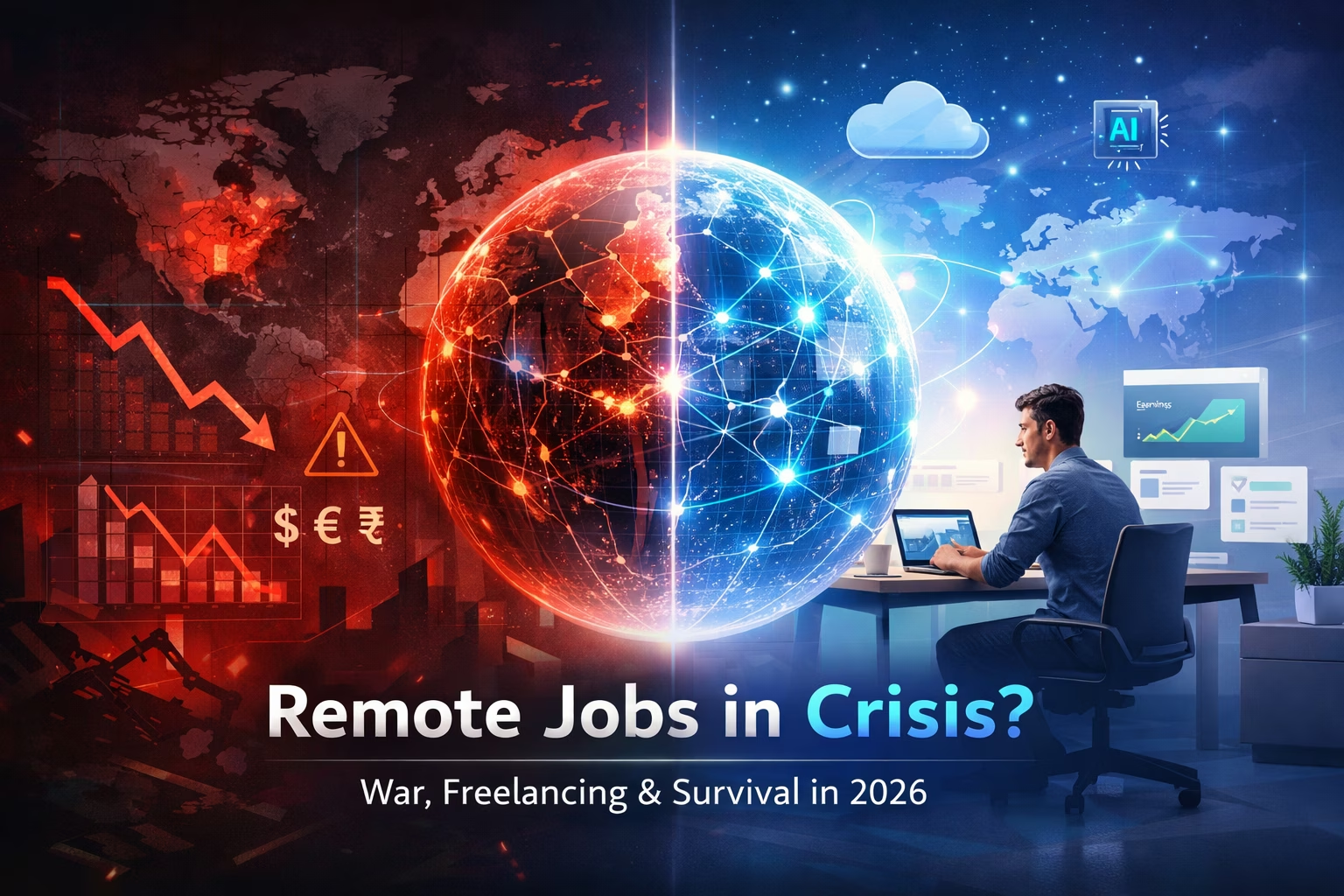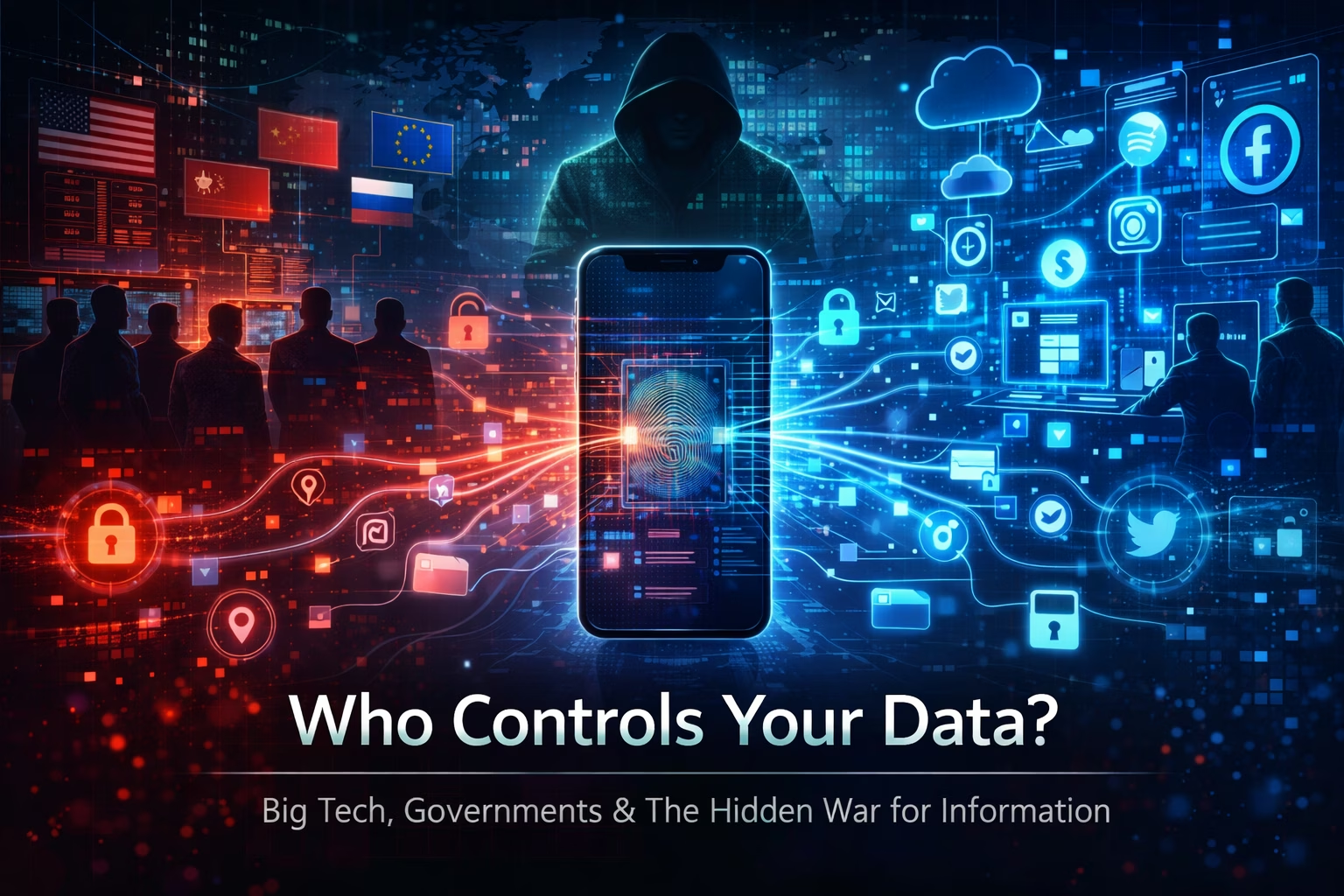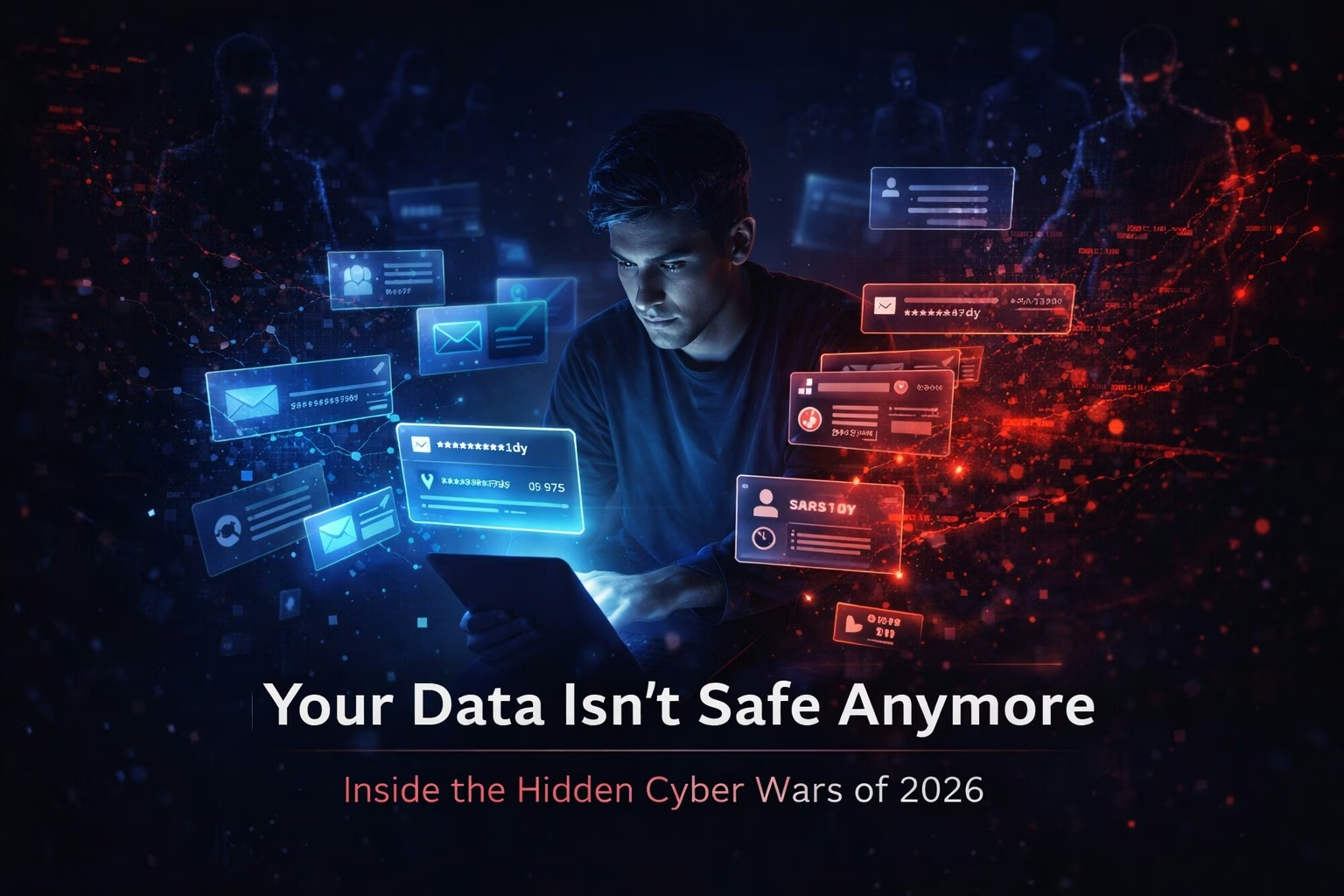
How Safe Is Your Data During Global Cyber Wars? The 2026 Reality You Need to Know

Cyber wars are no longer a distant threat — they're happening right now, and your personal data is caught in the crossfire. Discover how global cyber conflicts put your emails, banking info, and privacy at real risk, and what you can do to protect yourself in 2026.
Introduction: Your Data Is Already on the Battlefield
Imagine waking up one morning to find your bank account drained, your emails exposed, and your identity sold on a dark web marketplace — not because you clicked a suspicious link, but because two governments decided to go to war in cyberspace.
This isn't science fiction. It's happening right now.
Every day, invisible battles are being fought across digital networks — battles that most ordinary people know nothing about. And here's the uncomfortable truth: you are caught in the crossfire, whether you like it or not.
The question of data safety during cyber wars isn't just a topic for governments and tech companies anymore. It's personal. It's urgent. And it affects every person reading this right now.
So — how safe is your data, really? Let's find out.
What Are Global Cyber Wars?
Cyber wars, at their core, are conflicts fought through digital means rather than physical weapons. Instead of bombs and missiles, the weapons are malware, ransomware, denial-of-service attacks, and sophisticated hacking tools.
But who's involved?
- Nation-states — Governments that use state-sponsored hacker groups to attack rivals, steal intelligence, and disrupt infrastructure
- Criminal organizations — Large-scale hacking groups motivated by financial gain
- Corporations — Sometimes caught in the middle, sometimes active participants in data collection and surveillance
- Hacktivists — Ideologically motivated groups targeting governments or companies they oppose
Why do cyber wars happen? The reasons are layered:
- Economic espionage (stealing trade secrets and research)
- Political disruption (influencing elections, spreading disinformation)
- Military advantage (disabling enemy systems before or during physical conflict)
- Financial gain (ransomware attacks on infrastructure)
The lines between politics, crime, and warfare have blurred completely in the digital age. And that ambiguity is what makes it so dangerous for everyday users like you.
How Cyber Wars Actually Work
Understanding the mechanics helps you understand your risk. Here's a simplified breakdown.
Government-Level Cyber Attacks
State-sponsored attacks are often the most sophisticated and the hardest to detect. These operations can run silently for months — sometimes years — before anyone notices.
Governments deploy elite hacker units to:
- Infiltrate foreign government databases
- Steal classified research and military plans
- Plant backdoors in critical software used globally
- Manipulate communication networks
The disturbing part? The tools and vulnerabilities these groups exploit often leak into the wild — and end up being used by criminal hackers against ordinary citizens.
Corporate Data Breaches
When geopolitical tensions rise, corporations become prime targets. Tech companies, banks, healthcare providers, and energy firms all hold massive volumes of sensitive data — making them irresistible targets.
A successful breach of a large corporation doesn't just expose executives. It exposes you — your personal details, your financial records, your private communications stored in their systems.
Infrastructure Attacks
This is where it gets truly alarming.
Modern society runs on interconnected digital infrastructure — power grids, water treatment systems, financial networks, internet service providers. In a cyber war scenario, attacking these systems creates chaos at a civilian level.
- Banks get knocked offline
- ATMs stop working
- Internet access gets disrupted
- Emergency services get overwhelmed
You don't need to be a specific target to be affected. Sometimes, simply being a citizen of a targeted country is enough.
Is Your Personal Data at Risk?
Let's be direct: yes, your data is at risk.
Not just in some abstract, theoretical way. Here's what's actually vulnerable when cyber conflicts escalate:
- Emails — Intercepted, read, and used for intelligence or blackmail
- Passwords — Stolen through compromised databases and credential-stuffing attacks
- Banking information — Targeted directly or leaked through financial institution breaches
- Social media activity — Monitored, scraped, and profiled for behavioral analysis
- Location data — Tracked through apps and sold or stolen by bad actors
- Health records — Increasingly targeted because of their sensitivity and value
- Work files and communications — Especially critical for remote workers and freelancers
Most people don't realize that their data isn't just sitting in one place. It's scattered across dozens of platforms, services, and third-party databases — each one a potential entry point for attackers.
And in times of global cyber war, the volume, speed, and ambition of these attacks increases dramatically.
Real Examples of Cyber Attacks During Conflicts
History offers chilling examples of how cyber warfare bleeds into civilian life.
The NotPetya Attack (2017) started as a targeted strike disguised as ransomware against Ukrainian infrastructure. Within hours, it had spread globally — crippling shipping companies, pharmaceutical giants, and logistics firms across dozens of countries. Ordinary employees found their work computers locked, their files destroyed. Billions of dollars were lost. Most victims had nothing to do with the original conflict.
The SolarWinds Breach involved state-sponsored hackers quietly inserting malicious code into a widely used software update. For months, they moved silently through the systems of government agencies, Fortune 500 companies, and cybersecurity firms. The breach wasn't discovered quickly — and by the time it was, the damage was already done.
Ukraine's Digital War (2022–ongoing) demonstrated that cyber attacks are now a standard component of modern military conflict. Before and during the physical invasion, Ukrainian government websites were defaced, financial institutions were hit with DDoS attacks, and disinformation campaigns flooded social media. Civilians on both sides found themselves in a confusing, dangerous digital environment.
The pattern is clear: cyber wars don't stay contained. They spread, they escalate, and they hurt people far beyond the original target zone.
Big Tech vs Governments — Who Controls Your Data?
This is the question most people avoid asking — because the answer is uncomfortable.
Who Really Owns Your Data?
Technically, you do. Legally, the picture is far murkier.
When you sign up for a social media platform, a cloud service, or even a free email account, you hand over enormous amounts of personal data. The terms of service — which almost nobody reads — often grant these companies sweeping rights to collect, analyze, and share your information.
The truth is, your data has become a commodity. It's bought, sold, and traded in ways most users never see.
Can Governments Access Your Data?
Yes — and more easily than you might think.
Through legal frameworks like national security orders, intelligence agencies can compel tech companies to hand over user data — often without the user ever being notified. In authoritarian countries, this access is even more direct and less regulated.
Even in democracies with strong privacy laws, the boundaries around government surveillance remain contested and frequently tested. The rise of global cyber wars has accelerated government justifications for expanding surveillance capabilities.
Are Tech Companies Truly Neutral?
Here's what's really happening: tech companies operate as commercial entities with business interests. They're not governments, but they're not purely neutral either.
They cooperate with governments when legally required. They operate under the laws of the countries where they're based. And during cyber conflicts, they often find themselves positioned between competing pressures from multiple governments simultaneously.
The idea that your data is locked safely in a neutral corporate vault is a comfortable fiction. The reality is considerably more complicated.
Hidden Risks Most People Ignore
Beyond the headlines, there are quieter risks that accumulate in the background of a cyber war environment:
- Mass surveillance creep — Emergency powers introduced during conflicts have a way of becoming permanent
- AI-powered cyber attacks — Machine learning now enables attackers to identify vulnerabilities faster than humans can patch them
- Supply chain attacks — When trusted software or hardware gets compromised at the source, every user downstream is exposed
- Disinformation as a weapon — Your data is used to microtarget you with manipulative content designed to shape your beliefs and behavior
- Identity theft at scale — Leaked data from multiple breaches gets combined to build detailed profiles used for fraud
- Third-party app exposure — That useful little app connected to your main accounts could be the weakest link in your security chain
- Fake Wi-Fi hotspots — Common in public spaces, increasingly used during conflict periods to harvest credentials from unaware users
Most people focus on obvious threats and ignore the slow, quiet erosion of their digital privacy happening in the background every day.
How to Protect Your Data
The good news: you are not powerless. Here's how to fight back.
Basic Protection Tips
These are non-negotiable fundamentals. If you're not doing these already, start today:
- Use strong, unique passwords for every account — never reuse passwords across multiple platforms
- Enable two-factor authentication (2FA) on everything that supports it — email, banking, social media, cloud storage
- Keep your software updated — patches fix the vulnerabilities attackers exploit
- Be skeptical of links in emails, messages, and social media, even from contacts you trust
- Avoid public Wi-Fi for anything sensitive — banking, work email, or private communications
- Review app permissions — do your apps really need access to your camera, microphone, and location?
Advanced Protection Methods
Once the basics are covered, level up your digital security:
- Use a reputable VPN — A virtual private network encrypts your internet traffic and masks your IP address. It's not a silver bullet, but it significantly raises the barrier for surveillance and interception. Choose a provider with a verified no-logs policy.
- Switch to encrypted messaging apps — Platforms with end-to-end encryption ensure that only you and your recipient can read your messages. Look for apps where even the company itself cannot access your conversations.
- Use a password manager — These tools generate and securely store complex passwords, eliminating the temptation to reuse weak ones.
- Encrypt sensitive files — If you store important files locally or in the cloud, encryption ensures that even if they're stolen, they're unreadable without the key.
- Use a privacy-focused browser and search engine — Mainstream browsers and search engines collect significant behavioral data. Alternatives exist that are built around privacy by default.
- Regularly audit your digital footprint — Search your own name and email addresses. Check whether your credentials have been exposed in known data breaches using legitimate breach-checking tools.
Cyber security isn't a one-time setup. It's an ongoing practice — a habit, like locking your front door every time you leave the house.
The Future of Cyber Wars: 2026–2030
If the current trajectory holds, the next four years will bring significant escalation. Here's where things are headed:
AI-powered attacks will become the norm. Attackers are already using artificial intelligence to automate the discovery of vulnerabilities, craft convincing phishing messages, and adapt their strategies in real time. Defense teams are racing to keep up, but the offense tends to move faster.
Surveillance infrastructure will expand. Governments around the world are investing heavily in surveillance technology — often justified by cyber security and national security concerns. The boundary between protecting citizens and monitoring them will continue to be tested.
Critical infrastructure will be a primary battleground. Power grids, water systems, financial networks, and communication infrastructure will face increasingly sophisticated attacks. The civilian impact of these attacks will grow.
Quantum computing will change the encryption game. As quantum computing capabilities advance, many current encryption standards will become vulnerable. The race to develop quantum-resistant cryptography is already underway — but the transition will create a period of heightened risk.
Cyber war will become inseparable from conventional conflict. Future military engagements will be preceded and accompanied by large-scale cyber operations targeting civilian infrastructure. The distinction between "cyber war" and "war" will essentially disappear.
The window to build strong personal and organizational cyber defenses is now — before these trends accelerate further.
Final Thoughts
Here's the honest reality: you are living through the early stages of a new kind of warfare, one that is invisible, relentless, and deeply personal.
Your emails, your bank account, your private messages, your location history — these aren't just data points. They're pieces of your life. And in a world of escalating global cyber wars, they are targets.
The good news is that awareness is the first line of defense. The fact that you're reading this means you're already ahead of the majority of people who sleepwalk through their digital lives, completely unaware of the risks accumulating around them.
Take action. Start small if you have to — one strong password, one enabled 2FA, one VPN subscription. Build from there.
Because in the age of cyber warfare, the most dangerous thing you can do is assume someone else is protecting you.
FAQ: Your Top Questions Answered
Is my data safe during a cyber war? Not automatically. Your data passes through multiple systems — devices, apps, servers, networks — each of which can be compromised during a period of heightened cyber conflict. Active protection measures significantly reduce your risk, but no one can guarantee complete safety.
Can hackers access my bank account during cyber conflicts? It's possible, especially through phishing attacks, credential theft from data breaches, or direct attacks on financial institutions. Using 2FA, monitoring your accounts regularly, and avoiding suspicious links are your best defenses.
How do governments monitor internet activity? Through a combination of legal data requests to tech companies, monitoring of internet traffic at the infrastructure level, partnerships with intelligence agencies, and — in some countries — direct control over internet service providers. The extent varies significantly by country and jurisdiction.
Is a VPN enough to protect my privacy? A VPN is an important tool, but it's one layer of protection, not a complete solution. It encrypts your traffic and hides your IP address, but it doesn't protect against malware, phishing, weak passwords, or compromised devices. Think of it as one essential piece of a broader security strategy.
What is the safest way to browse online? Use a privacy-focused browser with tracking protection enabled, a reputable VPN, and a search engine that doesn't log your queries. Avoid logging into accounts unnecessarily, clear cookies regularly, and be cautious about the sites you visit and the permissions you grant.
What should I do if I think my data has been breached? Change your passwords immediately, starting with your most sensitive accounts. Enable 2FA if you haven't already. Check breach notification services to see what information was exposed. Monitor your financial accounts for unusual activity. If financial information was compromised, consider placing a fraud alert with credit bureaus.
Are messaging apps safe during cyber wars? It depends on the app. Apps that use genuine end-to-end encryption — where only the sender and recipient can read messages — offer strong protection even in high-risk environments. Apps without this feature are significantly more vulnerable to interception, especially during periods of heightened cyber activity.