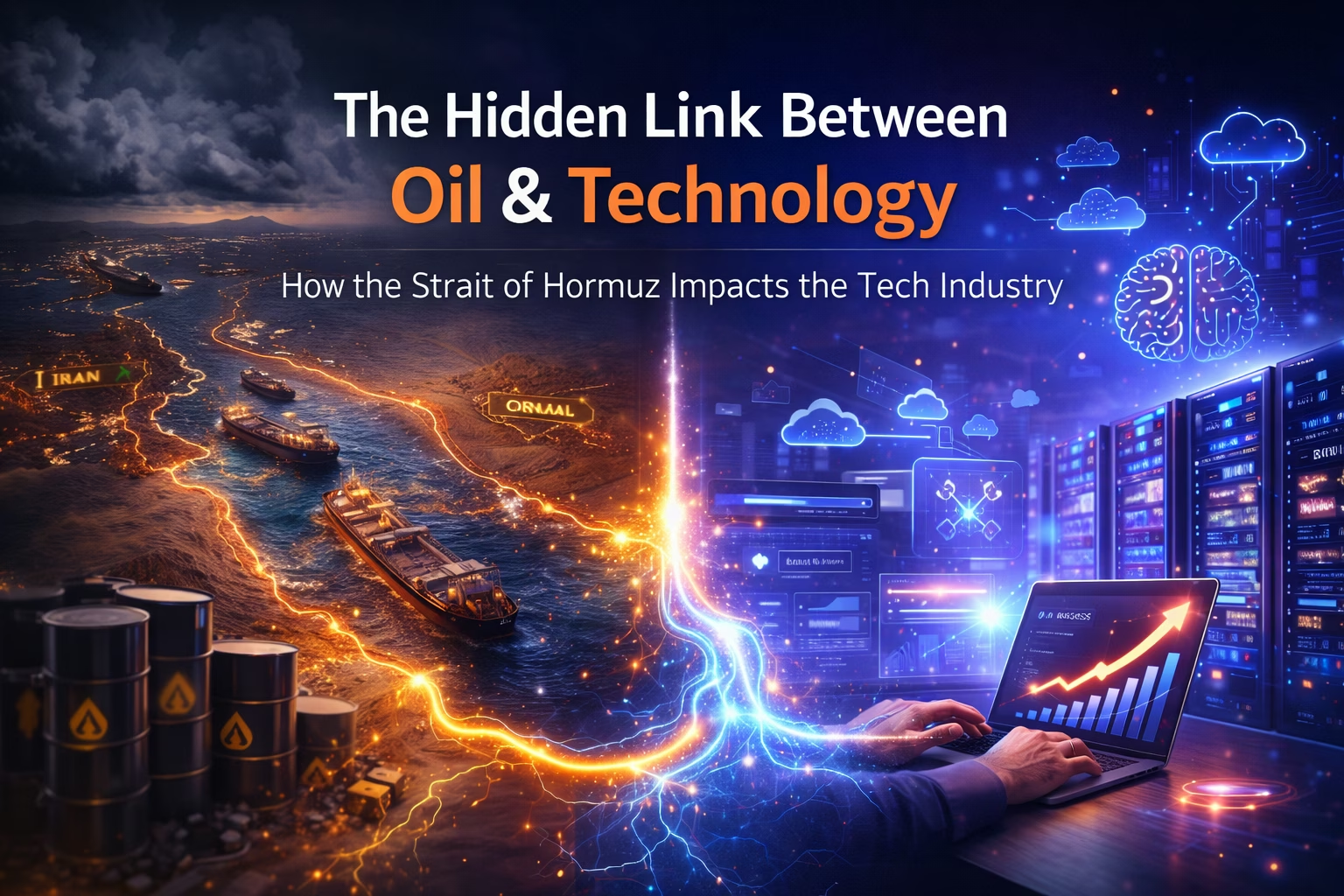
How the Strait of Hormuz Impacts the Global Tech Industry

The Strait of Hormuz isn't just about oil. Discover how this narrow waterway affects cloud computing, AI costs, semiconductor manufacturing, and your digital business in 2026.
Introduction
When you think about the global tech industry, your mind probably goes to Silicon Valley, software developers, cloud servers, and AI algorithms. You rarely think about a narrow stretch of water between Iran and Oman.
But here’s the surprising truth: The Strait of Hormuz impacts the global tech industry more than most people realize.
This 21-mile-wide waterway is the most important oil transit chokepoint in the world. Nearly 20% of global petroleum passes through it daily. And because the tech industry runs on electricity—lots of it—anything that affects energy prices eventually affects your website hosting costs, cloud computing bills, and even the price of your next laptop.
So how can a sea route affect cloud computing, AI, and the apps you use every day?
Let’s dive in.
What is the Strait of Hormuz? (Simple Explanation)
The Strait of Hormuz is a narrow sea passage located between the Persian Gulf and the Gulf of Oman. It connects oil-rich Middle Eastern countries—like Saudi Arabia, UAE, Kuwait, and Iraq—to the open ocean.
-
Width: Only 21 miles at its narrowest point
-
Depth: Shallow enough that large tankers must stay in specific lanes
-
Location: Between Iran (north) and Oman (south)
Why is it called a global chokepoint?
A chokepoint is a narrow passage that can be easily blocked. If the Strait of Hormuz closes—even for a few days—global energy markets panic. Oil prices spike. Shipping routes get rerouted. And the entire world economy feels the pain.
In short: What happens in the Strait of Hormuz does not stay there. It reaches every industry—including tech.
The Connection Between Oil, Energy & the Tech Industry
You might ask: “I run a software company. Why should I care about oil tankers?”
Here’s the direct link:
Oil prices → Electricity costs → Tech operating costs
Let me explain.
Data centers need massive electricity
Every time you use Netflix, send an email, or store a photo on Google Drive, you are using a data center. These data centers are giant warehouses filled with servers. And servers need two things:
-
Electricity to run
-
Electricity to cool down (servers generate heat)
When oil prices rise, electricity becomes more expensive. When electricity becomes more expensive, running data centers costs more. And those costs get passed down to you.
AI and cloud computing are energy-hungry
Training a single AI model like ChatGPT consumes as much electricity as 100 American homes use in an entire year. Running that AI for millions of users every day? Even more.
So when the Strait of Hormuz impact on tech industry becomes real, it looks like this:
-
Oil prices spike due to regional tensions
-
Electricity prices follow
-
Cloud providers raise their fees
-
Your SaaS tools get more expensive
-
Startups feel the squeeze
💡 Key insight: Energy disruptions don't just affect factories and transportation. They directly increase cloud computing and SaaS costs.
Impact on Cloud Computing & Data Centers
Major cloud providers like Amazon Web Services (AWS), Google Cloud, and Microsoft Azure operate hundreds of data centers worldwide. Each one consumes enormous amounts of power.
How the Strait of Hormuz affects cloud costs
| Scenario | Result |
|---|---|
| Oil prices increase 20% | Electricity costs rise 10–15% |
| Data center operating costs rise | Cloud providers raise prices by 5–10% |
| Your monthly hosting bill | Increases by 8–12% |
This isn't theoretical. In 2022, when energy prices spiked due to global events, AWS and Google Cloud announced price increases for the first time in years.
Who feels the pain?
-
E-commerce stores paying for hosting
-
SaaS founders running cloud-based apps
-
Freelancers using premium cloud tools
-
Startups with tight profit margins
📉 Real impact: A startup spending $5,000/month on cloud hosting could see that bill jump to $5,500–$6,000 within months of an energy crisis.
Semiconductor & Hardware Industry Impact
You’ve heard about the global chip shortage. But did you know that semiconductor manufacturing is extremely energy-intensive?
Chips need stable, cheap electricity
Producing a single silicon wafer requires:
-
Extreme heat (over 1000°C)
-
Clean rooms with constant air filtration
-
Ultra-pure water production
-
Precision machinery running 24/7
All of this consumes massive electricity.
The chain reaction
-
Energy prices rise due to Strait of Hormuz disruption
-
Chip fabrication plants (like TSMC, Samsung, Intel) face higher costs
-
Chip prices increase
-
Every device with a chip—phones, laptops, GPUs, cars—becomes more expensive
⚡ Fact: Semiconductor fabs are among the most energy-intensive factories on Earth. Some large fabs consume as much electricity as a small city.
Global Supply Chain Disruption (Tech Products)
The Strait of Hormuz doesn't just carry oil. It also carries raw materials used in tech manufacturing.
What passes through or near the Strait?
-
Petrochemicals – used in plastic casings for phones and laptops
-
Metals – copper, aluminum, and rare earth elements
-
Chemicals – used in circuit board production
-
Fertilizers – indirectly affects agriculture tech
When shipping is disrupted, these materials get delayed or become more expensive.
Impact on tech products
-
Laptops and smartphones – production delays, higher prices
-
GPUs and servers – longer wait times for data centers
-
Networking equipment – routers, switches, cables cost more
🚢 Shipping disruption reality: During the 2021 Suez Canal blockage, tech companies reported 2–4 week delays in hardware shipments. A Strait of Hormuz closure would be far worse.
Impact on Startups & Digital Businesses
You don't need to manufacture hardware to feel the effects. Digital businesses get hit from multiple angles.
Three ways startups are affected:
-
Higher hosting costs – Cloud providers raise prices
-
More expensive ads – Google and Meta ads cost more when the economy is volatile
-
Tighter budgets – Investors become cautious during energy crises
Real-world example
A small SaaS startup with 10 employees:
-
Monthly cloud bill: $3,000 → $3,600 (+20%)
-
Monthly ad spend: $5,000 → $6,000 (+20%)
-
Annual impact: Over $20,000 in extra costs
For a startup with thin margins, that could mean delaying a new hire or cutting marketing.
AI, Web Apps & Digital Services Cost Surge
Artificial intelligence is the hottest trend in tech. But AI has a dirty secret: it consumes massive energy.
AI energy consumption facts
-
A single ChatGPT query uses 10x more electricity than a Google search
-
Training GPT-4 consumed an estimated 50+ gigawatt-hours of electricity
-
Running AI models for millions of users requires data centers running 24/7
The cost ripple effect
When energy prices rise due to Strait of Hormuz impact on tech industry:
-
AI model training becomes more expensive
-
API costs for AI tools (like OpenAI, Anthropic) increase
-
Developers and SaaS founders pay more to integrate AI
-
Eventually, end-users pay higher subscription fees
🤖 Prediction: If energy prices stay high, we will see fewer "free" AI tools and more premium pricing tiers.
Future Predictions: Tech Industry Outlook
The tech industry cannot ignore geopolitics anymore. Here’s what experts predict for the coming years.
Shift towards renewable energy
Data centers are already moving toward solar, wind, and nuclear power. Companies like Google and Microsoft have pledged to run on 100% renewable energy by 2030. The Strait of Hormuz vulnerability accelerates this trend.
Decentralized infrastructure
Instead of relying on a few giant data centers, tech companies will build smaller, distributed data centers in regions with stable energy and politics.
More efficient hardware
Chip designers are under pressure to create processors that do more with less electricity. Apple’s M-series chips and ARM-based servers are early examples.
Energy-aware software development
In the future, developers will optimize code not just for speed, but for energy efficiency. Green coding could become a competitive advantage.
Opportunities for Tech Businesses (LetDigitalFly Angle 🚀)
Every crisis creates opportunities. For tech-savvy businesses, the Strait of Hormuz impact on tech industry opens new doors.
Rising demand for SEO and digital marketing
When physical supply chains get disrupted, businesses shift online. They need:
-
Better websites to sell products
-
SEO optimization to get found on Google
-
Content marketing to attract customers
👉 This is where LetDigitalFly comes in.
Cost-saving tech solutions
Companies want to reduce expenses during energy crises. They look for:
-
Automation tools to replace manual work
-
Efficient software that lowers cloud bills
-
Mobile apps to reach customers directly
Opportunities include:
| Service | Why demand rises |
|---|---|
| SEO optimization | Businesses compete harder for online visibility |
| Website development | Companies modernize their digital presence |
| Mobile app development | Direct customer access without middlemen |
| Backlinking services | Higher search rankings without ad spend |
| Automation consulting | Reduce operational costs |
🚀 Grow your digital business with LetDigitalFly – We help tech companies and startups build fast websites, optimize for search engines, and scale their online presence. Contact us today to future-proof your digital strategy.
Conclusion
The Strait of Hormuz is 21 miles wide. But its impact stretches across oceans, industries, and even into the digital world.
We’ve learned that:
-
The Strait of Hormuz impacts the global tech industry through energy prices, supply chains, and hardware costs
-
Cloud computing, AI, and semiconductors all depend on stable, affordable electricity
-
Startups and digital businesses face higher costs during energy disruptions
-
But opportunities exist for tech companies that adapt and help others save money
Here’s the powerful truth:
“Even the digital world runs on physical energy pipelines.”
Your apps, your cloud storage, your AI tools—they all depend on electricity. And that electricity depends, in part, on a narrow stretch of water on the other side of the planet.
Smart tech businesses will prepare now. They’ll optimize their cloud spending. They’ll invest in SEO to reduce customer acquisition costs. And they’ll partner with agencies like LetDigitalFly to build efficient, high-performing digital assets.
The future belongs to those who understand that geopolitics and technology are no longer separate worlds.
FAQs
How does the Strait of Hormuz affect the tech industry?
The Strait of Hormuz is a key transit point for global oil supplies. When disruptions occur, oil prices rise, leading to higher electricity costs. Since data centers, AI training, and semiconductor manufacturing consume massive electricity, tech operating costs increase significantly.
Why do oil prices impact cloud computing?
Cloud providers like AWS, Google Cloud, and Microsoft Azure operate huge data centers that run on electricity. When oil prices rise, electricity becomes more expensive. Cloud providers pass these increased costs to customers through higher hosting and service fees.
Can shipping disruptions affect software companies?
Yes. Even pure software companies rely on hardware—servers, laptops, networking equipment—that must be shipped globally. Shipping disruptions in the Strait of Hormuz delay hardware deliveries and increase costs, which ultimately affects software companies' infrastructure and budgets.
What industries are most affected?
The most affected industries include:
-
Cloud computing and data centers
-
Semiconductor manufacturing
-
AI and machine learning companies
-
Hardware manufacturers (laptops, phones, GPUs)
-
E-commerce and digital startups
How can tech businesses adapt?
Tech businesses can:
-
Optimize cloud usage to reduce waste
-
Invest in SEO to lower customer acquisition costs
-
Use energy-efficient hardware and software
-
Diversify hosting providers across different regions
-
Partner with digital agencies like LetDigitalFly to build cost-effective online presence
Will renewable energy solve this problem?
Partially. Major tech companies are investing heavily in solar, wind, and nuclear power for data centers. However, the transition will take years. In the meantime, energy prices will remain sensitive to geopolitical events like Strait of Hormuz disruptions.
Is this a short-term or long-term risk?
Both. Short-term spikes happen during regional tensions. Long-term, the world's dependence on Middle Eastern oil is decreasing, but the Strait of Hormuz will remain a critical chokepoint for at least another decade.
Ready to Future-Proof Your Digital Business?
The digital world is changing fast. Energy costs, supply chains, and global events all affect your online success.
At LetDigitalFly, we help tech companies and startups:
-
✅ Build high-performance websites
-
✅ Optimize for SEO and organic growth
-
✅ Develop mobile apps that engage users
-
✅ Create cost-effective digital strategies
👉 Contact LetDigitalFly today and let’s grow your business—no matter what happens in the world.