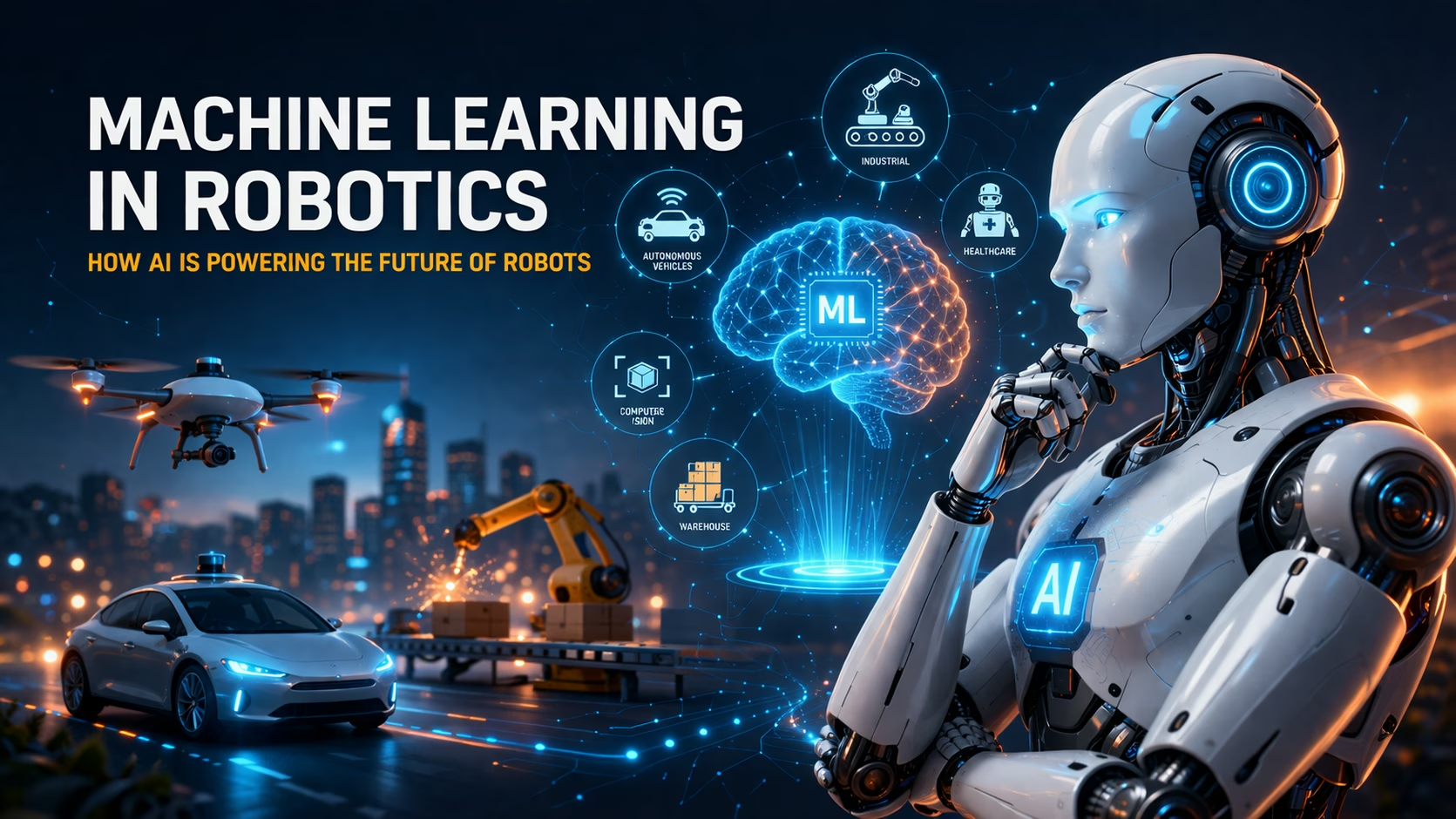
Machine Learning in Robotics: How It Works, Applications, Benefits & Future Trends

Discover how machine learning in robotics enables intelligent automation, autonomous decision-making, and real-world applications across industries like manufacturing, healthcare, and logistics.
Machine Learning in Robotics: How It Works, Applications, Benefits & Future Trends
Introduction
Machine learning in robotics is transforming how machines interact with the world. Instead of relying on fixed programming, modern robots can learn from data, adapt to new environments, and improve their performance over time.
From autonomous vehicles and warehouse robots to surgical systems and industrial automation, AI-powered robotics is becoming the backbone of next-generation technology.
In this guide, you’ll learn:
- What machine learning in robotics is
- How robots learn and make decisions
- Key algorithms used in robotics
- Real-world applications across industries
- Benefits, challenges, and future trends
What Is Machine Learning in Robotics?
Machine learning in robotics refers to the integration of algorithms that enable robots to learn from data, experience, and interactions rather than relying solely on predefined instructions.
Instead of being explicitly programmed for every task, robots can:
- Recognize patterns from sensor data
- Make decisions in real time
- Adapt to changing environments
- Improve performance through feedback
👉 In simple terms:
Machine learning allows robots to think, learn, and evolve.
How Does Machine Learning Work in Robots?
Machine learning in robotics typically follows a continuous learning loop:
1. Data Collection
Robots gather data using:
- Cameras (robot vision)
- Sensors (LiDAR, radar, touch)
- Environmental inputs
2. Model Training
Machine learning models process this data to:
- Identify patterns
- Predict outcomes
- Learn behaviors
3. Decision-Making & Feedback
The robot:
- Takes action based on predictions
- Receives feedback
- Improves future performance
This cycle is often called a feedback loop learning system, enabling robots to continuously improve.
Key Machine Learning Techniques in Robotics
1. Supervised Learning
Robots learn from labeled data.
📌 Example:
Training a robot to recognize objects using pre-labeled images.
2. Unsupervised Learning
Robots detect patterns without labeled data.
📌 Example:
Grouping unknown objects based on shape or size.
3. Reinforcement Learning in Robotics
Robots learn through trial and error.
📌 Example:
A robot learning how to walk or grasp objects through repeated attempts.
4. Deep Learning
Uses neural networks for complex tasks like:
- Robot vision
- Speech recognition
- Object detection
5. Imitation Learning (Learning from Demonstration)
Robots learn by observing human actions.
📌 Example:
A robotic arm copying human movements in manufacturing.
Applications of Machine Learning in Robotics
1. Autonomous Navigation
Robots use machine learning to:
- Map environments
- Avoid obstacles
- Navigate dynamically
Used in:
- Self-driving cars
- Delivery robots
- Drones
2. Robot Vision and Object Recognition
Using computer vision for robotics, machines can:
- Identify objects
- Track movement
- Understand surroundings
3. Predictive Maintenance
Robots detect issues before failure by analyzing:
- Sensor data
- Performance patterns
4. Grasping and Manipulation
Machine learning helps robots:
- Pick up objects
- Adjust grip strength
- Handle fragile items
5. Human-Robot Interaction
Robots can:
- Understand speech
- Recognize gestures
- Collaborate safely with humans
6. Industrial and Warehouse Robotics
Applications include:
- Automated sorting
- Quality control
- Logistics optimization
Benefits of Machine Learning in Robotics
✔ Adaptability
Robots can adjust to new environments without reprogramming.
✔ Improved Efficiency
Automation becomes faster and more accurate.
✔ Better Decision-Making
Real-time data enables smarter actions.
✔ Scalability
Systems improve as more data is collected.
Challenges of Machine Learning in Robotics
❌ Data Limitations
Robots require large datasets to learn effectively.
❌ Sim-to-Real Gap
Training in simulations may not transfer perfectly to real-world environments.
❌ High Computational Cost
Machine learning models require significant processing power.
❌ Safety & Reliability
Errors in decision-making can lead to real-world risks.
Future of Machine Learning in Robotics
The future of robotics is deeply connected to advancements in AI.
🔹 Embodied Intelligence
Robots will better understand and interact with physical environments.
🔹 Generative AI for Robotics
AI models will generate actions, behaviors, and strategies.
🔹 Edge Computing in Robotics
On-device learning will reduce reliance on cloud systems.
🔹 Autonomous Learning Systems
Robots will learn continuously without human supervision.
🔹 Multi-Modal and Transformer Models
Combining vision, language, and motion for smarter robots.
FAQs About Machine Learning in Robotics
What is machine learning in robotics?
Machine learning in robotics allows robots to learn from data and improve their performance without explicit programming.
How is machine learning applied in robotics?
It is used for tasks like navigation, object recognition, predictive maintenance, and human-robot interaction.
What is reinforcement learning in robotics?
It is a method where robots learn through trial and error by receiving rewards or penalties.
What are the benefits of machine learning in robotics?
Improved adaptability, efficiency, decision-making, and automation capabilities.
What are the challenges of using ML in robotics?
Data requirements, computational costs, safety concerns, and real-world unpredictability.
Conclusion
Machine learning in robotics is redefining what machines can do. By enabling robots to learn, adapt, and make decisions, it opens the door to smarter automation across industries.
As technologies like robot vision, reinforcement learning, and generative AI continue to evolve, robotics will become more autonomous, intelligent, and capable than ever before.