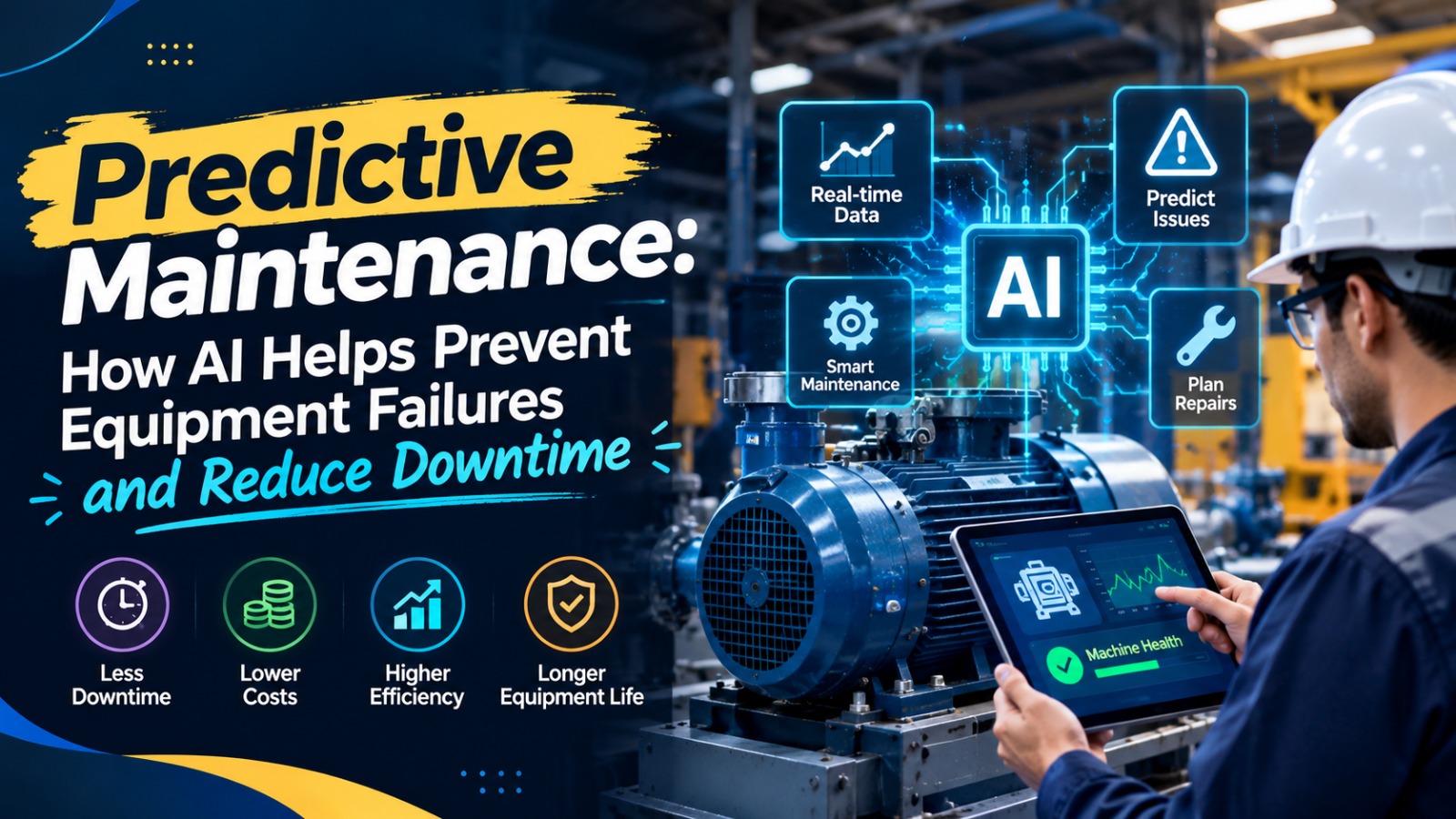
Predictive Maintenance: How AI Helps Prevent Equipment Failures and Reduce Downtime
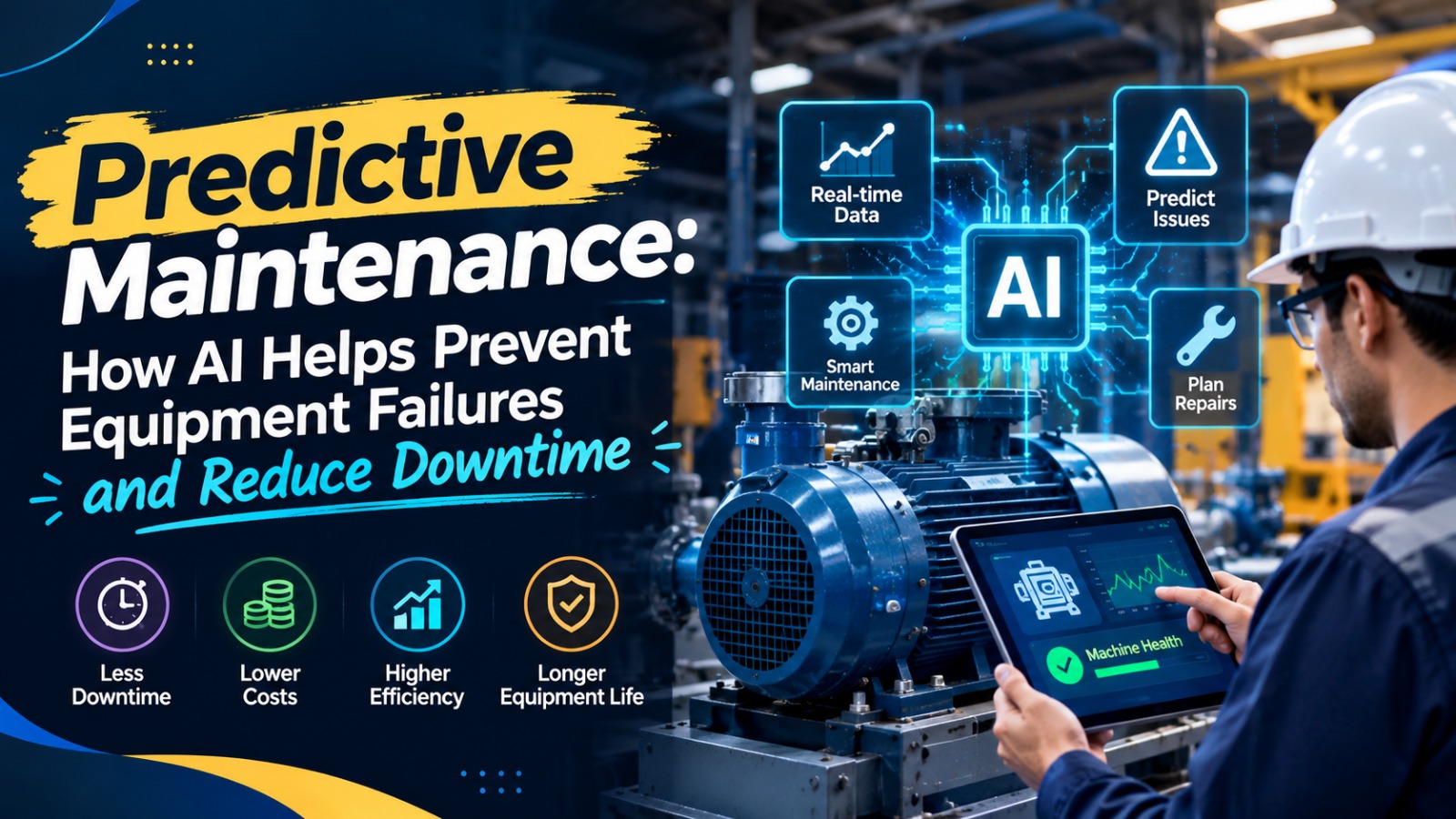
Discover how predictive maintenance uses AI and real-time equipment data to identify potential failures early, reduce unexpected downtime, and help manufacturers keep operations running smoothly.
Predictive maintenance is helping manufacturers take a smarter approach to equipment care. Instead of waiting for a machine to break down or servicing it simply because a scheduled date has arrived, businesses can look at how their equipment is actually performing and spot possible problems earlier. With the help of AI, sensors, and real-time data, maintenance teams can notice unusual changes in a machine’s performance and investigate them before they turn into a major breakdown. This can make maintenance more timely, reduce unexpected downtime, and help keep production running without unnecessary interruptions.
What Is Predictive Maintenance?
Predictive maintenance is a way of maintaining machines based on their actual condition rather than a fixed schedule. Instead of waiting for equipment to fail, businesses monitor things like temperature, vibration, pressure, and other performance signals to spot possible issues early.
For example, if a machine starts vibrating more than usual, it could be a sign that a component needs attention. Predictive maintenance helps the maintenance team notice that change and check the machine before the problem turns into an unexpected breakdown.
The idea is simple: find the warning signs early, deal with the problem at the right time, and keep production moving.
How Does Predictive Maintenance Work?
Predictive maintenance starts by collecting information about how a machine is working. Sensors and connected equipment can track things such as temperature, vibration, pressure, energy use, and operating hours. This gives maintenance teams a better idea of what is happening inside the equipment. That information can then be compared with normal operating patterns. If the system notices a change that could point to a developing problem, it can alert the maintenance team so they can take a closer look.
The main idea is simple: The goal is to identify warning signs early. As a result, businesses have more time to inspect equipment, plan repairs, and avoid unnecessary disruption to production.
How AI Improves Predictive Maintenance
AI makes predictive maintenance more useful by helping businesses understand large amounts of equipment data. Instead of relying only on manual checks, AI can analyze patterns and notice changes that may be difficult to spot during a routine inspection.
For example, if a machine’s temperature or vibration slowly starts changing, an AI system can compare that data with normal operating patterns. If the change looks unusual, it can alert the maintenance team so they can investigate before a serious failure occurs.
AI can also help maintenance teams decide which issues need attention first. This also helps maintenance teams focus on the issues that need attention.
Predictive Maintenance vs. Preventive Maintenance
Predictive maintenance and preventive maintenance both aim to reduce equipment failures, but they use different approaches.
Preventive maintenance is usually based on a fixed schedule. For example, a machine may be inspected or serviced every three months, even if it is still working normally. Predictive maintenance, on the other hand, uses equipment data and condition monitoring to determine when maintenance may actually be needed.
The right approach depends on the type of equipment, available data, and maintenance needs of the business. In some cases, companies may use both methods together to keep equipment reliable and reduce unexpected downtime.
Benefits of Predictive Maintenance
Predictive maintenance can help businesses deal with equipment problems before they cause major interruptions. By monitoring equipment regularly, maintenance teams can identify potential issues earlier and plan the necessary work.
It can also reduce the chances of unexpected downtime. Instead of dealing with a sudden breakdown, businesses may have more time to schedule repairs when they cause less disruption to production. Another benefit is better use of maintenance resources. Teams can focus their time on equipment that actually shows signs of a problem rather than servicing every machine at the same frequency. Over time, this can make maintenance more organized and efficient.
Common Applications in Manufacturing
Predictive maintenance can be used across different types of manufacturing equipment. It is especially useful for machines that are critical to production and where an unexpected failure could cause delays.
For example, sensors can monitor motors, pumps, compressors, conveyor systems, and other equipment. Changes in vibration, temperature, pressure, or energy use can provide useful signals about the condition of a machine.
By monitoring these signals, maintenance teams can identify equipment that may need attention and plan inspections or repairs before a small issue becomes a larger production problem.
Challenges of Predictive Maintenance
Although predictive maintenance can be useful, setting it up can take time and resources. Businesses may need sensors, data collection systems, software, and trained staff to manage the process properly.
Another challenge is data quality. If the equipment data is incomplete, inaccurate, or inconsistent, the system may not provide useful warnings. This is why businesses need to make sure their sensors and monitoring systems are working reliably.
There can also be a learning curve for maintenance teams. Employees need to understand how to use the data and respond to alerts effectively. A successful predictive maintenance system therefore requires both good technology and people who know how to use it.
How Businesses Can Get Started
Businesses do not need to change their entire maintenance system at once. A practical starting point is to choose a few important machines and begin collecting data such as temperature, vibration, pressure, or operating hours.
Once enough data is available, the maintenance team can look for unusual patterns and decide which equipment needs closer attention. Businesses can start small, learn from the results, and expand the approach over time.”
The goal is to build a system that supports maintenance teams rather than replacing their judgment. Good data, clear processes, and regular monitoring can make predictive maintenance easier to manage and more useful in daily operations.
Conclusion
Predictive maintenance gives businesses a more practical way to manage equipment by focusing on the machine’s actual condition. With sensors, real-time data, and AI, maintenance teams can identify potential problems earlier and plan repairs before they lead to unexpected breakdowns.
The goal is not simply to use more technology, but to make maintenance decisions based on useful information. When implemented properly, predictive maintenance can help reduce downtime, improve maintenance planning, and keep production running more smoothly.