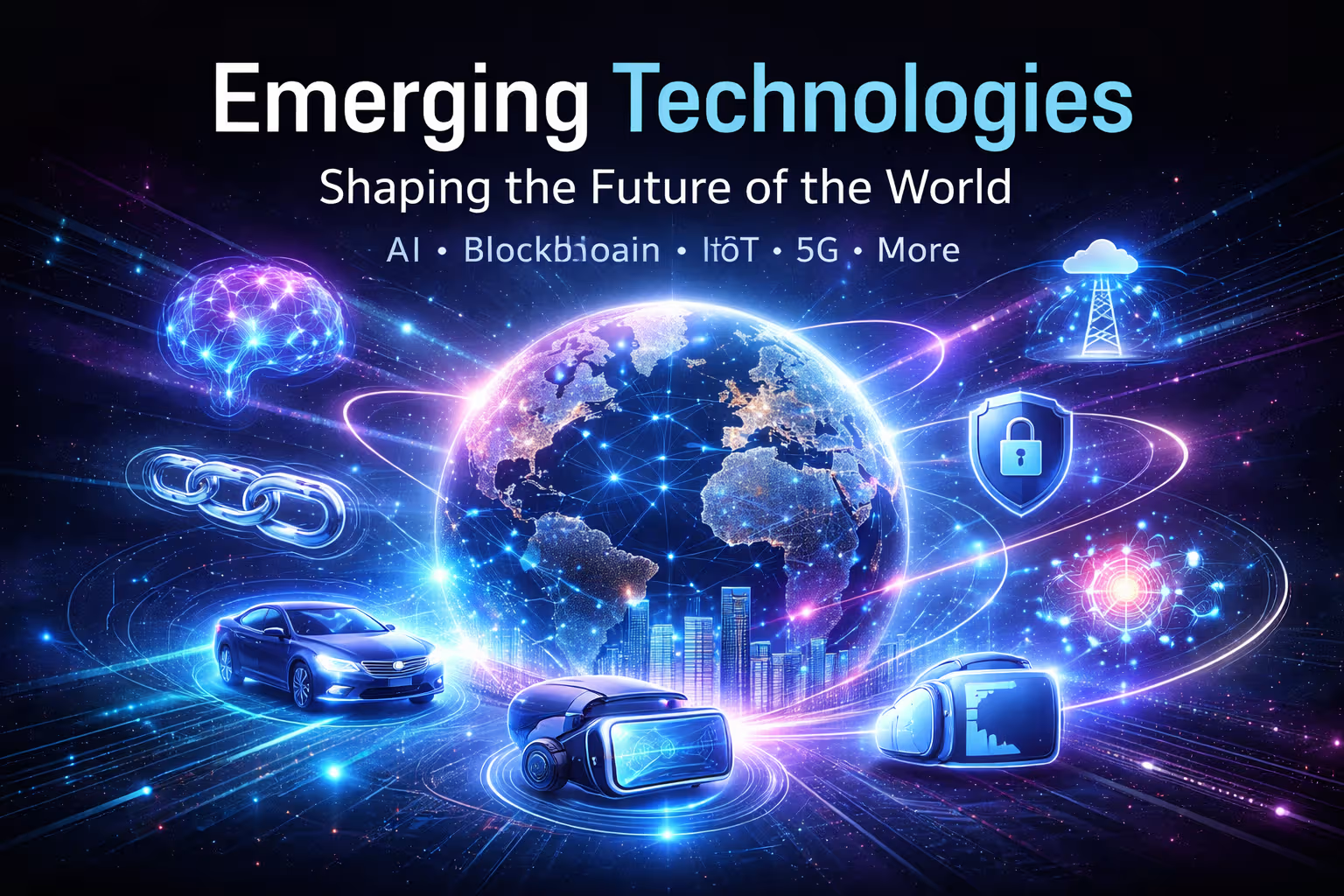
Top 10 Emerging Technologies That Will Change the World

From AI to Quantum Computing, the world's most powerful emerging technologies are reshaping how we live, work, and do business. Discover the top 10 innovations every entrepreneur, startup, and business owner needs to understand in 2026 — and how to harness them for growth.
We are living through one of the most extraordinary periods in human history. Emerging technologies are no longer experimental curiosities confined to research labs — they are actively reshaping industries, redefining business models, and transforming everyday life.
For entrepreneurs, business owners, and anyone with an eye on the future, understanding these technologies isn't just interesting — it's essential. In this article, we break down the top 10 emerging technologies that will change the world, with real-world applications and what they mean for your business.
What Are Emerging Technologies?
Emerging technologies are innovations that are currently developing or will be developed within the next five to ten years, and which have the potential to significantly alter the business and social landscape.
They differ from established technologies in that they are still evolving — often disrupting existing industries, creating entirely new markets, and solving problems that were previously considered unsolvable.
Why should you care? Because the businesses that understand and adopt these technologies early gain a decisive competitive advantage. Those that ignore them risk being left behind.
Top 10 Emerging Technologies That Will Change the World
1. Artificial Intelligence (AI)
Artificial Intelligence is the simulation of human intelligence by machines — enabling computers to learn, reason, problem-solve, and make decisions with minimal human input.
Real-world use cases:
- AI-powered chatbots handling customer service 24/7
- Predictive analytics helping retailers manage inventory
- AI diagnosis tools detecting diseases from medical imaging
Impact on businesses:
AI reduces costs, improves decision-making speed, and enables hyper-personalization at scale. Companies using AI report up to 40% improvements in operational efficiency.
Future potential:
AI will eventually power entire autonomous business functions — from marketing automation to financial forecasting — making it the single most transformative technology of our era.
2. Machine Learning (ML)
Machine Learning is a subset of AI where systems learn from data, identify patterns, and improve their performance over time — without being explicitly programmed.
Real-world use cases:
- Fraud detection in banking and fintech
- Netflix and Spotify recommendation engines
- Predictive maintenance in manufacturing
Impact on businesses:
ML empowers businesses to extract actionable insights from large datasets, automate repetitive analytical tasks, and build smarter products that get better with use.
Future potential:
As data volumes grow, ML models will become more accurate and autonomous — driving the next generation of intelligent software applications.
3. Blockchain Technology
Blockchain is a decentralized, distributed ledger system that records transactions across multiple computers in a way that is transparent, immutable, and highly secure.
Real-world use cases:
- Cryptocurrency transactions (Bitcoin, Ethereum)
- Supply chain transparency for food and pharmaceutical industries
- Smart contracts automating legal and financial agreements
Impact on businesses:
Blockchain eliminates the need for intermediaries, reduces fraud, speeds up cross-border transactions, and creates new levels of trust between business partners.
Future potential:
Blockchain will underpin a new generation of decentralized applications, digital identity systems, and tokenized economies.
4. Internet of Things (IoT)
IoT refers to the network of physical objects — devices, vehicles, appliances, and infrastructure — embedded with sensors and software that connect and exchange data over the internet.
Real-world use cases:
- Smart home devices (thermostats, security cameras, voice assistants)
- Industrial IoT sensors monitoring factory equipment in real time
- Smart city infrastructure managing traffic, lighting, and utilities
Impact on businesses:
IoT enables real-time monitoring, remote management, and data-driven operations — reducing downtime, cutting costs, and improving service quality.
Future potential:
With over 75 billion IoT devices expected by 2030, the connected world will generate unprecedented streams of actionable data.
5. Augmented Reality (AR) & Virtual Reality (VR)
AR overlays digital information onto the real world, while VR creates fully immersive digital environments. Together, they are redefining how we learn, shop, work, and communicate.
Real-world use cases:
- AR-powered try-before-you-buy experiences in retail
- VR training simulations for surgeons, pilots, and military personnel
- Immersive virtual collaboration spaces for remote teams
Impact on businesses:
AR/VR dramatically improve training effectiveness, customer engagement, and product visualization — leading to faster decisions and higher conversion rates.
Future potential:
The metaverse — a persistent, interconnected virtual world — will open entirely new economies for commerce, entertainment, and social interaction.
6. Robotics & Automation
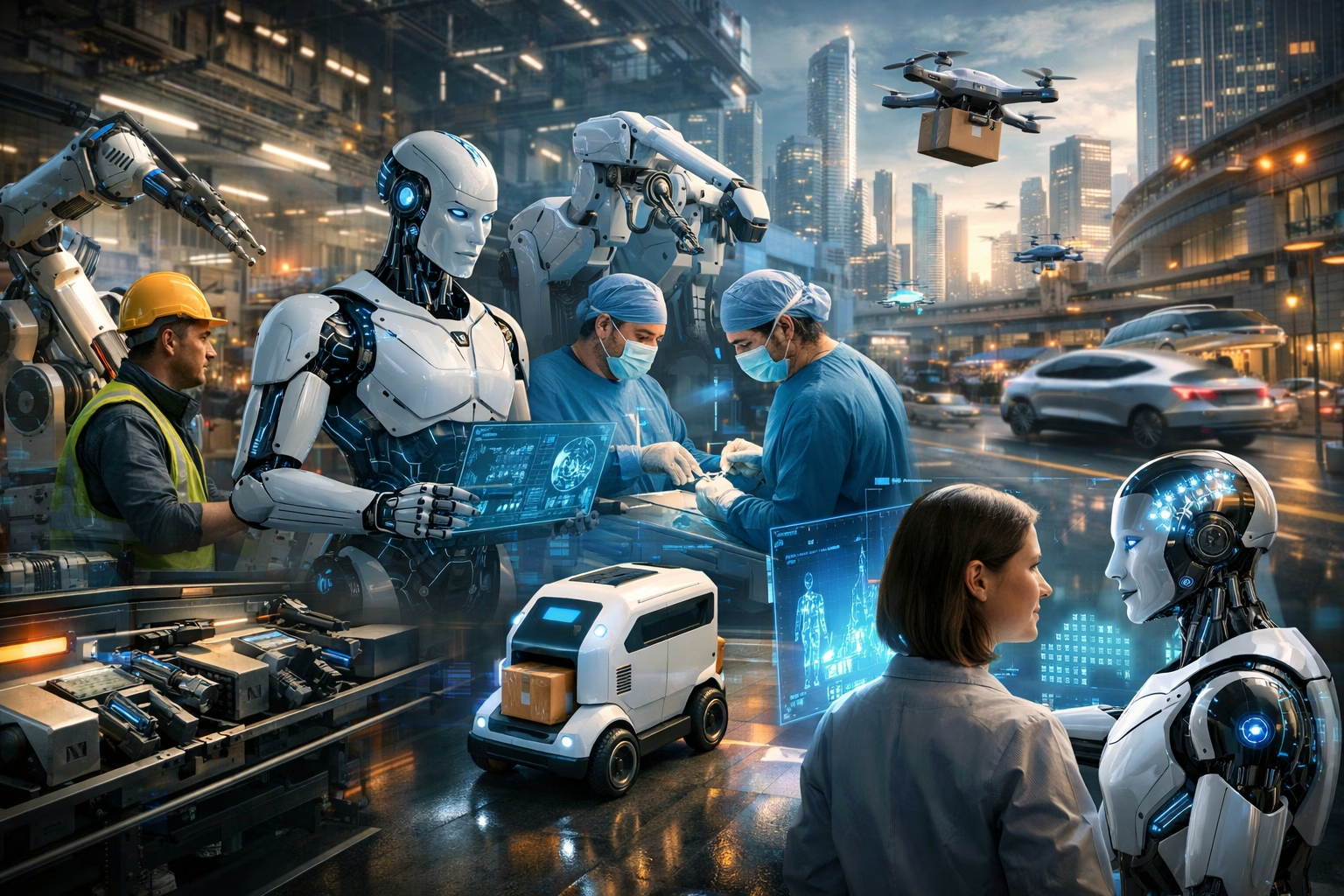
Modern robotics combines physical hardware with intelligent software to automate tasks that were previously performed by humans — ranging from assembly lines to surgical procedures.
Real-world use cases:
- Warehouse robots at Amazon fulfillment centers
- Robotic surgery systems performing minimally invasive procedures
- Agricultural robots harvesting crops with precision
Impact on businesses:
Automation dramatically increases throughput, reduces human error, and lowers long-term labor costs — giving companies a significant operational edge.
Future potential:
Collaborative robots (cobots) will work alongside humans across industries, creating hybrid workforces that blend human creativity with machine precision.
7. 5G Technology
5G is the fifth generation of wireless network technology, offering speeds up to 100 times faster than 4G, ultra-low latency, and the capacity to connect billions of devices simultaneously.
Real-world use cases:
- Real-time remote surgery enabled by low-latency 5G networks
- Autonomous vehicles communicating with infrastructure instantly
- Ultra-HD video streaming and cloud gaming without lag
Impact on businesses:
5G unlocks new possibilities for mobile-first applications, IoT deployments, and real-time data processing — enabling services and experiences that simply weren't possible before.
Future potential:
As 5G infrastructure expands globally, it will serve as the foundation for the next decade of digital innovation.
8. Cloud Computing
Cloud computing delivers computing services — servers, storage, databases, networking, software, and analytics — over the internet, enabling flexible, scalable, and cost-efficient IT infrastructure.
Real-world use cases:
- Startups building and scaling apps on AWS, Google Cloud, or Azure
- Businesses storing and analyzing data without on-premise hardware
- Remote teams collaborating via cloud-hosted platforms
Impact on businesses:
Cloud computing levels the playing field — giving small businesses access to enterprise-grade technology at a fraction of the cost, while enabling large organizations to scale instantly.
Future potential:
Edge computing will extend the cloud to the device level, enabling faster, smarter, and more localized data processing.
9. Cybersecurity Innovations
As the digital world expands, so do the threats. Next-generation cybersecurity innovations — including AI-powered threat detection, zero-trust architecture, and quantum encryption — are evolving to meet these challenges.
Real-world use cases:
- AI systems detecting and neutralizing cyberattacks in real time
- Biometric authentication replacing passwords
- Zero-trust frameworks protecting enterprise networks
Impact on businesses:
Cybersecurity is no longer optional — it's a business imperative. Companies that invest in modern security frameworks protect their data, reputation, and customer trust.
Future potential:
Quantum-safe encryption will become essential as quantum computers gain the ability to crack traditional cryptographic systems.
10. Quantum Computing
Quantum computing harnesses the principles of quantum mechanics to process information exponentially faster than classical computers — solving complex problems that would take current supercomputers millions of years.
Real-world use cases:
- Drug discovery simulations accelerating pharmaceutical research
- Optimization problems in logistics, finance, and materials science
- Breaking and building next-generation encryption systems
Impact on businesses:
While still emerging, quantum computing promises to revolutionize fields from financial modeling to climate simulation — giving early adopters an insurmountable computational advantage.
Future potential:
Within the next decade, quantum computing will transition from experimental to practical — unlocking breakthroughs that we can barely imagine today.
How These Technologies Will Impact Businesses
The collective impact of these innovations on business is profound and irreversible. Here's what companies across all industries can expect:
- Increased Efficiency: Automation and AI will handle repetitive tasks, freeing human talent for higher-value creative and strategic work.
- Smarter Decision-Making: Real-time data from IoT, ML models, and cloud analytics will enable more accurate, faster business decisions.
- New Revenue Streams: Technologies like blockchain, AR/VR, and AI will open entirely new products, services, and business models.
- Enhanced Customer Experience: Personalization powered by AI and immersive experiences via AR/VR will redefine what customers expect.
- Competitive Differentiation: Businesses that adopt these technologies early will pull ahead of competitors still relying on legacy systems.
Why Businesses Should Adopt Emerging Technologies Now
The question is no longer whether to adopt new technologies — it's how quickly you can do it. Here's why the timing matters:
- Markets Move Fast: Early adopters of transformative technologies consistently outperform those who wait.
- Customer Expectations Are Rising: Consumers and business clients increasingly expect seamless, tech-enabled experiences.
- Talent Follows Innovation: The best developers, data scientists, and tech leaders want to work with cutting-edge tools.
- Costs Are Coming Down: Cloud, AI, and automation tools are more accessible and affordable than ever before.
The window to gain a first-mover advantage is open right now — but it won't stay open forever.
Challenges of Adopting Emerging Technologies
It's important to approach technology adoption with clear eyes. Key challenges include:
- High Initial Investment: Cutting-edge technologies require upfront capital — though long-term ROI typically justifies the cost.
- Security Risks: New technologies introduce new vulnerabilities. Robust cybersecurity strategies must accompany every adoption plan.
- Skill Gaps: Implementing advanced technology requires specialized talent that is still in short supply globally.
- Integration Complexity: Connecting new solutions with existing legacy systems can be technically challenging and time-consuming.
The key is to partner with experienced technology providers who can guide the process, minimize risk, and accelerate results.
Future Outlook: A Tech-Driven World
The convergence of these ten technologies will not just change individual industries — it will fundamentally reshape the global economy.
We are moving toward a world where AI makes real-time decisions, robots handle physical labor, quantum computers solve previously unsolvable problems, and everything is connected through 5G and IoT networks. Businesses that are digitally prepared will thrive. Those that aren't will struggle to survive.
The future belongs to the bold — those willing to innovate, invest, and transform.
Start Your Digital Transformation with LetDigitalFly
At LetDigitalFly, we help businesses adopt and leverage modern technologies — from AI-powered applications and mobile solutions to cloud platforms and custom software. Whether you're a startup building your first product or an established business ready to modernize, we have the expertise to make it happen.
Get Started: Contact our team today for a free consultation. Let's build the technology that will take your business into the future.
Visit LetDigitalFly.com to learn more about our services and start your digital transformation journey.
Conclusion
Emerging technologies are not a distant concept — they are here, evolving rapidly, and reshaping the world as we know it. From AI and machine learning to quantum computing and 5G, these innovations are creating extraordinary opportunities for businesses, entrepreneurs, and individuals alike.
Staying informed about technology trends 2026 and beyond is no longer optional — it's a core business strategy. The companies that invest in understanding and adopting these technologies today will be the industry leaders of tomorrow.
The future of technology is being written right now. Make sure your business is part of the story.
Frequently Asked Questions (FAQ)
1. What are emerging technologies?
Emerging technologies are innovations that are currently developing or will be developed in the near future, with the potential to significantly disrupt industries, create new markets, and change how we live and work. Examples include AI, blockchain, IoT, and quantum computing.
2. Why are emerging technologies important?
They drive economic growth, create new industries, solve complex global problems, and give businesses the tools to operate more efficiently and competitively. Staying ahead of technology trends is crucial for long-term business success.
3. Which technology is growing the fastest?
Artificial Intelligence is currently the fastest-growing technology, with global AI investment exceeding hundreds of billions of dollars annually. Cloud computing and 5G infrastructure are also expanding at extraordinary rates.
4. How can businesses use new technologies?
Businesses can adopt new technologies by identifying their core operational challenges, partnering with technology providers, investing in staff training, and starting with pilot projects before scaling. Solutions like AI, cloud computing, and automation offer the fastest and most measurable returns.
5. What is the future of technology?
The future points toward a fully connected, AI-driven, automated world. Technologies like quantum computing will unlock breakthroughs in medicine, climate science, and materials. The metaverse will create new economic ecosystems. And 5G-powered IoT will make entire cities intelligent.
6. Are emerging technologies expensive to implement?
Initial implementation costs can be significant, but the long-term ROI — through cost savings, efficiency gains, and new revenue streams — typically far outweighs the investment. Many technologies, especially cloud-based AI and automation tools, are now accessible to businesses of all sizes.