Why IT Employees Are Demanding Remote Jobs Due to Rising Fuel Prices

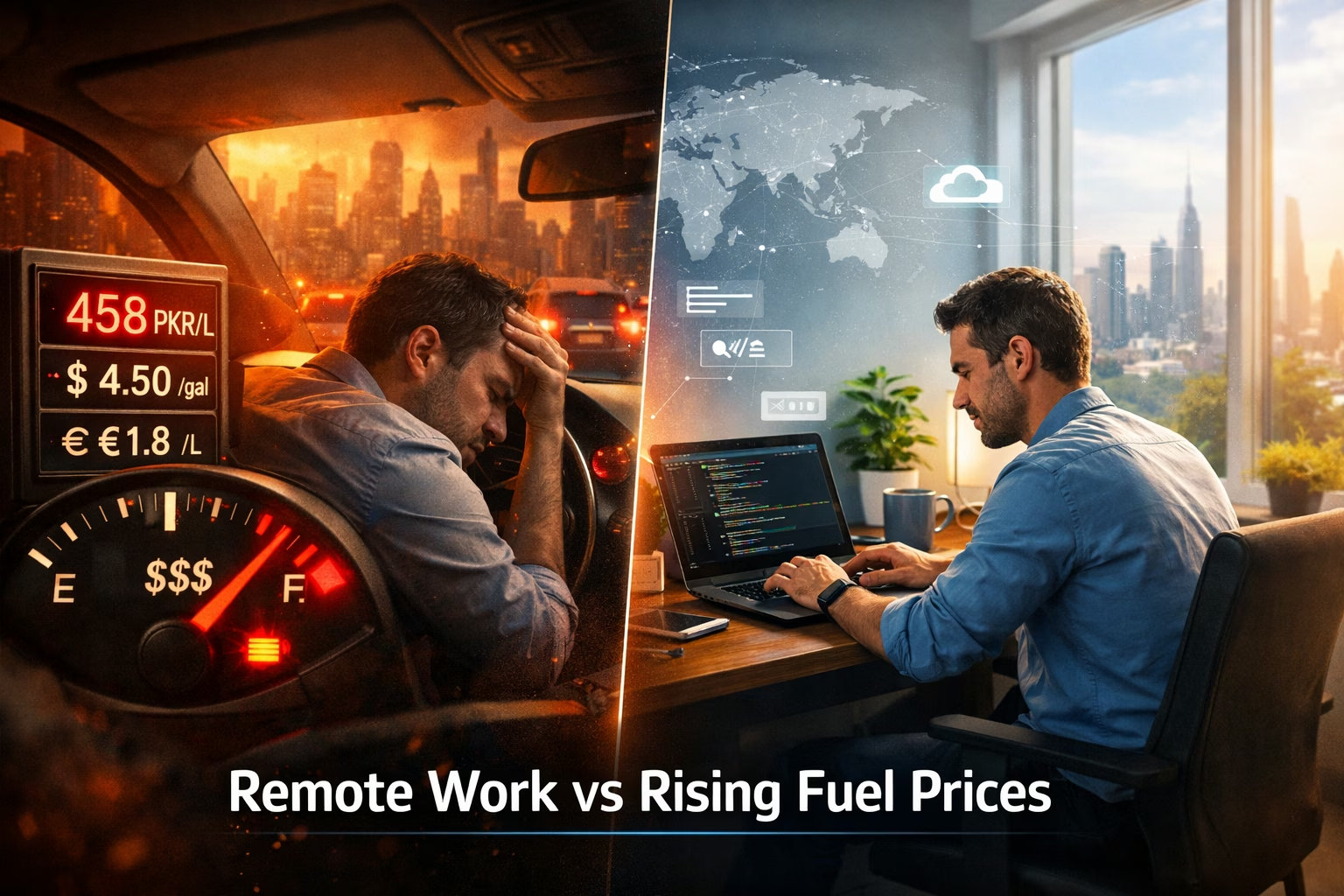
Globally, fuel prices are breaking records. From the US to Europe, Asia to the Middle East, IT employees are facing unsustainable commuting costs. This article explores why remote work is no longer a perk but a financial necessity, how rising petrol prices (including 458 PKR per liter in Pakistan) are reshaping the tech industry, and what the future of work looks like for developers, engineers, and designers worldwide.
Introduction: A Global Turning Point
For the first time in modern history, a trip to the fuel station has become a moment of financial anxiety for millions of workers worldwide. Whether you are a software engineer in San Francisco, a database administrator in London, a full-stack developer in Dubai, or a DevOps specialist in Bangalore, the numbers on the petrol pump are climbing faster than salaries can keep up.
Globally, fuel prices have surged to record levels. In the United States, average gasoline prices crossed $4.50 per gallon in many states. Across Europe, drivers in the UK, Germany, and France are paying the equivalent of $7 to $9 per gallon. In emerging economies like India and Pakistan, the situation is even more severe—with petrol in Pakistan recently reaching 458 PKR per liter, a figure that would have seemed unimaginable just a few years ago.
For IT employees, who have long been at the forefront of digital transformation, this fuel crisis has triggered a powerful and growing demand: remote work is no longer just a perk or a temporary pandemic measure. It has become a financial necessity.
This article explores why IT professionals across different countries are now demanding remote jobs as a direct response to rising fuel prices, how this shift is reshaping the global tech industry, and what the future of work looks like from 2026 to 2030 and beyond.
Global Rise in Petrol Prices: A Worldwide Crisis
Fuel prices do not respect borders. What began as supply chain disruptions during the post-pandemic recovery has been worsened by geopolitical conflicts, inflation, and fluctuating oil production levels. The result is a sustained increase in petrol prices across every major economy.
United States
In the US, the average price of regular gasoline rose from around $2.50 per gallon in 2020 to over $4.50 per gallon in many regions by 2025–2026. In California, prices have touched $6 per gallon. For IT employees commuting 30 to 50 miles daily, this translates to hundreds of dollars in additional monthly expenses.
Europe
European nations have faced even steeper hikes due to higher fuel taxes and reliance on imported energy. In the UK, petrol prices have exceeded £1.60 per liter (approximately $7.50 per gallon). In Germany, France, and Italy, drivers regularly pay over €1.80 per liter. A typical IT worker commuting from suburban areas into tech hubs like London, Berlin, or Paris can spend over £300 or €350 per month on fuel alone.
Asia
Across Asia, the picture is equally challenging. In India, petrol prices have fluctuated between 100 and 120 rupees per liter in major cities like Mumbai and Delhi. In Singapore, one of the most expensive places to own a vehicle, petrol costs around SGD 2.80 per liter. In Pakistan, as a striking example, the latest petrol price stands at 458 PKR per liter—a figure that has forced thousands of IT professionals to reconsider their daily commute.
Middle East
Even oil-producing nations have not been completely immune. While fuel remains cheaper in countries like Saudi Arabia, UAE, and Qatar, prices have still risen compared to previous years, and the global inflationary environment has increased overall living costs.
The key takeaway is clear: across different countries, from developed Western economies to rapidly growing Asian markets, fuel prices are putting unprecedented pressure on commuting workers. And IT employees, who often work in city centers while living in more affordable suburbs, are among the hardest hit.
Impact of Fuel Prices on IT Employees
a) Increased Commuting Costs
For an IT employee earning a decent salary, a 20 percent increase in monthly fuel expenses might not seem catastrophic at first glance. But when combined with rising rent, food inflation, and higher utility bills, the cumulative effect is devastating.
Consider a typical software engineer living 25 kilometers from their office. Assuming a car that gives 12 kilometers per liter, a round trip consumes approximately 4.2 liters of fuel. At the current petrol price in Pakistan (458 PKR per liter), one round trip costs nearly 1,920 PKR. Multiply that by 22 working days, and the monthly fuel bill exceeds 42,000 PKR. For an IT professional earning between 100,000 and 150,000 PKR per month, fuel alone consumes nearly one-third of their salary.
In the US, the math is similarly alarming. A 40-mile round trip in a car that gets 25 miles per gallon costs roughly $7.20 per day at $4.50 per gallon. Over a month, that is nearly $160—and over a year, almost $2,000. For a junior developer or a QA engineer, that money could have gone toward student loans, savings, or professional certifications.
b) Reduced Savings and Financial Stress
The erosion of disposable income is perhaps the most direct consequence of rising fuel prices. IT employees who once enjoyed comfortable savings rates are now watching their bank accounts stagnate or shrink. This is especially true for those in the early to mid stages of their careers, where salary growth has not kept pace with inflation.
Across different countries, IT professionals report cutting back on dining out, delaying vacations, and postponing major purchases simply to afford the commute to an office where they perform tasks that could easily be done from home. The irony is not lost on anyone.
c) Mental Stress and Burnout
Fuel anxiety is a real and growing phenomenon. Every time an IT employee sees a petrol price notification on their phone, their heart sinks. Should they take the car or public transport? Should they ask for a salary advance? Should they look for another job closer to home—or fully remote?
This constant financial worry, combined with the daily frustration of traffic jams, aggressive drivers, and unpredictable commute times, leads directly to burnout. The tech industry already struggles with mental health challenges; adding fuel price stress only makes things worse.
d) Time Loss and Reduced Productivity
Time is the one resource that money cannot buy. When an IT employee spends two to three hours every day commuting, that time is stolen from deep work, family, exercise, and rest. A developer who could be writing clean code or learning a new framework is instead stuck in stop-and-go traffic, arriving at the office already exhausted.
This time loss has a direct impact on productivity. Studies have shown that long commutes correlate with lower job satisfaction, higher turnover rates, and reduced cognitive performance. For a knowledge industry like IT, where mental clarity is everything, the cost of commuting is simply too high.
Why Remote Work is Now a Necessity, Not a Trend
For years, remote work was framed as a perk—something companies offered to attract top talent but never fully embraced. The COVID-19 pandemic changed that temporarily, but as offices reopened, many organizations pushed for return-to-office (RTO) mandates.
However, rising fuel prices have fundamentally altered the calculation. Remote work is no longer about comfort or preference. It is about financial survival.
When an IT employee can save $200 to $500 per month by working from home, that is real money. When they can reclaim 10 to 15 hours per week that would otherwise be wasted in traffic, that is real time. When they can avoid the mental exhaustion of daily commutes, that is real well-being.
For many IT professionals across the US, Europe, Asia, and the Middle East, remote work has become the single most important factor in their job decisions. Surveys consistently show that a majority of tech workers would accept a lower salary in exchange for permanent remote work—precisely because the savings on fuel and other commuting costs more than make up the difference.
Remote Work vs Office Work: A Clear Comparison
| Factor | Office Work | Remote Work |
|---|---|---|
| Fuel Cost | High (varies by region: $150–$500+ per month) | None |
| Vehicle Maintenance | Higher due to daily wear and tear | Minimal |
| Time Spent Commuting | 1 to 4 hours daily | Zero |
| Work-Life Balance | Poor (office hours + commute) | Excellent |
| Productivity | Medium (interruptions, meetings, noise) | Higher (focused environment) |
| Flexibility | Low (fixed hours, location) | High (choose when and where to work) |
| Exposure to Traffic Stress | High | None |
| Ability to Work for Global Companies | Limited by location | Unlimited |
| Environmental Impact | Higher carbon footprint | Lower emissions |
The table above makes it clear: for IT employees, the office-first model has become financially and personally unsustainable in an era of record fuel prices.
Global Shift Toward Remote and Hybrid Work
Across major economies, companies are finally listening. Not necessarily out of empathy—but out of economics. When IT employees leave because commuting costs have become unbearable, companies face expensive turnover, recruitment costs, and lost productivity.
United States
Tech giants like Airbnb, Dropbox, and Spotify have embraced permanent remote work. Others like Google, Microsoft, and Apple have adopted hybrid models, though employee pushback continues. The trend is undeniable: remote job postings in the US tech sector have increased by over 300 percent since 2020, and salaries for remote roles have largely caught up with in-office positions.
Europe
In the UK, Germany, and the Netherlands, remote work legislation has strengthened. Many European countries now have a legal right to request remote work, and companies that refuse are struggling to hire senior IT talent. The fuel price crisis has accelerated this trend significantly.
Asia
In India, where fuel prices have risen sharply, IT hubs like Bengaluru, Hyderabad, and Pune have seen a massive surge in demand for remote roles. Startups and multinational corporations alike are offering work-from-home options to retain talent. In Pakistan, the 458 PKR per liter petrol price has become a rallying point for IT professionals demanding remote work.
Middle East
Dubai, Abu Dhabi, and Riyadh are positioning themselves as remote-work-friendly destinations. With high fuel costs and extreme summer heat, the appeal of working from home is obvious. Many tech companies in the region now offer fully remote or hybrid arrangements.
The global shift is not uniform, but the direction is clear. Across different countries, the old model of daily commuting to a central office is dying. Remote and hybrid work are the new normal.
Benefits of Remote Work for IT Employees
Beyond the immediate relief from fuel costs, remote work offers a range of powerful benefits:
Save Money on Fuel and More
This is the most obvious benefit. By eliminating the daily commute, IT employees can save hundreds of dollars or thousands of rupees every month. That money can go toward savings, investments, hobbies, or simply reducing financial stress.
Better Work-Life Balance
Working from home allows IT professionals to have breakfast with their children, take a midday walk, or finish work and immediately transition into personal time. There is no draining commute at the start and end of each day.
Increased Productivity
Contrary to old-school management beliefs, most IT employees are more productive at home. Fewer distractions, no unnecessary meetings, and the ability to create a personalized work environment all contribute to higher output.
Access to Global Job Market
When location no longer matters, an IT employee in Lahore can work for a company in London. A developer in Texas can join a startup in Berlin. Remote work opens up the entire world as a job market, often with significantly higher salaries than local options.
Environmental Benefits
Fewer cars on the road means lower carbon emissions. For IT professionals who care about climate change, remote work is a meaningful way to reduce their personal environmental impact.
Challenges of Remote Work (And How to Overcome Them)
No solution is perfect, and remote work comes with its own set of challenges. However, these can be managed with awareness and discipline.
Isolation and Loneliness
Working from home can feel isolating, especially for extroverts or junior employees who learn from peer interactions.
Solution: Schedule virtual coffee breaks, join online tech communities, and consider co-working spaces a few days per month.
Communication Gaps
Without spontaneous office conversations, information can get siloed.
Solution: Use tools like Slack, Teams, or Discord effectively. Over-communicate rather than under-communicate. Establish clear documentation practices.
Discipline and Motivation
Not everyone thrives without external structure.
Solution: Create a dedicated home office, follow a consistent daily routine, and use productivity techniques like Pomodoro or time blocking.
Career Growth Concerns
Some IT employees worry that remote work limits visibility and promotion opportunities.
Solution: Proactively communicate achievements to managers. Seek feedback regularly. Build relationships through video calls and occasional in-person meetups if possible.
Future of Work: 2026–2030 Predictions
Looking ahead, several trends will shape the relationship between fuel prices, remote work, and the IT industry.
Remote Work Will Become the Default
By 2028, a majority of IT roles will be advertised as remote-first or hybrid. Office space will shrink, and companies will redirect those savings into employee benefits and technology.
AI Will Enhance the Digital Workplace
AI-powered collaboration tools, virtual assistants, and automated workflows will make remote work even smoother than working in an office. Language translation, meeting summarization, and smart scheduling will remove many current friction points.
Office Culture Will Transform
Physical offices will not disappear entirely, but their purpose will change. Instead of daily workstations, offices will become spaces for collaboration, training, and social events. The daily commute will become a weekly or monthly occurrence, not a daily grind.
Fuel Prices Will Remain Volatile
Given geopolitical instability, climate policies, and supply constraints, fuel prices are unlikely to return to pre-2020 lows. This means the economic case for remote work will only strengthen over time.
Real-Life Scenarios: Office Employee vs Remote Worker
Scenario A: Office Employee in London
Ahmed is a backend developer living 30 kilometers outside London. He drives to work four days a week (his company mandates three days but he often goes in four). His car consumes 7 liters per 100 kilometers. At UK petrol prices of £1.60 per liter, his daily fuel cost is approximately £13.50. Over 16 driving days per month, he spends £216 on fuel alone. Add parking (£120), vehicle depreciation, and maintenance, and his monthly commuting cost exceeds £400. After taxes and rent, Ahmed has little left for savings or leisure.
Scenario B: Remote Worker in the Same City
Same city. Same job title. But Maria works fully remote for a company based in Manchester. She spends zero pounds on fuel for commuting. Her car is used for groceries and weekend trips. She saves £400 per month, which she invests in a professional certification and a home gym. She starts work at 9 AM after a 10-second walk from her bedroom to her home office. Her stress levels are low, and her productivity is high.
The contrast could not be starker. Across different countries, millions of IT employees are choosing to become Maria.
Practical Tips for IT Employees Wanting to Switch to Remote Jobs
If rising fuel prices are pushing you toward remote work, here is how to make the transition successfully.
Update Your Skills
Remote-friendly IT skills are in high demand. Focus on:
-
Cloud computing (AWS, Azure, Google Cloud)
-
Cybersecurity
-
Full-stack web development
-
Data science and AI
-
DevOps and automation
Build a Remote-Ready Portfolio
Showcase projects that demonstrate your ability to work independently. Include clear documentation, version control (Git), and evidence of remote collaboration (e.g., contributions to open-source projects).
Polish Your LinkedIn Profile
Recruiters actively search for remote candidates. Use keywords like “remote,” “distributed team,” and “global collaboration” in your profile. List any prior remote work experience.
Apply on Remote-First Platforms
Beyond traditional job boards, use platforms specifically designed for remote work:
-
Upwork (freelance and long-term contracts)
-
Fiverr (project-based work)
-
LinkedIn Jobs (filter by remote)
-
We Work Remotely
-
Remote OK
-
FlexJobs
Prepare for Remote Interviews
Remote interviews are different. Ensure good lighting, a stable internet connection, and a quiet background. Practice explaining how you manage time, communicate asynchronously, and stay productive without direct supervision.
Negotiate for Remote Work in Your Current Job
If you like your current employer but hate the commute, make a business case. Calculate how much fuel money you would save the company by reducing office overhead. Offer a trial period of two remote days per week. Many employers are more flexible than they appear.
Conclusion: The Future Is Remote, and Fuel Prices Are Accelerating It
The connection between rising fuel prices and the demand for remote work is not coincidental. It is causal. Across the United States, Europe, Asia, and the Middle East, IT employees are doing the math. They are calculating how much of their salary goes up in smoke—literally—every time they start their car for a commute that technology has made unnecessary.
From the software engineer in California paying $6 per gallon to the web developer in Pakistan facing 458 PKR per liter, the story is the same. Office-centric work models are becoming financially irrational. The benefits of remote work—saved money, saved time, reduced stress, higher productivity, and global opportunities—are simply too powerful to ignore.
For tech companies, the message is clear. Adapt to remote work or lose your best talent. The era of forcing IT employees to commute five days a week is ending. The companies that embrace remote and hybrid models will attract the brightest minds. Those that cling to outdated office mandates will watch their workforce shrink.
For IT professionals, the path forward is equally clear. Develop remote-friendly skills, build a strong online presence, and prioritize roles that offer location freedom. The power has shifted. In a world of rising fuel prices, you no longer have to choose between earning a living and living well.
The office door is closing. The remote connection is opening. And fuel prices are pushing us all through that door faster than anyone predicted.
The future of work is not coming. It is already here. And it works from home.