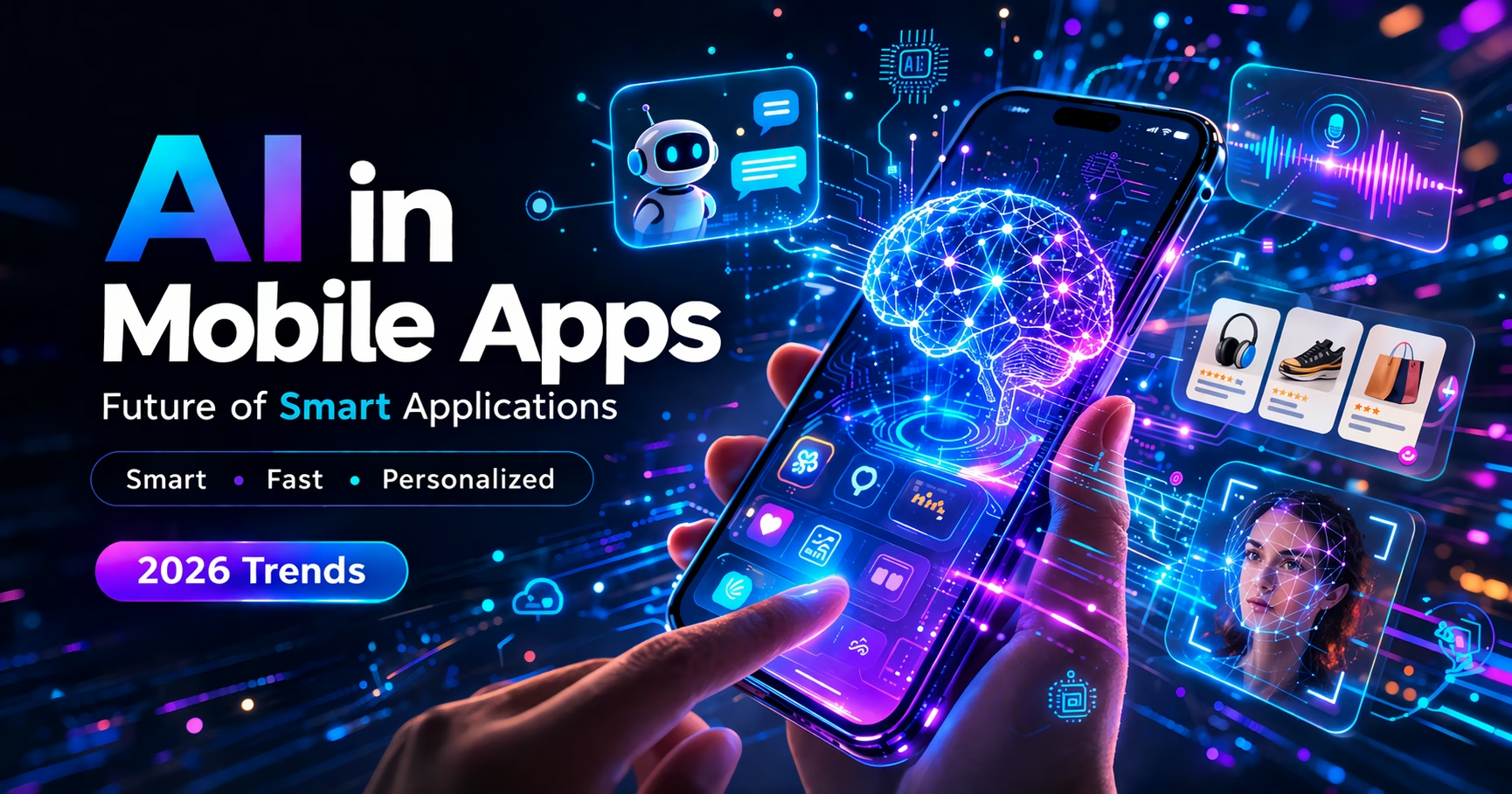
AI in Mobile Apps: The Complete Business Guide

AI is no longer a luxury — it’s a business necessity. Discover how AI-powered mobile apps boost retention, cut costs, and deliver personalization. Real examples, key features, and why you should invest now.
Think about the last time you used your phone. Maybe you asked Siri a question, got a Netflix recommendation that was scarily accurate, or received a smart reply suggestion while typing a message. All of that is AI in mobile apps — and it's reshaping how we live, work, and do business.
In 2026, artificial intelligence is no longer a luxury feature reserved for tech giants. It's a business necessity. Whether you run a startup, an e-commerce store, or a service business, building smart mobile applications with AI capabilities can dramatically improve how you attract and retain customers.
This guide breaks everything down in simple English — no technical jargon, no fluff. Just clear, actionable insights to help you understand what AI in mobile app development really means and why it matters for your business right now.
$407 Billion — AI market size by 2027
75%+ of apps using AI by 2026
3x higher user retention with personalization
40% cost savings through automation
Table of Contents
- What Is AI in Mobile Apps?
- Key Benefits of AI in Mobile Apps
- Top AI Features in Modern Apps
- Real-World Examples of AI Apps
- Future of AI in Mobile Apps
- Challenges of AI in Mobile Apps
- Why Businesses Should Invest in AI Apps
- How LetDigitalFly Can Help
- Conclusion
- FAQ
1. What Is AI in Mobile Apps?
At its core, AI in mobile apps means giving your app the ability to think, learn, and make decisions — just like a human would. Instead of following a rigid set of rules, an AI-powered app understands patterns, adapts to user behavior, and improves over time.
Imagine hiring a personal assistant who never sleeps, learns every customer's preferences by heart, and gets smarter every single day. That's essentially what AI does inside your mobile app.
Common Examples of AI in Apps
- Chatbots— Automated assistants that answer customer questions 24/7, without human involvement. Apps like banking or e-commerce apps use these extensively.
- Voice Assistants— Features like Siri, Google Assistant, and Alexa that understand your spoken words and take action — all powered by AI and machine learning in apps.
- Recommendation Systems— When Netflix suggests your next binge-worthy show or Spotify creates your perfect playlist, that's AI analyzing your past behavior to predict what you'll enjoy next.
- Smart Search— AI understands what you mean, not just what you type, delivering better search results even with typos or vague terms.
- Face/Image Recognition— Apps that unlock with your face, scan documents, or identify products from photos use AI-powered image recognition.
In simple terms: AI transforms a basic app into a smart assistant that understands, learns, and serves your users better with every interaction. That's the true power of smart mobile applications.
2. Key Benefits of AI in Mobile Apps
Why are businesses rushing to integrate AI into their apps? Because the returns are real — from happier users to lower operating costs. Here are the core benefits that make AI mobile app development a game-changer.
Deep Personalization
AI tailors content, offers, and experiences to each individual user — making them feel the app was built just for them.
Powerful Automation
Repetitive tasks like customer support, order tracking, and data entry can be automated — saving time and money.
Better User Experience
Apps that anticipate needs and remove friction feel intuitive and delightful — users stay longer and come back more often.
Data-Driven Decisions
AI turns raw user data into actionable insights — helping you improve your app, marketing, and products with confidence.
24/7 Availability
AI-powered features never sleep. Your customers get instant responses and support at any hour of the day.
Competitive Edge
Businesses with AI apps consistently outperform those without — in engagement, retention, and revenue growth.
3. Top AI Features in Modern Apps
When it comes to AI app features, the options are exciting and growing fast. Here's a look at the most impactful features businesses are building into their artificial intelligence apps today.
AI-Powered Chatbots
Chatbots handle customer queries instantly — without any human agent needed. They can answer FAQs, take orders, process refunds, and even guide users through complex processes. For businesses, this means lower support costs and happier customers around the clock.
Voice Recognition & Natural Language Processing
Voice-enabled features let users interact with apps by speaking naturally. From hands-free navigation to voice-based shopping, this AI feature dramatically improves accessibility and convenience. Machine learning in apps helps the system understand accents, dialects, and context over time.
Image & Object Recognition
Apps can now "see" through the camera. Whether it's scanning a product barcode, identifying a plant species, reading a business card, or verifying a user's face for login — image recognition opens up incredible possibilities for businesses in retail, healthcare, logistics, and more.
Predictive Analytics
What if your app could predict what a customer wants before they even search for it? Predictive analytics uses past behavior data to forecast future actions — helping businesses send the right offer at the right moment, reducing churn, and increasing conversions.
Smart AI Recommendations
Recommendation engines are the silent heroes of apps like Amazon, Netflix, and YouTube. By analyzing what users browse, buy, or watch, the AI continuously refines its suggestions — leading to longer sessions and higher sales for businesses.
Sentiment Analysis
AI can read customer reviews, support tickets, and social media feedback to understand how people feel about your brand. This allows you to respond proactively to negative sentiment and double down on what's working.
4. Real-World Examples of AI Apps
Still wondering if AI in mobile apps actually works in the real world? These globally recognized apps prove it beyond any doubt.
Netflix
Netflix's recommendation engine analyzes your viewing history, time of day, and even how long you pause on a thumbnail to suggest content. More than 80% of what people watch on Netflix comes from AI recommendations — not manual browsing.
Spotify
Spotify uses machine learning in apps to generate personalized playlists like "Discover Weekly" and "Daily Mix." It analyzes your listening habits, mood patterns, and similar user profiles to surface music you'll love — often before you know you love it.
Google Maps
Google Maps uses AI to analyze real-time traffic data from millions of users, predict journey times with high accuracy, suggest the fastest routes, and even alert you to incidents ahead. It processes a staggering amount of data every second to keep you moving.
ChatGPT
Perhaps the most famous AI app of our era, ChatGPT demonstrates what artificial intelligence apps can do at a conversational level — answering questions, writing content, solving problems, and assisting with complex tasks through a simple chat interface.
Amazon
Amazon's app uses AI at every touchpoint — from product recommendations to dynamic pricing, fraud detection, and Alexa voice shopping. It's a masterclass in how AI features can drive revenue and loyalty simultaneously.
5. Future of AI in Mobile Apps
The future of mobile apps is being written right now — and AI is the author. Here are the most important trends shaping the next wave of smart mobile applications.
Trend 01
Hyper-Personalization
Apps will go beyond basic recommendations to create fully individualized experiences — different layouts, content, pricing, and offers for each unique user.
Trend 02
AI + Augmented Reality
The fusion of AI and AR will transform shopping, education, and entertainment. Imagine trying on clothes virtually or learning surgery through an AR simulation guided by AI.
Trend 03
On-Device AI
AI will increasingly run on the device itself — not the cloud — making apps faster, more private, and functional even without internet.
Trend 04
AI-Powered Security
Behavioral biometrics and AI threat detection will replace traditional passwords, providing frictionless yet highly secure authentication for users.
Trend 05
Predictive Health Monitoring
Health apps powered by AI will detect early signs of illness, monitor vitals in real time, and alert both users and doctors before conditions worsen.
Trend 06
Generative AI Features
Apps will generate personalized content, images, and advice on the fly — giving every user a uniquely crafted experience, not a one-size-fits-all product.
6. Challenges of AI in Mobile Apps
While the promise is enormous, it's important to go in with clear eyes. Here are the honest challenges that come with AI mobile app development.
Data Privacy & Security
AI systems need data to learn — and that raises valid concerns about how user data is collected, stored, and protected. Businesses must comply with regulations like GDPR and ensure end-to-end encryption. Partnering with an experienced AI app development company helps navigate these requirements safely.
Development Cost
Building a truly intelligent app requires more investment than a standard app. However, with cloud-based AI tools and ready-made machine learning models, costs have dropped significantly in 2026 — making AI accessible even to growing startups.
Technical Complexity
Integrating AI features properly requires expertise. A poorly implemented AI system can frustrate users instead of helping them. This is why choosing the right AI app development company with a proven track record matters enormously.
7. Why Businesses Should Invest in AI Apps Right Now
If you're a business owner or entrepreneur debating whether to invest in AI mobile app development, consider this: your competitors already are.
- Higher Customer Retention:Personalized AI experiences make users feel understood. That emotional connection translates directly into loyalty and repeat business.
- Lower Operating Costs:Automating support, data processing, and user onboarding reduces the need for large teams — freeing up budget for growth.
- Faster Growth:AI apps scale effortlessly. As your user base grows, the app gets smarter and more efficient — without proportional increases in costs.
- Better Marketing ROI:AI-driven analytics tell you exactly who your best customers are, what they want, and when to reach them — making every marketing dollar go further.
- Future-Proofing Your Business:The businesses that invest in smart mobile applications today will have a compounding advantage over those who wait. The gap between AI-powered and non-AI businesses will only widen.
In short: investing in AI isn't just about keeping up with technology. It's about staying relevant, competitive, and growing in a market that is moving faster than ever before.
Ready to Build Your AI-Powered App?
We at LetDigitalFly specialize in AI-powered mobile app development for businesses, startups, and entrepreneurs worldwide. Whether you have a fully formed idea or just a spark of inspiration, our expert team will help you design, build, and launch a smart mobile application that stands out in 2026's competitive landscape.
From AI chatbots and recommendation engines to voice recognition and predictive analytics — we bring every powerful AI app feature to life with clean, scalable, and user-friendly design.
Get a Free Consultation ↗
No obligation. No technical jargon. Just a clear plan for your app.
8. Conclusion
AI in mobile apps is not a distant future — it is the present, and it is accelerating rapidly. In 2026, the apps that succeed will be the ones that feel personal, responsive, and almost eerily helpful. The ones that frustrate users will be left behind.
From chatbots and voice assistants to predictive analytics and hyper-personalization, the AI app features available today are powerful, accessible, and proven. Real-world giants like Netflix, Spotify, and Google Maps didn't become indispensable by accident — they became indispensable through intelligent, data-driven experiences.
For business owners, startups, and entrepreneurs, the opportunity is wide open. The question is no longer whether to invest in AI mobile app development — it's how quickly you can get started. The future of mobile apps belongs to those who act today.
Frequently Asked Questions
What is AI in mobile apps?
AI in mobile apps refers to the integration of artificial intelligence technologies — such as machine learning, natural language processing, and computer vision — into smartphone applications. This allows apps to learn from user behavior, make smart decisions, automate tasks, and deliver personalized experiences without constant human input.
How much does an AI app cost to build?
The cost of building an AI-powered mobile app varies widely depending on complexity, features, and the development team you choose. A basic AI-enhanced app might start from $10,000–$25,000, while a fully custom AI app with advanced features can range from $50,000 to $200,000 or more. The good news is that with modern cloud-based AI tools, costs in 2026 are more accessible than ever before.
Are AI apps expensive to maintain?
Not necessarily. While there are ongoing costs for cloud services, data processing, and regular updates, AI apps often reduce costs in other areas — particularly in customer support and operations. Over time, a well-built AI app typically delivers a strong return on investment by automating work and improving customer retention.
Which types of businesses need AI apps the most?
Almost any business can benefit from AI, but industries that see the highest returns include e-commerce (personalization and recommendations), healthcare (symptom checkers and health monitoring), finance (fraud detection and smart banking), education (personalized learning), retail (inventory and demand forecasting), and customer service (24/7 AI chatbots). If your business involves customer interaction or data, AI can almost certainly add value.
Is AI the future of mobile app development?
Absolutely. AI is already the present of mobile development — and its role will only deepen. By 2027 and beyond, we expect AI to be a standard component in virtually every consumer app. Businesses that adopt AI early will build stronger user relationships, reduce operational costs, and gain a competitive advantage that compounds over time. In short: AI is not where mobile development is heading — it's where it already is.