AI in Robotics – The Future of Intelligent Machines

ai-in-robotics-future-intelligent-machines
Introduction: Are You Ready for the Robot Revolution?
Imagine walking into a warehouse where robots don’t just follow fixed paths—they learn, adapt, and make decisions on their own. Or stepping into a hospital where a robotic arm performs surgery with precision no human hand can match. This isn’t science fiction. This is AI in robotics in 2026.
But what exactly does that mean? And why should business owners, startups, or tech enthusiasts care?
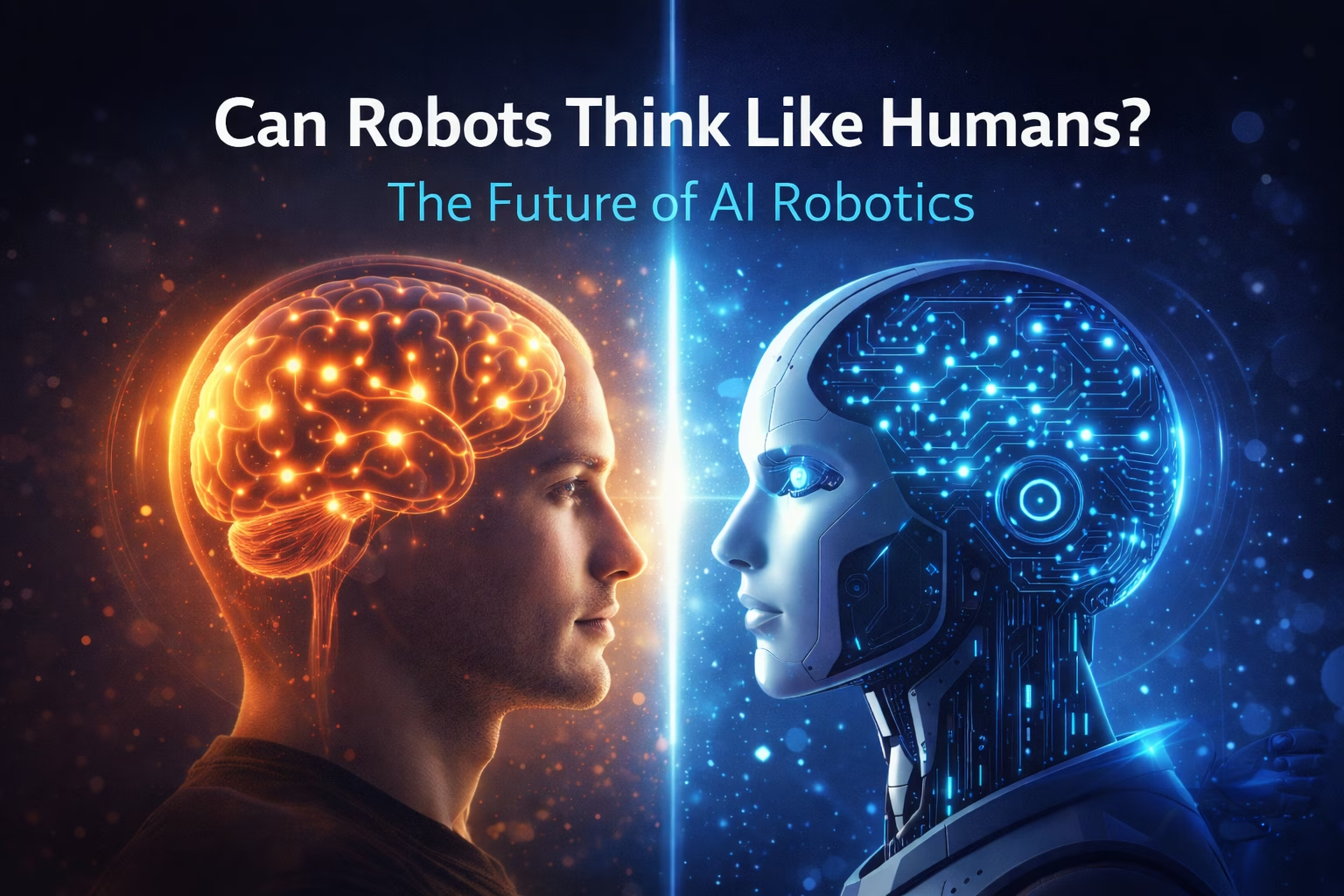
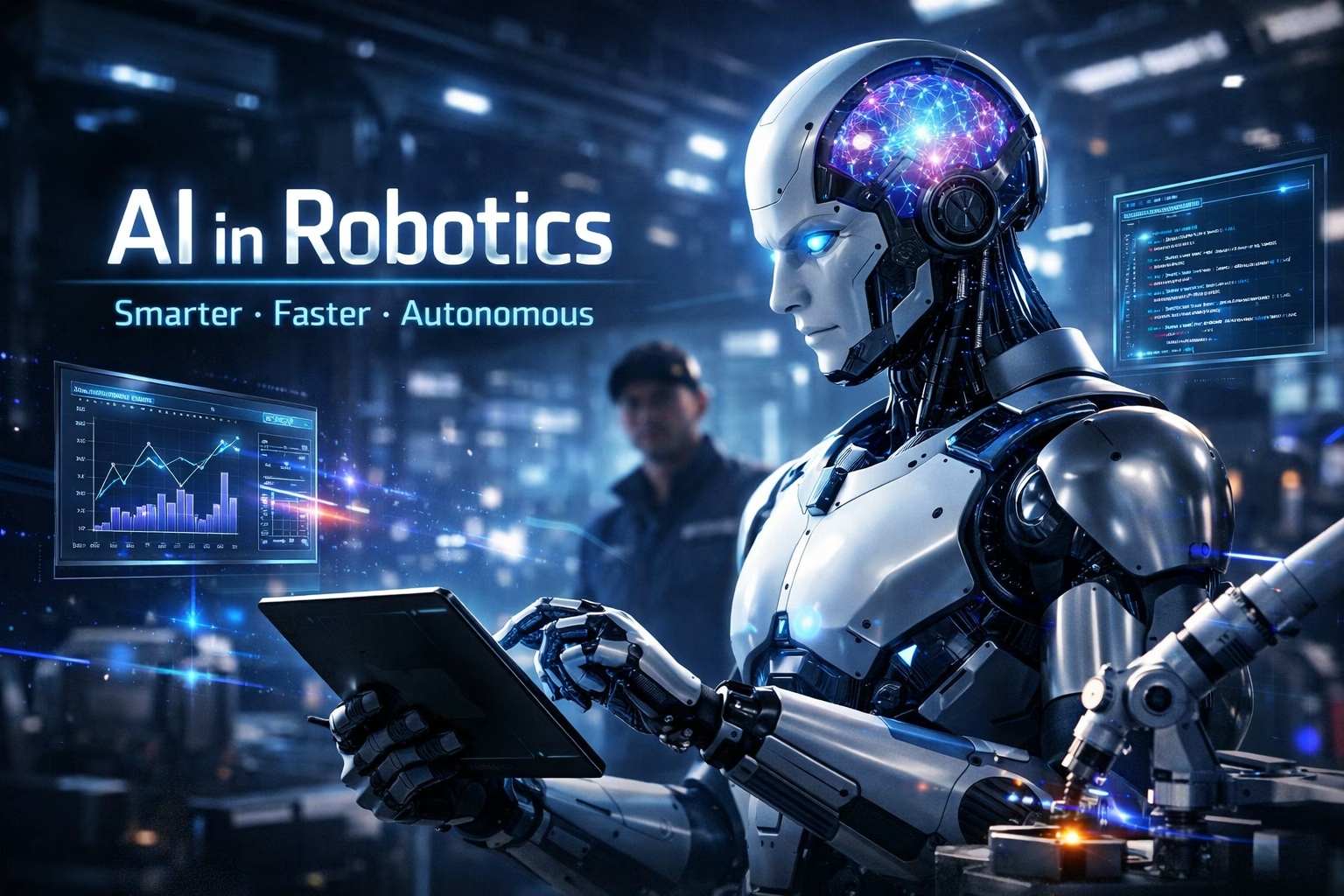
In simple terms, AI in robotics combines artificial intelligence with physical machines. It gives robots the ability to see, hear, understand, and decide. Unlike old factory robots that repeat the same motion endlessly, AI-powered robots learn from experience.
By 2026, this technology has moved from labs into real-world businesses. From small startups to large enterprises, intelligent machines are changing how work gets done. Whether you run a retail shop, a farm, or a logistics company, understanding robotics technology today could decide your success tomorrow.
Let’s dive in.
What is AI in Robotics? (A Simple Explanation)
To understand AI in robotics, let’s break it down.
-
Robotics is the field of designing and building physical machines that can move and perform tasks.
-
Artificial Intelligence (AI) is software that learns, reasons, and makes decisions.
When you combine them, you get AI-powered robots—machines that don’t just follow commands but think for themselves.
Traditional Robots vs. AI-Powered Robots
| Traditional Robots | AI-Powered Robots |
|---|---|
| Follow fixed instructions | Learn from data |
| Cannot adapt to change | Adjust to new situations |
| Require human programming | Improve themselves over time |
| Work in controlled environments | Operate in dynamic, real-world settings |
Example: A traditional robot on a car assembly line welds the same spot every time. If a part moves slightly, it fails. But an AI-powered robot uses cameras and machine learning to find the exact spot, even if things shift.
That’s the power of machine learning in robotics.
How AI is Making Robots Smarter
So, how do these intelligent machines actually work? Let’s keep it simple.
1. Learning from Data
Just like you learn from experience, AI robots learn from data. Every task they perform creates information. Over time, they get better, faster, and more accurate.
2. Decision-Making Abilities
AI gives robots a “brain.” They can analyze multiple options and choose the best action. For example, a delivery robot can decide to take a different path if the main road is blocked.
3. Automation & Adaptability
Robotics automation used to mean rigid, repetitive tasks. Now, AI allows robots to adapt. A packaging robot can handle boxes of different sizes without reprogramming.
4. Self-Improving Systems
The most exciting part? AI robots can improve themselves. They identify their own mistakes and adjust. This is called continuous learning, and it’s changing the future of robotics forever.
“In 2026, AI isn’t just an add-on to robots. It’s the engine that drives them.”
Key Benefits of AI in Robotics for Businesses
Why should you, as a business owner or entrepreneur, invest in AI in robotics? Here are the top benefits.
✅ Increased Efficiency
AI robots work faster than humans and never get tired. They optimize their own movements to save time.
✅ Cost Reduction
Yes, the upfront cost can be high. But over time, AI robots reduce labor costs, errors, and waste. Many businesses see full ROI within 12–18 months.
✅ Accuracy & Precision
Human errors cost money. AI-powered robots deliver near-perfect accuracy, whether in surgery, assembly, or data entry.
✅ 24/7 Operations
Robots don’t sleep, take breaks, or go on vacation. Your business can run around the clock.
✅ Improved Safety
Dangerous jobs—like handling toxic chemicals or working in extreme heat—can be done by robots. This keeps your human team safe.
Real-World Applications of AI in Robotics
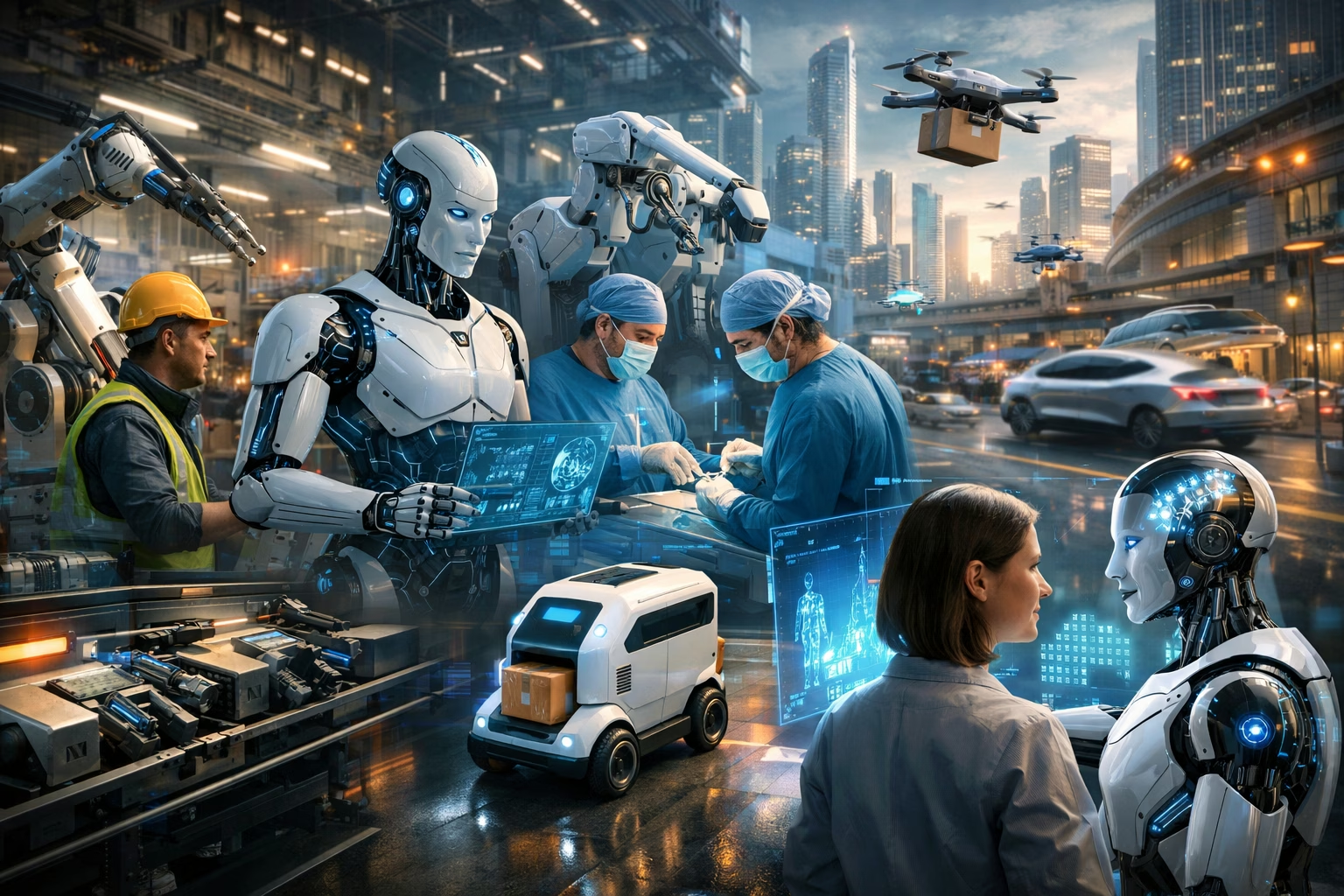
Let’s look at how different industries are using AI in robotics right now.
🏥 Healthcare
-
Robotic surgery: AI-assisted robots perform delicate operations with tiny incisions.
-
Robot assistants: They help nurses lift patients, deliver medicines, and even talk to elderly patients.
🏭 Manufacturing
-
Quality control: AI robots use computer vision to spot defects instantly.
-
Assembly lines: Robots adapt to different products without stopping production.
🌾 Agriculture
-
Smart farming: AI robots identify weeds, spray only where needed, and harvest crops at perfect ripeness.
-
Drones: Flying robots monitor soil health and livestock.
📦 Logistics & Warehousing
-
Autonomous mobile robots (AMRs): These bots carry goods across massive warehouses.
-
Delivery robots: Sidewalk robots now deliver food, packages, and groceries in dozens of cities.
🛒 Customer Service
-
Retail robots: They greet customers, check inventory, and answer questions.
-
Hotel robots: AI-powered concierges deliver items to guest rooms.
As you can see, AI-powered robots are no longer experimental. They are practical, profitable, and here to stay.
Top Features of AI-Powered Robots
If you’re considering robotics solutions for your business, look for these key features.
-
Computer vision: Robots see and identify objects, people, and environments.
-
Voice recognition: Natural language processing allows voice commands and conversations.
-
Predictive analytics: AI predicts machine failures or supply shortages before they happen.
-
Autonomous decision-making: No human needed for routine choices.
-
Human interaction: Advanced robots understand gestures, emotions, and social cues.
These features turn a simple machine into an intelligent machine that works alongside people, not just for them.
The Future of AI in Robotics (2026 & Beyond)
What does the next five years look like? Here are the top trends shaping the future of robotics.
🧍 Humanoid Robots
General-purpose robots that look and move like humans. Companies like Tesla and Boston Dynamics are leading this charge. By 2026, early humanoids will work in warehouses and factories.
🌐 AI + IoT Integration
When AI robots connect to the Internet of Things (IoT), they share data with other machines, sensors, and systems. This creates truly smart factories and cities.
🏙️ Smart Cities & Automation
Imagine traffic managed by AI robots, waste collection done autonomously, and streetlights repaired by drones. That future is closer than you think.
🏠 Robotics in Everyday Life
Home robots will cook, clean, and care for elderly family members. Not just vacuum cleaners—real multipurpose assistants.
🧠 Hyper-Intelligent Machines
With advances in machine learning, future robots will solve problems we haven’t even identified yet. They will become creative partners, not just tools.
The future of robotics is not about replacing humans. It’s about amplifying what humans can achieve.
Challenges of AI in Robotics (Honest Talk)
It’s not all smooth sailing. If you’re planning to invest, understand these challenges first.
💰 High Development Cost
Building or buying AI robots is expensive. Custom solutions require a skilled robotics development company.
🔒 Data Privacy & Security
AI robots collect massive amounts of data. If not secured properly, that data can be hacked.
⚙️ Technical Complexity
You need experts to install, maintain, and update AI systems. Not every business has that in-house.
⚖️ Ethical Concerns
Who is responsible if an AI robot makes a mistake? What happens to human jobs? These questions are still being debated.
Despite these challenges, the benefits far outweigh the risks for most forward-thinking businesses.
Why Businesses Should Invest in Robotics Solutions
Still on the fence? Here’s why smart business owners are moving now.
🚀 Competitive Advantage
Early adopters of AI in robotics outperform competitors who wait. You’ll deliver faster, cheaper, and better.
💸 Automation = More Profit
Every task you automate reduces operational costs. Those savings go straight to your bottom line.
📈 Scalability
Human workers are hard to scale quickly. Robots? Just buy more or upgrade software. You can grow without limits.
😊 Better Customer Experience
Faster delivery, fewer errors, 24/7 service—your customers will notice and reward you with loyalty.
If you’re a startup or an established business, robotics automation is no longer a luxury. It’s a necessity.
Conclusion: The Age of Intelligent Machines Has Arrived
We are living through one of the most exciting technological shifts in history. AI in robotics is no longer a distant promise—it is a practical, powerful tool that businesses are using right now to reduce costs, improve quality, and unlock new opportunities.
From healthcare to farming, logistics to customer service, intelligent machines are working alongside people, making our lives easier and businesses more profitable.
The question is no longer if you should adopt robotics technology. The question is how soon.
Those who act today will lead their industries tomorrow. The future belongs to the curious, the bold, and the forward-thinking.
Are you ready?
❓ FAQ: AI in Robotics (2026)
1. What is AI in robotics in simple words?
AI in robotics means adding a “smart brain” to a physical robot. The robot can learn, make decisions, and adapt to new situations—not just repeat fixed movements.
2. How do AI robots work?
They use sensors (cameras, microphones) to collect data. Then AI software analyzes that data and decides what to do. Over time, they learn from their actions and improve.
3. Are AI robots expensive?
Upfront costs can be high, especially for custom solutions. However, most businesses recover their investment within 12–24 months through labor savings, fewer errors, and 24/7 operation.
4. Which industries use robotics the most?
Top industries include manufacturing, healthcare, logistics, agriculture, retail, and hospitality. But almost any business can benefit from robotics automation.
5. Is robotics the future of business?
Absolutely. As labor costs rise and customer expectations increase, robotics automation gives businesses speed, accuracy, and scalability that humans alone cannot match.
6. Can small businesses afford AI robots?
Yes. Many robotics companies now offer affordable, plug-and-play robots designed for small warehouses, shops, and offices. Leasing options are also available.
7. Will AI robots replace human jobs?
They will replace some repetitive tasks, but they also create new jobs in robot maintenance, AI training, and supervision. Most experts believe humans and robots will work together.