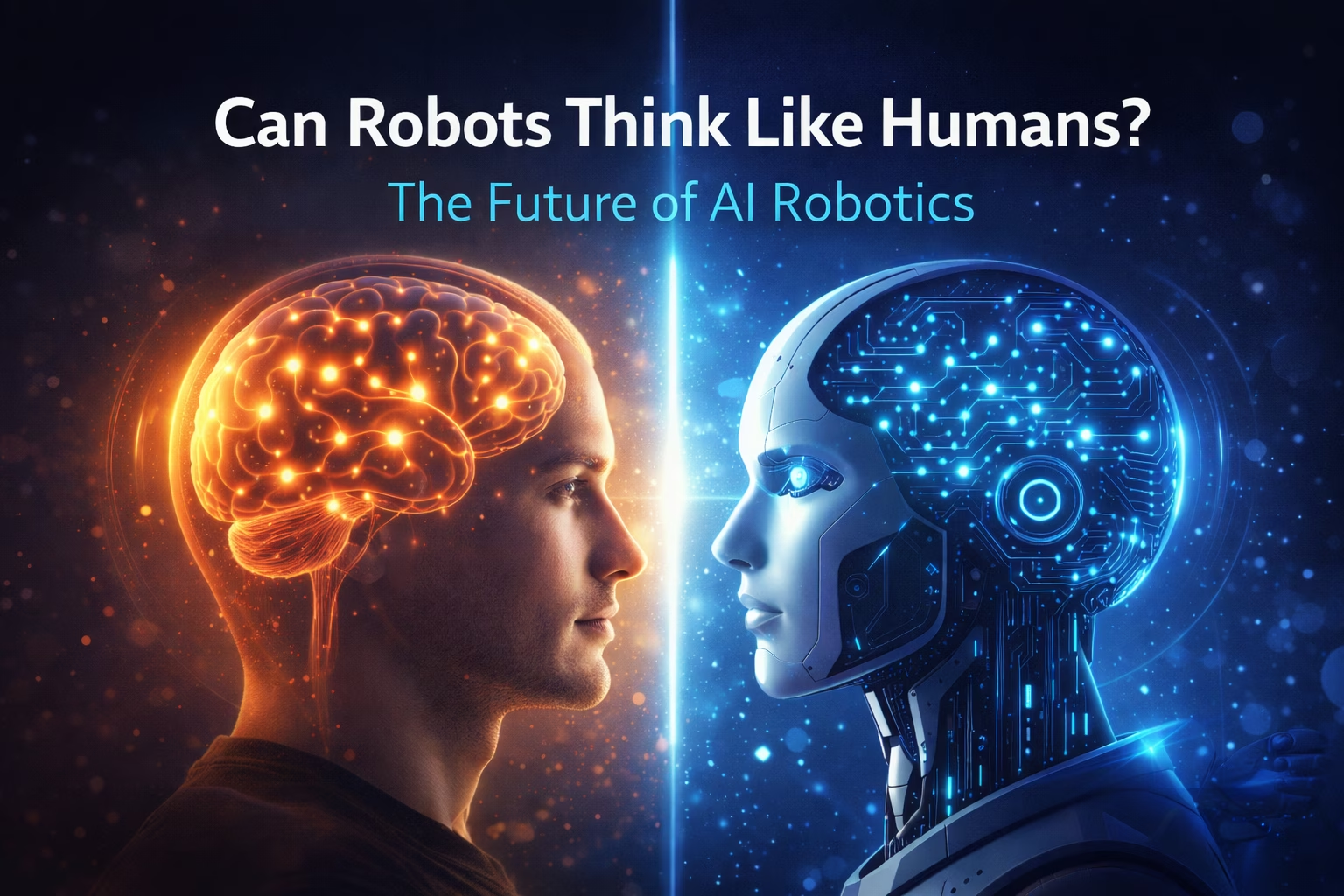
Can Robots Think Like Humans? The Future of AI Robotics

Can robots really think like humans? Explore the fascinating world of AI robotics — from machine learning and humanoid robots to emotional AI and the future of human-robot collaboration. A beginner-friendly guide for students and tech enthusiasts.
Introduction: What If Robots Could Think Like Us?
Imagine waking up one morning and asking your robot assistant, "Hey, how are you feeling today?" — and it actually replies, "A little tired, but ready to help!"
Sounds like a movie, right? But this question — can robots think like humans — is no longer just science fiction. In 2026, it is one of the most exciting debates in the world of technology.
Artificial intelligence and robotics are growing faster than ever before. From self-driving cars to smart speakers, artificial intelligence robots are already part of our daily lives. But can they truly think the way we do — with emotions, creativity, and wisdom?
In this article, we'll explore what it really means to "think like a human," how AI robotics works, and what the future of AI robotics might look like. Whether you're a curious student, a tech enthusiast, or a parent trying to understand the world your child is growing up in — this article is for you!
What Does "Thinking Like a Human" Actually Mean?
Before we compare robots vs humans thinking, we need to understand what human thinking really involves.
Human thinking is not just about solving math problems or remembering facts. It's so much more than that. Here's what makes human intelligence special:
Emotions: Humans feel happiness, sadness, fear, love, and anger. These emotions guide our decisions every single day.
Decision Making: We don't just follow rules. We weigh options, consider consequences, and sometimes go with our gut feeling.
Creativity: Humans can write poems, paint pictures, invent new things, and imagine worlds that don't even exist yet.
Learning from Experience: If you touch a hot stove once, you never touch it again. Humans learn from mistakes and grow over time.
Consciousness: We are aware that we exist. We can ask "Why am I here?" — a question no computer has ever truly answered on its own.
This combination of emotions, creativity, consciousness, and experience-based learning is what makes human intelligence incredibly complex. And it's exactly what makes the question of AI vs human intelligence so fascinating.
What Is AI Robotics?
Now let's break down what AI robotics actually means — in simple terms.
Robotics is the branch of technology that deals with building and programming robots — machines that can perform tasks automatically.
Artificial Intelligence (AI) is the technology that allows machines to learn, reason, and make decisions — kind of like a brain for machines.
When you combine both, you get AI robotics — robots that don't just follow fixed instructions but can actually learn and adapt on their own.
Two key technologies power this:
Machine Learning in Robotics: This is when a robot learns from data. For example, a robot might watch thousands of videos of people walking and then learn how to walk itself — without being told every single step.
Deep Learning Robots: This is a more advanced form of machine learning. Deep learning uses layers of algorithms (like a human brain's neurons) to recognize patterns. This is how robots can recognize your face, understand speech, or even detect diseases in X-rays.
Real-World Examples:
- Self-driving cars like Tesla use AI to read road signs, detect pedestrians, and make driving decisions in milliseconds.
- Smart assistants like Siri and Alexa use deep learning to understand your voice and answer your questions.
- Robotic surgeons like the Da Vinci system help doctors perform incredibly precise operations.
These are all examples of machine learning in robotics and deep learning robots working together in the real world.
Can Robots Really Think Like Humans? (The Big Question)
Here's the honest truth: robots can think in some ways — but not in all the ways humans do.
Let's break it down with a simple comparison.
Robots Are Amazing At...
- Processing millions of pieces of data in seconds
- Remembering everything perfectly without forgetting
- Performing the same task over and over without getting tired
- Solving complex calculations instantly
But Robots Cannot...
- Feel emotions like joy, sadness, or love
- Have true self-awareness or consciousness
- Be genuinely creative (they remix existing ideas, not invent truly new ones)
- Understand the meaning behind words — only patterns
Think of it this way: a calculator is brilliant at math, but it has no idea why you're solving that equation. A robot might know you're crying because your face muscles are in a certain position — but it doesn't feel your sadness.
This is the core difference in AI vs human intelligence. Robots process. Humans experience.
Comparison Table: Robots vs Humans
| Feature | Humans | Robots / AI |
|---|---|---|
| Emotions | Yes, deeply felt | No (can simulate, not feel) |
| Creativity | High — original thinking | Limited — pattern-based |
| Memory | Forgets over time | Never forgets |
| Speed of Processing | Slow compared to AI | Extremely fast |
| Consciousness | Yes | No |
| Learning | From experience & emotions | From data & algorithms |
| Fatigue | Gets tired | Never gets tired |
| Moral Judgment | Yes | No (follows rules only) |
| Physical Adaptability | High | Improving, but still limited |
| Empathy | Yes | No (can mimic, not feel) |
Types of Robots That Act Like Humans
As robotics technology in 2026 advances, several types of robots are being designed to act more and more like us.
Humanoid Robots: These are robots built to look and move like humans. A famous example is Sophia, a robot made by Hanson Robotics that can hold conversations and make facial expressions. Another example is Atlas by Boston Dynamics, which can run, jump, and even do backflips. These humanoid robots represent the most visual side of the future of AI.
AI Chatbots: These are not physical robots, but they are among the most widely used AI systems. Chatbots like ChatGPT or Google's Gemini can hold conversations, write essays, solve problems, and even tell jokes. They're already helping students, businesses, and creators every day.
Social Robots: These robots are designed specifically to interact with humans in emotional or social ways. Pepper, made by SoftBank Robotics, is used in hospitals and stores to greet people and provide assistance. These emotional AI robots are being developed to detect human moods and respond with appropriate reactions.
Each of these robot types shows a different side of how AI and robotics are combining to create machines that feel more human — even if they truly aren't.
Advantages of AI Robots
There are many powerful benefits of AI robots that are already changing our world for the better.
Speed and Accuracy: AI robots can perform tasks much faster than humans and with near-perfect accuracy. In manufacturing, robots can assemble products at incredible speed without making errors.
No Fatigue: Unlike humans, robots never get tired. They can work 24 hours a day, 7 days a week — which is especially useful in industries like healthcare or logistics.
Dangerous Task Handling: Robots can be sent into dangerous environments — like burning buildings, nuclear plants, or deep-sea locations — where it would be too risky for humans.
Healthcare Revolution: AI robots are helping doctors diagnose diseases faster, assist in surgeries, and even deliver medicine in hospitals. In 2026, AI-powered diagnostic tools are saving thousands of lives every year.
Education Support: AI tutors and educational robots are helping students learn at their own pace, providing personalized lessons based on each student's needs.
Environmental Benefits: Smart AI systems are being used to monitor pollution, manage energy use in smart buildings, and even help fight climate change.
Disadvantages and Risks of Robotics
Of course, with great power comes great responsibility. The disadvantages of robotics and AI are just as important to understand.
Job Loss: One of the biggest fears is that robots will replace human workers. In factories, warehouses, and even customer service, automation is already reducing the need for human labor.
Lack of Emotions and Empathy: In fields like mental health, teaching, or caregiving — human connection is essential. Robots cannot truly empathize, and that's a serious limitation.
Ethical Concerns: Who is responsible if a self-driving car causes an accident? Who controls the decisions an AI robot makes in a hospital? These are difficult ethical questions that society is still working through.
AI Safety Risks: As AI becomes more powerful, the risk of it being misused — for surveillance, manipulation, or even warfare — becomes more real. Ensuring AI safety is one of the biggest challenges of our time.
Dependency: Over-relying on robots could make humans less skilled in certain areas. If AI does everything for us, what happens when the system fails?
The Future of AI Robotics (2030 and Beyond)
The future of AI robotics is both thrilling and a little bit scary. Here's what experts and researchers are predicting.
Smarter Robots: By 2030, AI robots will be significantly more intelligent. They will be able to understand context better, learn faster, and make more nuanced decisions.
Emotional AI: Scientists are working on emotional AI robots that can detect human emotions through facial expressions, voice tone, and body language — and respond in emotionally appropriate ways. This could transform mental health care, education, and elderly care.
Human-Robot Collaboration: The future is not robots replacing humans — it's robots working alongside humans. Imagine a surgeon guided by a robotic assistant, or a teacher supported by an AI that adapts lessons in real time.
Smart Homes and Smart Cities: By 2030, homes will have AI-powered systems managing energy, security, and comfort automatically. Entire cities will use robotics and AI to manage traffic, reduce waste, and improve quality of life.
Space Exploration: AI robots will play a huge role in exploring Mars and other planets — doing the dangerous work that humans cannot yet safely do in space.
The trajectory of robotics technology in 2026 already points strongly toward all of these possibilities becoming reality within the next decade.
Will Robots Replace Humans?
This is the question everyone wants answered. And the honest answer is: yes and no.
Jobs Most Likely to Change:
- Factory workers and assembly line jobs
- Data entry and administrative tasks
- Driving and delivery services
- Basic customer service roles
- Routine analysis and reporting
Jobs That Are Safer:
- Teachers, counselors, and social workers (require human empathy)
- Artists, writers, and musicians (require human creativity)
- Doctors making complex ethical decisions
- Community and spiritual leaders
- Innovators, entrepreneurs, and inventors
The key insight here is that robots are very good at repetitive, rule-based tasks. Humans excel at creativity, empathy, leadership, and complex judgment. The future workforce will likely require people who can work with AI — not compete against it.
The real threat is not robots themselves. It's being unprepared for a world where AI is everywhere.
Conclusion: The Future Is Human + Machine
So, can robots think like humans? The answer is: not yet — and maybe never in the fullest sense. Robots can process information faster, remember more, and work without rest. But they cannot feel love, experience wonder, or truly understand what it means to be alive.
What's exciting about 2026 and beyond is that we are moving toward a world where humans and robots work together — each bringing their unique strengths to the table. Robots handle the heavy lifting; humans provide the heart and soul.
If you're a student reading this, here's the most important thing to take away: learn about AI and robotics now. Not to compete with machines — but to learn how to direct them, create with them, and ensure they serve humanity in the best possible way.
The future is not written yet. And the people who will write it are the curious minds asking questions like the one that brought you here today.
Frequently Asked Questions (FAQ)
1. Can robots develop emotions? Not in the way humans experience them. Robots can be programmed to simulate emotions — smiling, expressing concern, or using empathetic language. However, these are responses based on data patterns, not genuine feelings. True emotional experience involves consciousness, which robots currently do not have.
2. Will robots replace human jobs? Robots will change many jobs, especially those involving repetitive or physical tasks. However, roles requiring creativity, empathy, leadership, and complex judgment are expected to remain human-dominated. The smartest approach is to learn skills that complement AI rather than compete with it.
3. What is the future of AI robotics? The future of AI robotics includes smarter machines, emotional AI, human-robot collaboration, smart cities, and advanced healthcare robots. By 2030, AI robots are expected to be deeply integrated into daily life — from homes and hospitals to schools and space exploration.
4. Are robots smarter than humans? In certain areas, yes — robots can process data far faster, remember perfectly, and perform calculations instantly. But in overall intelligence — which includes consciousness, creativity, moral judgment, and emotional depth — humans are far more sophisticated. It's less about "smarter" and more about "different strengths."
5. Is AI dangerous? AI itself is a tool — it's how it's designed and used that determines whether it's dangerous. Key risks include misuse in surveillance or warfare, job displacement, ethical dilemmas in decision-making, and over-dependence. Responsible development, ethical guidelines, and global cooperation are essential to keeping AI safe and beneficial for everyone.