Top 3 Free DA and DR Checker and What is TF CF, How We Can Make a Strong Website

Want to measure your website’s true SEO strength? Learn what DA, DR, TF, and CF mean, discover the top 3 free DA and DR checker tools, and get a step‑by‑step guide to building a strong, high‑ranking website.
Introduction
In the world of search engine optimization, understanding your website’s strength is not just an option—it is a necessity. Whether you own a small blog, an e-commerce store, or a corporate website, you need to know how search engines like Google view your site. This is where SEO metrics such as Domain Authority (DA), Domain Rating (DR), Trust Flow (TF), and Citation Flow (CF) come into play. These numbers give you a clear picture of your website’s credibility, backlink quality, and overall ranking potential.
Many website owners struggle to improve their search rankings because they do not track the right metrics. You can write great content, but without strong authority signals, your pages may never reach the top of Google. That is why learning about DA, DR, TF, and CF is so important. In this article, we will explain each concept in simple terms, share the top three free tools to check DA and DR, and show you exactly how to build a strong website that stands out from the competition.
By the end of this guide, you will have a clear roadmap to measure and improve your website’s SEO health. Let us dive in.
What is Domain Authority (DA)?
Domain Authority is a score developed by Moz, a well-known SEO software company. It predicts how likely a website is to rank on search engine result pages. The score ranges from 1 to 100, with higher scores indicating a greater ability to rank.
How DA is Calculated
Moz calculates DA using multiple factors, including:
-
The total number of unique domains linking to your site
-
The quality and relevance of those backlinks
-
The authority of the linking domains themselves
-
Moz’s own link graph data
DA is not a direct Google ranking factor, but it strongly correlates with Google rankings. Websites like Wikipedia, Apple, and Amazon have DA scores close to 100. A new blog might start with a DA of 1 to 10.
Why DA Matters for Your Website
Domain Authority helps you compare your site against competitors. If your competitor has a DA of 40 and you have 20, you know you need to build more high-quality backlinks. DA also helps you set realistic SEO goals. Instead of guessing, you can track your progress month by month.
Keep in mind that DA is a relative metric. It changes as Moz updates its index and as other websites gain or lose authority. So do not obsess over small fluctuations. Focus on steady improvement.
What is Domain Rating (DR)?
Domain Rating is a metric created by Ahrefs, another leading SEO tool. Like DA, DR measures the strength of a website’s backlink profile on a scale from 0 to 100. However, there are differences in how each metric is calculated.
How DR is Calculated
Ahrefs calculates DR based on:
-
The number of unique domains linking to your website
-
The DR of those linking domains (a recursive calculation)
-
The number of domains linking to each of those sites
Unlike DA, DR does not consider spam scores or link quality beyond the authority of linking domains. It focuses purely on the quantity and authority of unique referring domains.
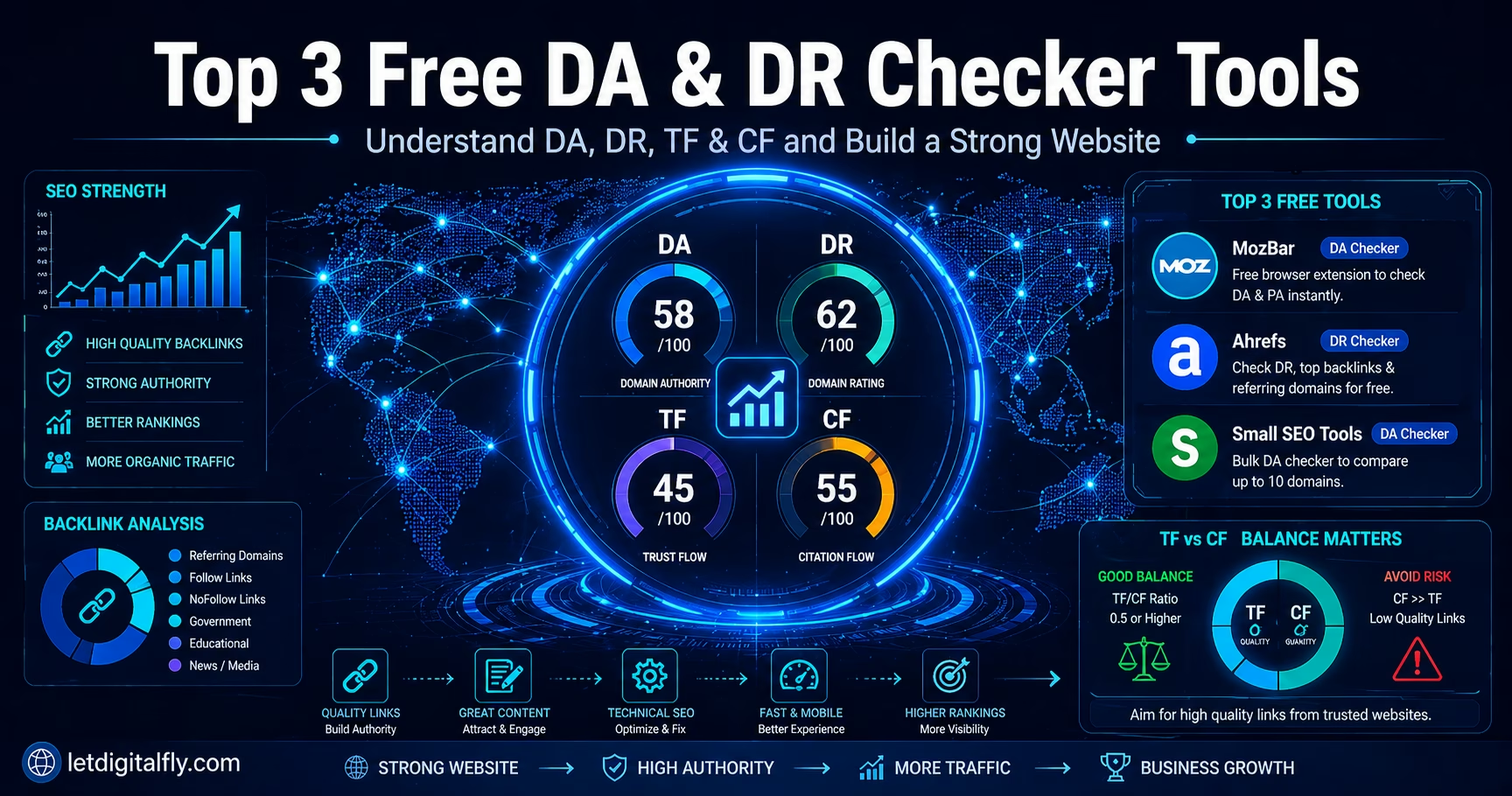
Top 3 Free DA and DR Checker Tools
You do not need to pay for expensive software just to check your DA and DR. Several tools offer free versions or limited free checks. Below are the top three reliable free checkers.
1. MozBar (Free DA Checker)
MozBar is a free browser extension for Chrome and Firefox. Once installed, you can see the DA and PA (Page Authority) of any website or webpage instantly.
Features:
-
Shows DA directly in your browser search results
-
Allows on-page analysis of link metrics
-
Highlights follow vs. nofollow links
Pros:
-
Completely free with no daily limits for basic DA viewing
-
Easy to use while browsing
-
Provides instant comparison of multiple sites
Best use case: Quickly check DA of competitors while doing manual research. Ideal for bloggers and small business owners who want a no-cost solution.
Limitations: The free version does not give you a full backlink report. For detailed link analysis, you need Moz Pro.
2. Ahrefs Free Backlink Checker
Ahrefs offers a free backlink checker that displays DR along with other useful data. You do not need an account to use it.
Features:
-
Shows Domain Rating (DR) and URL Rating (UR)
-
Lists the top 100 backlinks to any domain
-
Displays anchor text distribution
-
Shows referring domains
Pros:
-
No registration required
-
Provides actual backlink data, not just a score
-
Great for quick competitive research
Best use case: When you want to see not only the DR score but also which sites are linking to your competitors. Perfect for planning your own link building strategy.
Limitations: You only see the top 100 backlinks. For full data, you need a paid Ahrefs account.
3. Small SEO Tools Domain Authority Checker (Free)
While not directly from Moz, this free tool pulls DA data from Moz’s API. It allows you to check up to 10 domains at once.
Features:
-
Bulk DA check (up to 10 domains)
-
Shows PA (Page Authority) as well
-
Simple, no-signup interface
Pros:
-
Very user-friendly
-
No extension installation needed
-
Useful for comparing multiple competitors side by side
Best use case: When you need to compare DA across several websites quickly. Great for SEO audits.
Limitations: The data comes from Moz but may not be as up-to-date as MozBar. Also, it does not show DR (Ahrefs metric).
Honorable Mention: Majestic’s Free Plan
Majestic offers a free account with limited daily credits. You can use it to check Trust Flow and Citation Flow (which we explain next). While Majestic does not call its metric DA or DR, their “Trust Flow” is one of the most respected quality metrics in the industry.
What is Trust Flow (TF) and Citation Flow (CF)?
Trust Flow and Citation Flow are metrics from Majestic, a dedicated backlink analysis tool. Together, they give you a deep understanding of link quality versus link quantity.
Trust Flow (TF)
Trust Flow measures the quality of backlinks pointing to your website. Majestic uses a seed set of trusted websites (like government, educational, and major news sites). Then it analyzes how many “hops” away your site is from these trusted seeds. The closer you are, the higher your Trust Flow. The score ranges from 0 to 100.
A high Trust Flow means your site receives links from authoritative, reputable sources. For example, a backlink from a .edu domain or a well-known news site boosts your Trust Flow significantly.
Citation Flow (CF)
Citation Flow measures the quantity of backlinks, regardless of quality. It looks at how many links point to your site and how many referring domains you have. Like TF, it ranges from 0 to 100.
A site can have high Citation Flow but low Trust Flow if it has many links from low-quality or spammy websites. Think of CF as “volume” and TF as “quality.”
The Relationship Between TF and CF
The most powerful insight comes from comparing the two scores.
-
TF and CF are balanced (close to each other): This usually indicates a natural, healthy backlink profile. Your links are both numerous and trustworthy.
-
CF is much higher than TF: This is a red flag. It suggests you have many low-quality or spammy links. Google may penalize such sites.
-
TF is higher than CF: This is less common but positive. It means even though you have fewer links, the ones you have are very high quality.
For a strong website, you want both TF and CF to be high, but ideally with TF not too far behind CF. A good rule of thumb is a TF/CF ratio of 0.5 or higher. So if your CF is 40, aim for TF of at least 20.
Why TF, CF, DA, and DR Are Important for SEO
You might wonder: why should I care about these numbers? Google itself does not use DA or DR. But these metrics are powerful proxies for how Google likely views your site.
Backlink Quality Over Quantity
Google’s original PageRank algorithm was built on the idea that links are votes. But not all votes are equal. A link from a trusted, relevant website counts much more than a hundred links from random blog comments. DA, DR, and especially Trust Flow help you measure that trust.
Ranking Signals
Multiple studies have shown a strong correlation between high DA/DR and top Google rankings. Websites on page one of Google typically have higher authority scores than those on page three. While correlation is not causation, improving your authority metrics often leads to better rankings.
Website Credibility and Traffic
When your website has strong SEO metrics, other webmasters are more willing to link to you. You also get more organic traffic because search engines trust your content. Over time, this creates a positive cycle: more authority leads to more links, which leads to even more authority.
Avoiding Penalties
If you notice your CF is much higher than TF, you can take action to disavow bad links. Ignoring these warning signs could result in a manual penalty from Google. Monitoring TF and CF monthly helps you stay safe.
How to Build a Strong Website
Now we get to the core of this article. Knowing the metrics is one thing, but actually building a strong website requires consistent effort. Follow these proven strategies.
1. Publish High-Quality, Original Content
Content is the foundation of any strong website. Google wants to rank pages that genuinely help users. That means:
-
Write in-depth articles that answer real questions
-
Use clear headings, short paragraphs, and bullet points
-
Include original data, images, or examples
-
Update old content regularly
When you create valuable content, other websites naturally want to link to it. This is the most sustainable way to improve DA, DR, and TF.
2. Build Strong Backlinks Strategically
Backlinks are the most important factor for authority metrics. But not all backlinks help. Focus on:
-
Guest posting on reputable blogs in your niche
-
Broken link building: Find broken links on other sites and suggest your content as a replacement
-
Resource page links: Many websites have pages listing useful tools or articles. Reach out and ask to be included.
-
Skyscraper technique: Find popular content in your niche, create something even better, then email everyone who linked to the original.
Avoid buying backlinks from Fiverr or cheap services. Those links are usually low quality and will hurt your TF/CF ratio.
3. Fix Technical SEO Issues
Even great content and backlinks won’t help if search engines cannot crawl your site properly. Technical SEO includes:
-
XML sitemap submitted to Google Search Console
-
Robots.txt properly configured
-
No duplicate content issues
-
Clean URL structure with relevant keywords
-
Proper use of canonical tags
A technically sound website gets indexed faster and retains link juice better.
4. Optimize for Fast Loading Speed
Page speed is a confirmed Google ranking factor for both desktop and mobile. Slow websites lose visitors and authority. Improve speed by:
-
Compressing images (use WebP format)
-
Enabling browser caching
-
Using a content delivery network (CDN)
-
Minimizing CSS and JavaScript files
-
Choosing a fast web host
Tools like Google PageSpeed Insights or GTmetrix can show you exactly what to fix.
5. Ensure Mobile-Friendliness
Over 60% of Google searches now happen on mobile devices. Google uses mobile-first indexing, meaning it primarily looks at the mobile version of your site for ranking. Make sure:
-
Your theme or design is responsive
-
Buttons and links are easy to tap
-
Text is readable without zooming
-
No intrusive pop-ups that block content
You can test your site with Google’s Mobile-Friendly Test tool.
6. Improve User Experience (UX)
Search engines track how users interact with your site. If people click on your result but quickly bounce back to Google, it signals that your page is not satisfying. Improve UX by:
-
Making navigation simple and intuitive
-
Reducing clutter and ads
-
Using internal links to guide readers to related content
-
Adding a search bar for large sites
7. Build Internal Links Strategically
Internal linking spreads authority from your strong pages to weaker ones. After writing a new article, link back to your most important pages (like cornerstone content). Use descriptive anchor text. A good internal linking structure also helps Google understand your site’s hierarchy.
Common Mistakes to Avoid
Even experienced website owners make mistakes that hurt their SEO metrics. Avoid these pitfalls.
Buying Low-Quality Backlinks
It is tempting to pay for hundreds of backlinks overnight. But search engines are smart. They detect unnatural link patterns. Buying links from link farms or private blog networks (PBNs) will tank your Trust Flow and can get your site deindexed.
Ignoring Content Quality
Some people focus only on link building while publishing thin, low-value content. That does not work anymore. Without quality content, your backlinks will not stick, and users will not engage.
Over-Optimizing Anchor Text
If every backlink to your site uses the exact same keyword phrase, it looks manipulative. Keep anchor text natural. Use branded, generic, and long-tail variation.
Neglecting Link Audits
As your site grows, you will accumulate bad links from spam sites. Run regular link audits using tools like Google Search Console or Majestic. Disavow toxic domains to protect your TF.
Advanced Tips to Improve Website Authority
Once you have the basics covered, try these advanced strategies to accelerate growth.
Guest Posting on High-Authority Sites
Guest posting remains one of the most effective ways to earn quality backlinks. Target websites with DA above 40 and TF above 30. Write genuinely helpful articles, not just link-filled fluff. One link from a TF 50 site is worth more than 50 links from TF 5 sites.
Create Content Clusters
Instead of writing standalone posts, organize your content into clusters. A pillar page covers a broad topic (like “SEO Guide”), and cluster pages dive into subtopics (like “keyword research” or “link building”). All cluster pages link back to the pillar page. This structure boosts internal linking and signals expertise to Google.
Reclaim Unlinked Mentions
Use tools like Google Alerts or Mention to track when people talk about your brand without linking. Politely ask them to add a link. This is an easy way to gain high-quality links because people already know and trust you.
Update and Republish Old Content
Google loves fresh content. Go through your old posts every 6–12 months. Add new information, fix broken links, and improve examples. Then republish with a current date. This often brings a ranking boost.
Business Perspective: Why Investing in Website Strength Pays Off
For business owners, SEO metrics are not just geeky numbers. They directly impact the bottom line.
More Organic Traffic = More Customers
Websites with high authority rank for more keywords. More rankings mean more free traffic. Unlike paid ads, this traffic compounds over time. A strong website becomes a long-term asset.
Lower Customer Acquisition Cost
Once your site ranks well, you spend less on advertising. Your cost per lead drops significantly. Many businesses report that organic search becomes their most profitable channel.
Trust and Brand Authority
Consumers trust Google’s recommendations. When your site appears on page one for important searches, people perceive your brand as credible. This trust extends to your products or services.
Long-Term Growth
Unlike social media posts that disappear in a day, a well-optimized article can bring traffic for years. Building a strong website is like planting trees that keep bearing fruit.
Service Integration
Implementing all the strategies above requires time, skill, and the right tools. Not every business owner has the resources to manage technical SEO, content creation, and link building alone. That is where professional help makes a difference.
If you are looking for expert guidance to improve your website’s DA, DR, TF, or CF, you can explore comprehensive digital solutions. Whether you need SEO tools, website development, custom software, or complete digital marketing support, professional teams exist to help you succeed.
👉 You can find reliable SEO tools and development services at https://www.letdigitalfly.com/
We offer:
-
Website development and optimization
-
Custom software solutions
-
Digital marketing strategies
-
SEO audits and implementation
Working with experienced professionals saves you months of trial and error. Instead of guessing which backlinks to build or how to fix technical errors, you get a clear, data-driven roadmap.
Conclusion:
Understanding Domain Authority, Domain Rating, Trust Flow, and Citation Flow is essential for anyone serious about SEO. These metrics help you measure your website’s current strength, spot weaknesses, and track improvement over time. The top three free checkers—MozBar, Ahrefs Free Backlink Checker, and Small SEO Tools—give you instant access to DA and DR data. And by balancing TF and CF, you ensure your backlink profile is both large and trustworthy.
But knowing the numbers is only half the battle. To truly build a strong website, you must publish high-quality content, earn genuine backlinks, fix technical issues, optimize for speed and mobile, and avoid common mistakes like buying cheap links. When you combine all these elements, your authority scores will rise naturally, and so will your Google rankings.
Remember, SEO is a marathon, not a sprint. Be patient, stay consistent, and focus on providing real value to your audience. Your website’s authority will grow over time.
If you want to build a strong website or develop any kind of software solution, you can contact our team through the Contact page.
👉 Get in touch here: https://www.letdigitalfly.com/contact/
Take the first step today. Measure your current DA and DR, identify your weakest areas, and start improving one metric at a time. Your future rankings will thank you.