The Future of Autonomous Robotics and AI (2026 Guide)

Discover how autonomous robots and AI are transforming industries in 2026 — from smart factories and surgical robots to self-driving cars and personal assistants. Your complete beginner-friendly guide to the future of robotics.
Introduction: The Age of Thinking Machines Is Already Here
Imagine a world where robots think, learn, and act entirely on their own — navigating complex environments, making split-second decisions, and performing tasks that once required years of human training. That world isn't science fiction anymore. It's 2026, and it's happening right now.
Autonomous robots powered by artificial intelligence are no longer confined to research labs or factory floors. They're delivering packages to your doorstep, assisting surgeons in operating rooms, picking produce on farms, and even keeping elderly patients company in care homes. The speed at which AI robotics is evolving is genuinely breathtaking — and the pace is only accelerating.
But what exactly are autonomous robots? How does AI give them the ability to think and adapt? And what does this technology mean for industries, jobs, everyday life, and the future of humanity itself?
In this comprehensive 2026 guide, you'll get a clear, jargon-free breakdown of everything you need to know about autonomous robotics and AI — from the core technology powering these machines to their real-world applications, the challenges they present, and the extraordinary future they're helping to build. Whether you're a tech enthusiast, a business professional, or simply a curious reader, this article will give you a solid, up-to-date picture of one of the most important technological revolutions of our time.
What Are Autonomous Robots?
Let's start with the basics. An autonomous robot is a machine capable of performing tasks in the real world without continuous human control. It senses its environment, processes information, makes decisions, and takes action — all on its own.
This is fundamentally different from traditional robots, which simply follow a fixed set of pre-programmed instructions. A traditional factory robot arm, for example, repeats the same motion thousands of times a day. It doesn't adapt if something unexpected happens. It doesn't learn. It doesn't think.
An autonomous robot, by contrast, can respond to change. It uses sensors, cameras, and AI algorithms to understand what's happening around it and decide the best course of action in real time. If an obstacle appears in its path, it navigates around it. If a patient's condition changes during a medical procedure, a surgical robot can adjust its movements accordingly.
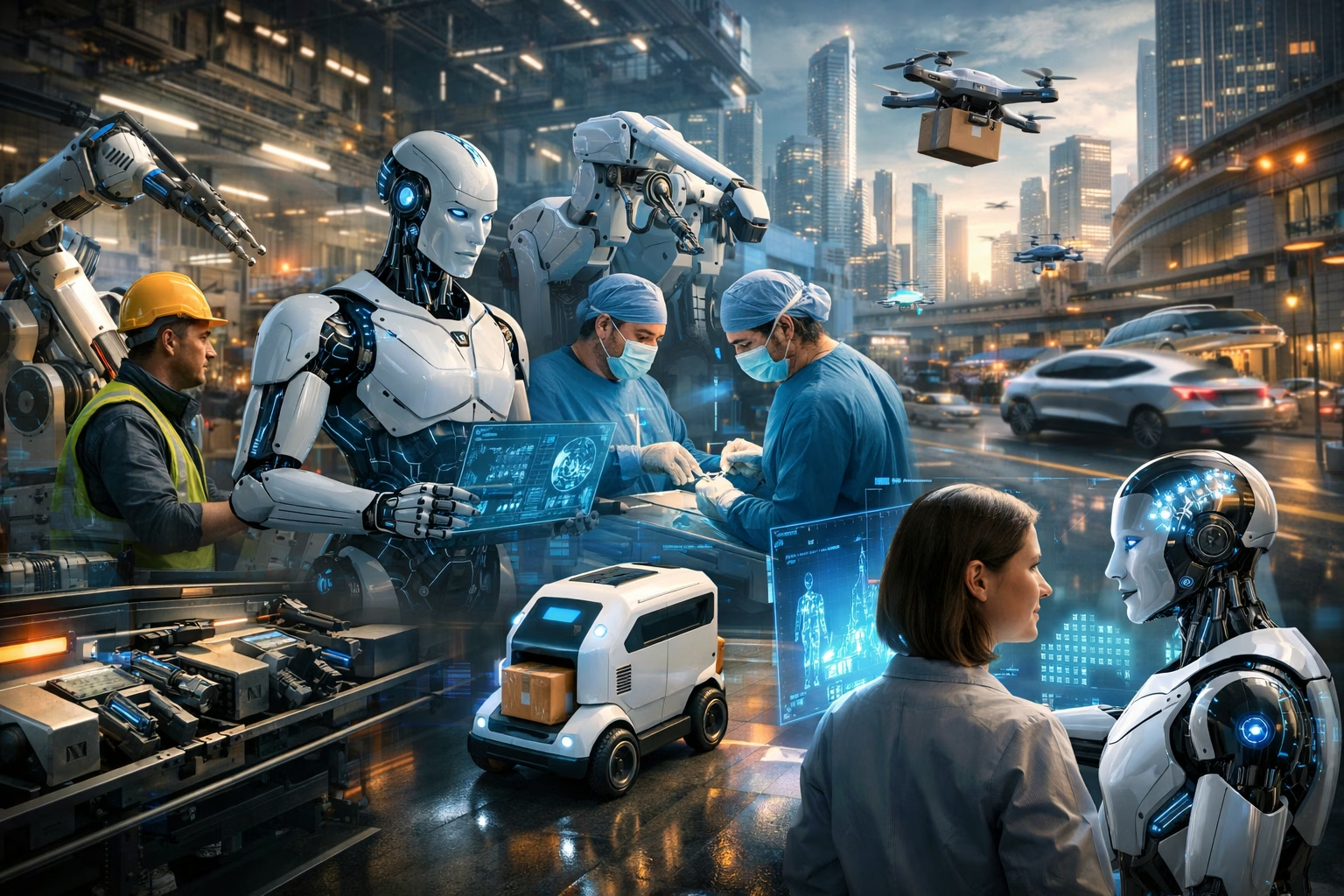
Some of the most recognizable examples of autonomous robots in 2026 include:
- Self-driving cars and trucks that navigate roads, read traffic signals, and avoid accidents without human drivers
- Warehouse robots like those used by Amazon and other logistics companies that sort, pick, and pack orders at superhuman speed
- Autonomous drones that deliver packages, monitor crops, and perform search-and-rescue operations
- Surgical robots that assist physicians with precision procedures in hospitals worldwide
- Companion robots that interact with elderly or lonely individuals in care settings
Each of these examples shares a common thread: they use artificial intelligence to bridge the gap between a pre-programmed machine and one that can truly function independently in the messy, unpredictable real world.
How AI Powers Autonomous Robotics
Artificial intelligence is the brain behind autonomous robots. Without AI, a robot is just a sophisticated mechanical tool. With AI, it becomes something far more remarkable — a system that can perceive, reason, and act.
Here's how the key AI technologies come together to power modern robotics:
Machine Learning allows robots to improve their performance over time by learning from experience. Instead of being explicitly programmed for every scenario, a machine learning-powered robot analyzes vast amounts of data, identifies patterns, and refines its behavior accordingly. A warehouse robot, for instance, gets faster and more accurate the more orders it processes.
Computer Vision gives robots the ability to see and interpret the visual world. Using cameras and sophisticated image-recognition algorithms, robots can identify objects, read labels, detect people, navigate environments, and even recognize facial expressions. Computer vision is what allows a self-driving car to distinguish between a pedestrian and a traffic cone — a distinction that could be literally life or death.
Natural Language Processing (NLP) enables robots to understand and respond to human speech. This is what makes personal assistant robots capable of carrying on conversations, taking instructions, and even picking up on emotional cues in a person's voice.
Reinforcement Learning is a type of AI where robots learn by trial and error — receiving rewards for successful actions and penalties for failures. This approach has led to some stunning breakthroughs, including robots that taught themselves to walk, balance, and manipulate objects with remarkable dexterity.
Sensor Fusion combines data from multiple sensors — cameras, lidar, radar, GPS, gyroscopes — to give robots a rich, accurate picture of their environment. No single sensor is perfect, but when their data is combined intelligently, the robot's understanding of the world becomes robust and reliable.
The result of combining all these technologies is a new generation of intelligent robots — machines that don't just execute commands but genuinely perceive and respond to the world around them.
Key Areas of Application
Industrial and Manufacturing: The Smart Factory Revolution
The factory floor has been transformed beyond recognition by autonomous robots and industrial automation AI. Smart factories — highly automated facilities where AI-powered robots handle everything from assembly to quality control — are becoming the global standard in manufacturing.
In 2026, industrial robots equipped with AI can:
- Assemble complex products with microscopic precision, far exceeding human capability
- Identify defects in real time using computer vision, dramatically reducing waste and improving quality
- Work continuously without fatigue, breaks, or sick days, maximizing productivity
- Collaborate safely alongside human workers, adjusting their movements to avoid collisions
Companies like BMW, Toyota, and Foxconn have deployed thousands of AI-powered robots across their facilities. The result is faster production, lower costs, fewer workplace injuries, and higher product quality. In sectors like electronics manufacturing, pharmaceutical production, and food processing, robotics technology trends point toward near-total automation of repetitive or hazardous tasks.
The economic impact is enormous. The global industrial robotics market is projected to continue expanding rapidly through the end of the decade, driven by demand for higher productivity and the need to offset rising labor costs.
Healthcare and Medical Robotics: Saving Lives with Intelligent Machines
Few applications of autonomous robots are as profound — or as potentially life-changing — as healthcare. Robotics in healthcare is advancing rapidly, with AI-powered systems now playing active roles in surgery, rehabilitation, diagnostics, and patient care.
Surgical robots like the da Vinci Surgical System allow surgeons to perform minimally invasive procedures with extraordinary precision, reducing patient recovery times and the risk of complications. In 2026, next-generation surgical robots incorporate AI that can assist with real-time decision-making during complex operations — flagging potential risks, suggesting adjustments, and providing visual overlays that enhance the surgeon's view.
Rehabilitation robots help patients recovering from strokes, spinal injuries, or surgery to regain mobility and strength through guided, AI-adapted physical therapy programs. These robots monitor patient progress and continuously adjust the intensity and type of exercises to optimize recovery.
AI diagnostic systems work alongside robots to analyze medical imaging — X-rays, MRIs, CT scans — identifying signs of disease with accuracy that rivals or exceeds experienced radiologists. Early detection of conditions like cancer, heart disease, or neurological disorders can be genuinely life-saving.
Companion robots represent a quieter but equally important innovation. In an aging global population, robots designed to provide social interaction, medication reminders, and basic monitoring for elderly individuals are helping to address the massive shortage of caregivers — while also combating the epidemic of loneliness among older adults.
Transportation and Autonomous Vehicles: Redefining How the World Moves
Self-driving cars have been "coming soon" for years — but by 2026, autonomous vehicles have made enormous strides toward mainstream adoption. Companies like Waymo, Tesla, and a growing roster of international competitors have deployed fully autonomous taxi services in multiple major cities, accumulating billions of miles of real-world driving data.
Beyond personal transportation, autonomous vehicles are revolutionizing logistics and delivery:
- Autonomous delivery robots navigate sidewalks in cities across the USA, Europe, and Asia, dropping off packages and groceries without human couriers
- Self-driving trucks are increasingly common on highways, promising to dramatically reduce freight costs while addressing a global truck driver shortage
- Autonomous drones are transforming last-mile delivery, particularly in rural or hard-to-reach areas, and are being used for medical supply delivery in developing countries
The implications for urban planning, traffic management, and environmental sustainability are equally significant. Fleets of shared autonomous vehicles could dramatically reduce the number of cars on the road, cutting congestion and emissions while freeing up vast amounts of urban space currently devoted to parking.
Daily Life and Personal Robots: Bringing AI Into the Home
Autonomous robots are also making their way into everyday homes and personal spaces. While the fully capable home robot of science fiction hasn't quite arrived, the progress is remarkable.
Robot vacuum cleaners and lawn mowers have already become mainstream household products. In 2026, they're smarter than ever — mapping your home in real time, learning your preferences, avoiding pets and children, and even emptying themselves.
More sophisticated home assistant robots are emerging that can help with tasks like fetching items, reminding users of medications or appointments, assisting elderly or disabled individuals with daily activities, and providing security monitoring. Companies like SoftBank Robotics, with their Pepper robot, and a range of newer startups are pushing this category forward rapidly.
Companion robots for children — educational, interactive AI-powered toys that adapt to a child's learning pace and personality — represent another fast-growing category that blends entertainment with genuine developmental benefit.
Innovations Driving the Future of Robotics
Several breakthrough innovations are propelling autonomous robotics into territory that seemed impossible just a few years ago.
AI-Powered Sensors have become dramatically more sophisticated and affordable. Lidar sensors that once cost tens of thousands of dollars now cost a fraction of that, making advanced autonomous navigation accessible for a much wider range of robotic applications.
Robotic Hands and Dexterous Manipulation remain one of the hardest problems in robotics — the human hand is extraordinarily complex — but AI-driven advances in tactile sensing and reinforcement learning are producing robot hands capable of handling fragile, irregular, or unpredictably shaped objects with growing reliability.
Collaborative Robots (Cobots) are designed specifically to work safely alongside humans — sensing human presence and adjusting their speed and force accordingly. Cobots are making automation accessible to small and medium-sized businesses that couldn't previously afford traditional industrial robots.
Swarm Robotics draws inspiration from nature — think ant colonies or flocks of birds — to coordinate large numbers of simple robots into collective systems capable of complex tasks. Swarms of small drones, for example, can map disaster zones, pollinate crops, or perform coordinated construction tasks with no central controller.
Boston Dynamics continues to push the frontier of what's mechanically possible, with robots like Spot and Atlas demonstrating agility, balance, and physical capability that was genuinely jaw-dropping just a decade ago. These platforms are increasingly being deployed in real industrial, military, and inspection applications.
Tesla's Optimus humanoid robot has progressed from a prototype concept to a system capable of performing meaningful factory tasks — representing a major step toward general-purpose humanoid robots that could eventually work in almost any environment designed for humans.
Challenges and Ethical Considerations
For all the excitement surrounding autonomous robots and AI robotics, the path forward is not without serious challenges and important ethical questions that society must grapple with.
Safety and Reliability remain paramount concerns. Autonomous systems occasionally fail — and in high-stakes environments like surgery, transportation, or critical infrastructure, those failures can be catastrophic. Ensuring that autonomous robots are not just effective but genuinely safe requires rigorous testing, redundant systems, and clear protocols for human override.
AI Bias is a significant issue. AI systems learn from data — and if that data reflects historical human biases, the robot's decisions can perpetuate or amplify those biases. In healthcare, for example, a diagnostic AI trained predominantly on data from one demographic group may perform poorly for others — with potentially serious consequences.
Privacy and Cybersecurity concerns are growing alongside robotic capabilities. Robots equipped with cameras, microphones, and sensors collect enormous amounts of data about the environments and people they interact with. Who owns that data? How is it stored? Could it be hacked? These questions are becoming increasingly urgent as robots enter homes, hospitals, and workplaces.
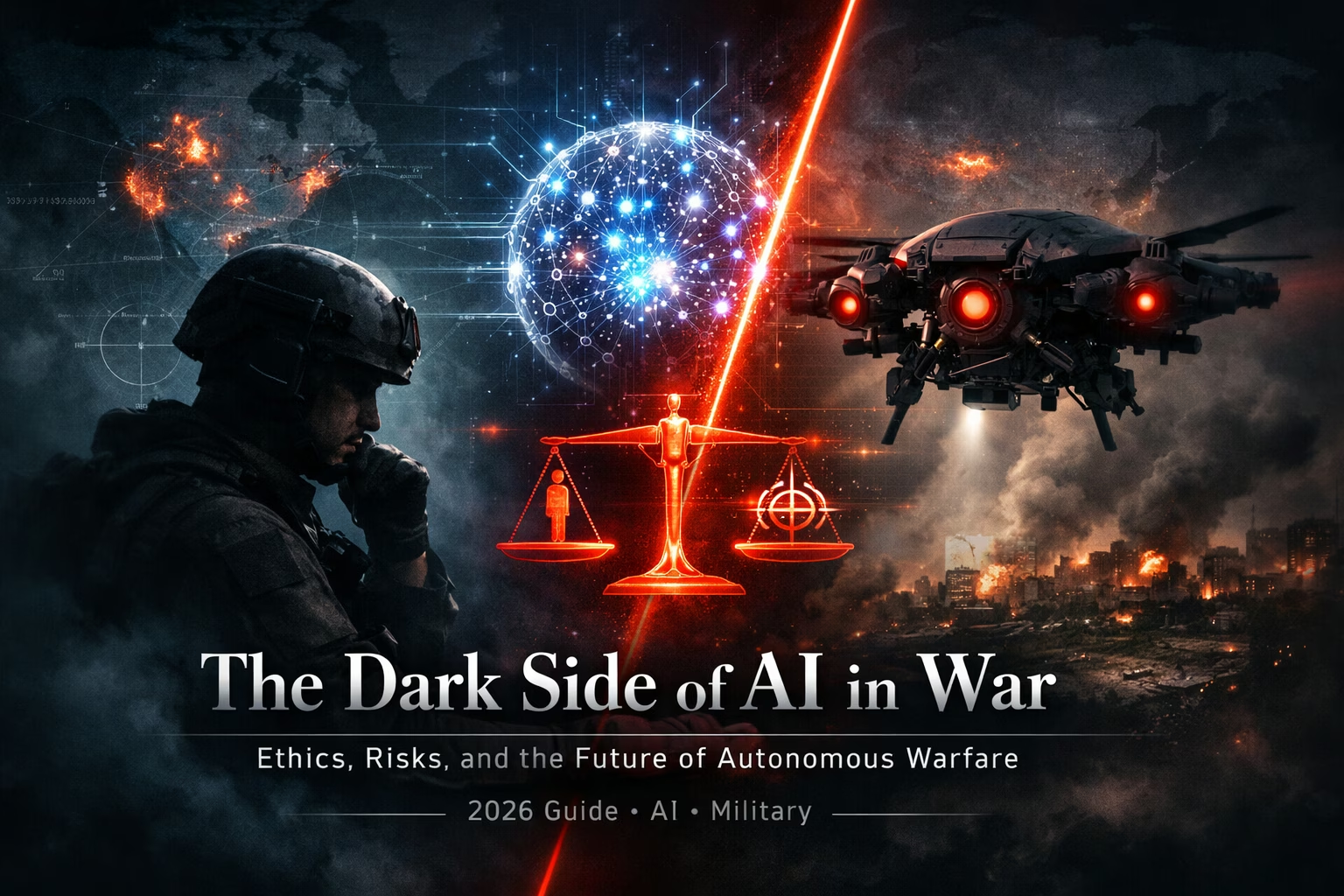
The Ethics of Autonomous Decision-Making raises profound philosophical questions. When a self-driving car faces an unavoidable accident, how should it decide what to do? When a military drone identifies a target, who bears moral responsibility for the outcome? The idea of machines making life-and-death decisions without human judgment in the loop is deeply uncomfortable — and the debate around it is far from resolved.
Job Displacement is perhaps the most socially significant challenge. Automation has always changed the nature of work, but the scale and speed of the current robotics revolution is unprecedented. While new jobs will certainly be created, the transition will be painful for millions of workers in manufacturing, transportation, logistics, and other sectors where automation is advancing fastest. Thoughtful policy, education reform, and investment in worker retraining are essential to manage this transition fairly.
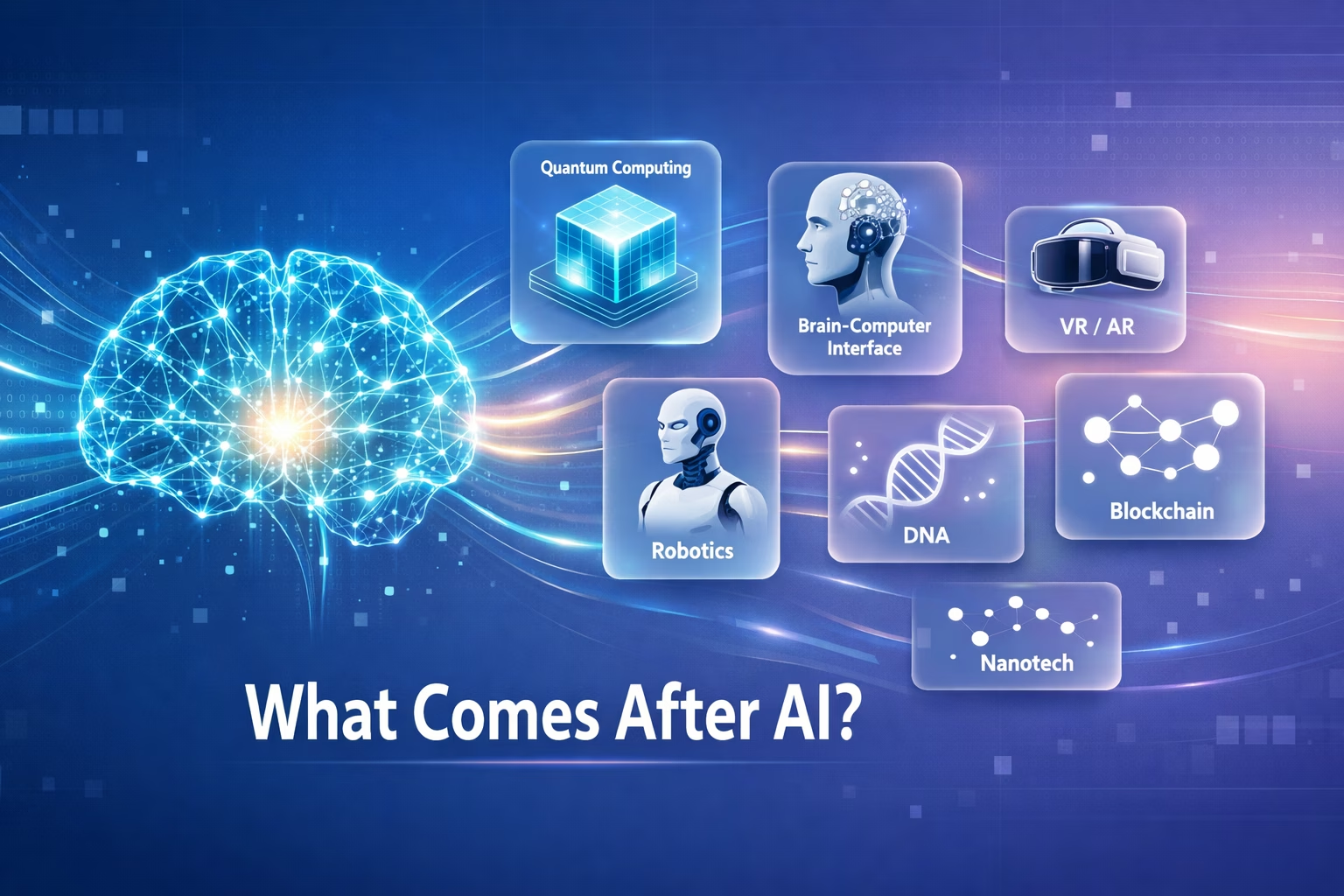
The Future Outlook: What Comes Next?
Looking toward 2030 and beyond, the trajectory of autonomous robotics and AI is extraordinary.
Integration with IoT and Smart Cities will create deeply interconnected environments where robots, sensors, networks, and infrastructure communicate seamlessly. Autonomous robots will manage traffic flow, maintain public spaces, respond to emergencies, and deliver services in ways that make cities safer, cleaner, and more efficient.
General-Purpose Humanoid Robots — capable of performing a wide variety of tasks in human environments without specialized programming — are moving from research labs toward commercial reality. If this vision is achieved, it would represent one of the most transformative technological developments in human history.
Quantum Computing will eventually supercharge AI capabilities, enabling robots to process vastly more complex information and make better decisions in real time. This could unlock robotic capabilities that are currently computationally out of reach.
Personalized Robotics will become more common, with AI-powered robots that learn individual users' preferences, habits, and needs over time — becoming genuinely tailored companions and assistants rather than generic tools.
Research investment from both governments and private companies continues to pour into the robotics space at record levels — ensuring that the pace of innovation will remain intense for the foreseeable future.
How Individuals and Businesses Can Prepare
The rise of autonomous robots and AI is not something to fear — but it does require proactive adaptation. Here's how you can position yourself and your organization for success:
For individuals:
- Invest in learning AI and robotics fundamentals through online courses, certifications, and degree programs — platforms like Coursera, edX, and MIT OpenCourseWare offer excellent starting points
- Develop skills that complement rather than compete with automation — creativity, emotional intelligence, complex problem-solving, and human judgment are increasingly valuable
- Stay informed about robotics technology trends through reputable tech publications and industry reports
- Embrace digital literacy as a baseline — understanding how AI systems work, even at a high level, is becoming an essential life skill
For businesses:
- Conduct an honest audit of which tasks in your operation could be automated — and develop a strategic plan for doing so responsibly
- Invest in upskilling your workforce so employees can work alongside automated systems rather than being replaced by them
- Explore collaborative robots (cobots) as an accessible entry point into automation, particularly for small and medium enterprises
- Stay engaged with regulatory developments around AI and robotics, as the legal landscape is evolving rapidly
Conclusion: A Future Built by Humans and Machines Together
Autonomous robots powered by artificial intelligence are not a distant possibility — they are a present reality that is reshaping industries, redefining human work, and opening possibilities that previous generations could only dream of. From robotic surgeons saving lives with superhuman precision to self-driving vehicles transforming how goods and people move around the world, the age of intelligent machines is well and truly underway.
The challenges are real — safety, ethics, job displacement, and the profound responsibility of building systems that make consequential decisions. But so are the opportunities: greater productivity, better healthcare, safer workplaces, and a higher quality of life for people around the world.
The most important thing to understand is this — the future of robotics will not be determined by machines alone. It will be shaped by the choices, values, and vision of the humans who design, deploy, and govern them. The question isn't whether robots will change the world. They already are. The question is what kind of world we'll choose to build alongside them.
Frequently Asked Questions (FAQs)
1. What is the difference between a regular robot and an autonomous robot? A regular robot follows fixed, pre-programmed instructions and repeats the same actions without adapting to changes. An autonomous robot uses AI to sense its environment, process information in real time, and make independent decisions. Autonomous robots can handle unexpected situations, learn from experience, and operate without continuous human supervision — making them far more flexible and capable than traditional machines.
2. What industries benefit most from autonomous robots in 2026? Manufacturing and logistics currently see the widest deployment of autonomous robots, with smart factories and warehouse automation leading the way. Healthcare is another major area, with surgical robots, diagnostic AI, and rehabilitation systems transforming patient care. Transportation — through self-driving vehicles and delivery drones — is rapidly advancing, while agriculture, construction, and personal/home services are emerging application areas with enormous growth potential.
3. How does AI enable robots to learn and improve over time? AI enables robotic learning primarily through machine learning and reinforcement learning. In machine learning, robots analyze large datasets to identify patterns and improve their performance. In reinforcement learning, robots learn through trial and error — receiving feedback on their actions and gradually optimizing their behavior. Computer vision and sensor fusion give robots the perceptual capabilities they need to apply this learning in real-world environments.
4. Are autonomous robots a threat to human jobs? Autonomous robots will certainly automate many tasks currently performed by humans — particularly repetitive, dangerous, or physically demanding work. However, history shows that technological revolutions also create new types of jobs and industries. The key challenge is managing the transition thoughtfully, through worker retraining programs, educational reform, and policy that ensures the economic benefits of automation are broadly shared rather than concentrated. Humans and robots working together — each contributing their unique strengths — is the most likely and productive future scenario.
5. What are the biggest challenges facing autonomous robotics in 2026? The major challenges include ensuring safety and reliability in high-stakes environments, addressing AI bias that can lead to unfair or inaccurate robotic decisions, protecting the privacy of data collected by robots, resolving ethical questions around autonomous decision-making, and managing the societal impact of job displacement. Cybersecurity is also a growing concern — as robots become more connected and capable, they also become more attractive targets for malicious actors. Addressing these challenges requires collaboration between technologists, policymakers, ethicists, and the public.