Search Enigne Basics

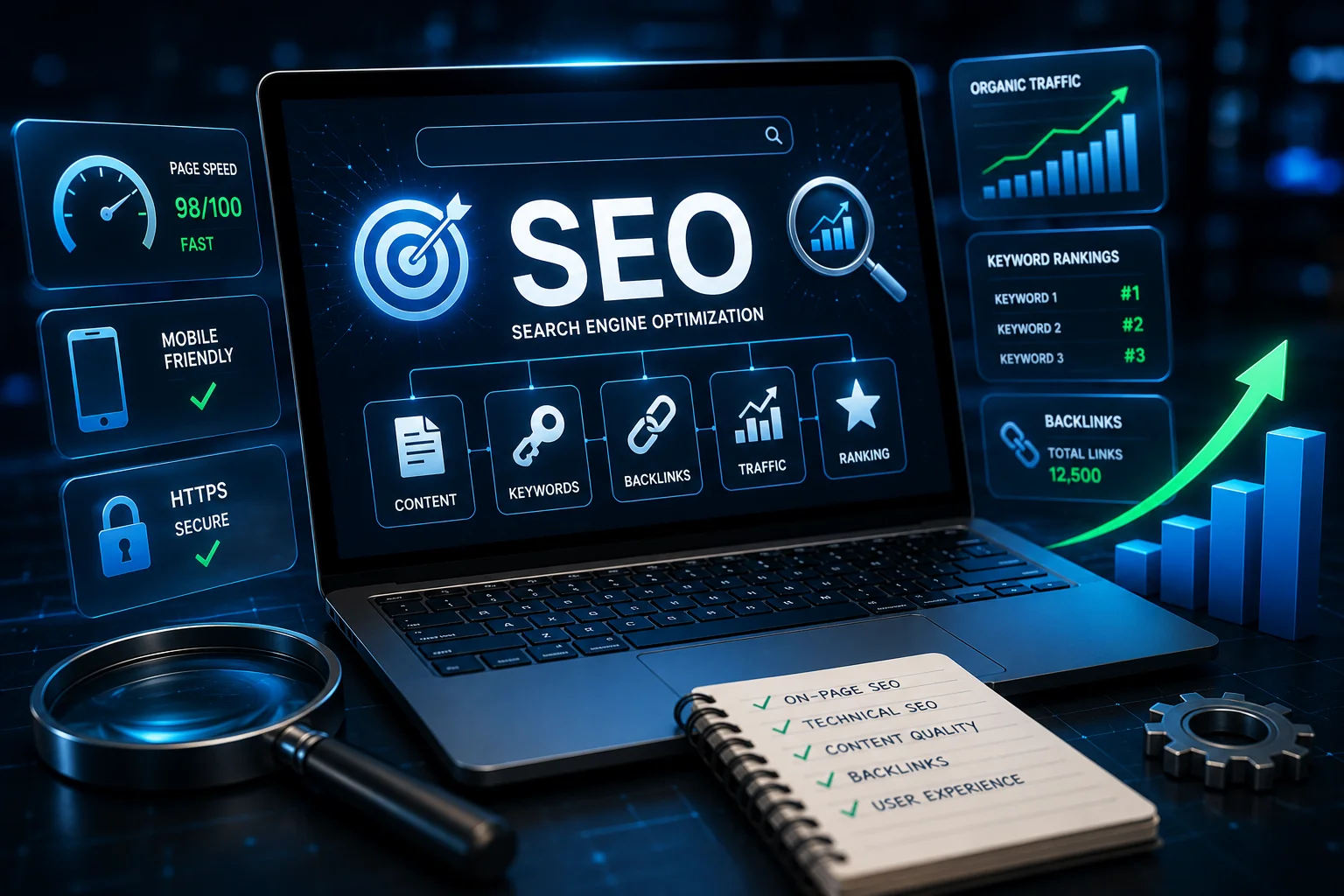
Search engines process billions of searches every day — but most website owners have no idea how they actually work. This guide covers everything from crawling and indexing to keywords, on-page SEO, backlinks, and page speed. If you want your website to rank on Google and get real traffic, understanding these basics is where it starts.
Introduction
Most people use search engines every single day without stopping to think about how they actually work. You type something in, results appear — simple, right? Not quite. Behind that search bar is a system that crawls billions of web pages, ranks them by relevance, and delivers results in under a second. If you own a website or are trying to grow one, understanding search engine basics is not optional. It is the starting point for everything in digital marketing.
This guide breaks down how search engines work, why ranking matters, and what you can do today to get your site noticed.
How Search Engines Actually Work
A search engine does three things: it crawls, it indexes, and it ranks.
Crawling is when a search engine sends out bots — often called "spiders" or "crawlers" — to scan your website. These bots follow links from page to page, collecting information about your content. If your site has broken links, poor navigation, or pages blocked by a robots.txt file, crawlers can miss important content entirely.
Indexing is what happens after crawling. The search engine stores the data it collected in a massive database. Think of it like a library card catalog — every page on the internet has a card. If your page is not in the index, it will never show up in search results, no matter how good the content is.
Ranking is the part most people care about. When someone searches for a term, the search engine pulls from its index and decides which pages best match that query. It uses hundreds of signals — backlinks, page speed, content quality, mobile-friendliness, and more — to decide who gets spot number one and who ends up on page five.
Why Keywords Are the Foundation
Every search starts with a keyword. People type in questions, product names, or simple phrases, and the search engine tries to match those queries to the most relevant content.
For your website, this means you need to understand what your audience is actually searching for. Not just broad terms, but specific ones. Someone searching "best free SEO tools for beginners" is in a very different mindset than someone searching "SEO." Targeting the right keywords puts your content in front of people who are already looking for what you offer.
There are three types of keywords worth knowing:
- Short-tail keywords — broad, high volume, very competitive (e.g., "SEO")
- Long-tail keywords — more specific, lower volume, easier to rank for (e.g., "how to do SEO for a small business blog")
- LSI keywords — related terms that give context to your content
Placing keywords naturally in your title, headings, and throughout your content helps search engines understand what your page is about.
On-Page SEO: Getting the Basics Right
On-page SEO is everything you do on your own website to improve its ranking. It starts with your title tag — the clickable headline that shows up in search results. Every page should have a unique, descriptive title that includes the target keyword.
Meta descriptions do not directly affect rankings, but they do affect click-through rates. A well-written meta description tells the reader exactly what they will get if they click, which means more traffic from the same position.
Heading structure matters too. Use H1 for your main title, H2 for major sections, and H3 for sub-points. This is not just for readers — it helps crawlers understand your page hierarchy.
Image alt text, internal linking, and clean URLs round out the basics. If you are working on understanding the technical side of charts and data visualization for SEO reporting, check out our earlier article on iTechcharts — it covers how to read and interpret SEO data visually, which makes tracking your progress a lot easier.
Backlinks: Why Other Sites Talking About You Matters
A backlink is when another website links to yours. Search engines treat these like votes of confidence. The more quality backlinks you have, the more trustworthy your site looks.
Not all backlinks are equal. A link from a high-authority website in your industry carries far more weight than a link from a random, unrelated blog. Focus on earning links through genuinely useful content — guides, tools, research, or original data that people actually want to reference.
Page Speed and Mobile Experience
Google has made it clear: slow websites lose rankings. Users expect a page to load in under three seconds. If it takes longer, they leave — and that bounce rate signals to the search engine that your content did not satisfy the query.
Mobile optimization is no longer optional either. More than half of all searches happen on mobile devices. If your site looks broken on a phone, you are already behind.
Conclusion
Search engine basics are not complicated — but most website owners skip them and then wonder why their traffic is flat. Crawling, indexing, keywords, on-page SEO, backlinks, and page speed are not advanced topics. They are the ground floor. Everything else in digital marketing is built on top of them.
Start with what you can control. Fix your titles, clean up your structure, write content that actually answers what people are searching for. Small improvements stack up fast when they are done consistently.
If you want someone to handle all of this for you — whether it is a full website build, SEO setup, or a custom software solution — the team at LetDigitalFly is ready to help.
🔹 Explore more powerful file conversion and online utilities at AllFileTools –
🔹 For technical support, digital solutions, and expert services, visit LetDigitalFly IT Services –
🔹 Discover additional career and productivity resources at Resume Slip Builder –
🔹 Read the latest sports news, athlete profiles and trending updates at SportifyHQ –