Why AI Transformation Is a Problem of Governance — And How Lightweight Blockchain-Based Cybersecurity Solves It

AI transformation is reshaping industries — but the biggest obstacle isn't technology, it's governance. Discover why accountability, transparency, and policy frameworks are the real keys to successful AI adoption.
Introduction
The digital landscape is shifting faster than most businesses can keep up with. From AI-powered identity verification to decentralized crypto exchanges, the convergence of blockchain technology and artificial intelligence is reshaping how companies operate, transact, and protect data.
Whether you are an entrepreneur, a developer, or simply someone trying to make sense of the crypto world, this guide breaks down the most relevant topics — from governance challenges in AI to how platforms like Grovex are making crypto accessible to everyday users.
Read on to understand what these emerging technologies mean for you and your business.
1. Agentic AI: How Pindrop and Anonybit Are Redefining Identity Security
Artificial intelligence is no longer just a tool — it is becoming an autonomous agent capable of making real-time decisions. Two companies standing at the forefront of this shift are Pindrop and Anonybit.
- Pindrop specializes in voice intelligence and deep fraud detection, using AI to analyze audio signals and verify caller identity with precision that humans simply cannot match.
- Anonybit takes a decentralized approach to biometric data — instead of storing sensitive fingerprint or face data in a central database (a hacker's dream), it fragments and distributes it across a decentralized network.
Together, these platforms represent what "agentic AI" looks like in practice:
- Autonomous threat detection without human intervention
- Real-time fraud scoring at scale
- Privacy-first architecture that eliminates single points of failure
For businesses handling sensitive customer data — particularly in fintech and healthcare — integrating agentic AI solutions like these is quickly moving from "nice to have" to a non-negotiable standard.
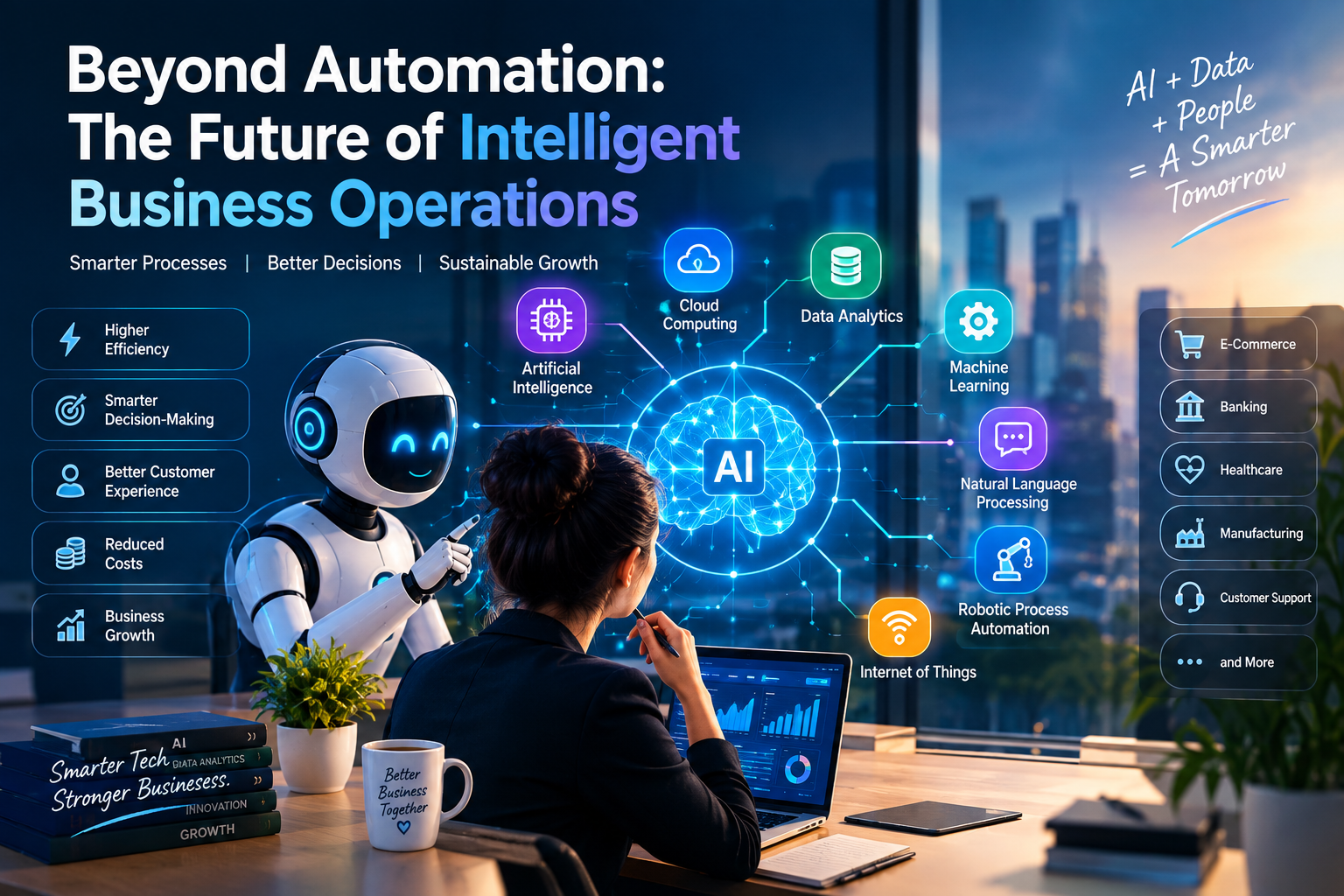
2. AI Transformation Is a Problem of Governance
The most underappreciated challenge in the AI revolution is not technical — it is governance.
Organizations across every industry are rushing to adopt AI, but very few have answered the fundamental questions:
- Who is accountable when an AI system makes a harmful decision?
- How do you audit an algorithm for bias or error?
- What regulations apply when AI crosses international borders?
This is why AI transformation is, at its core, a problem of governance. Technology adoption without governance frameworks leads to:
- Regulatory violations and heavy fines
- Reputational damage from biased or opaque AI outputs
- Security vulnerabilities from poorly monitored AI pipelines
- Loss of public trust in AI-driven services
Leading institutions — from the European Union with its AI Act to individual enterprises building internal AI ethics committees — are recognizing that the real work of AI transformation is organizational, not purely technical.
The takeaway? Before your business deploys AI, build the governance structure that will oversee it. Accountability, transparency, and auditability are not optional — they are the foundation.
3. Lightweight Blockchain-Based Cybersecurity: Big Protection Without the Overhead
Traditional cybersecurity models rely on centralized servers and perimeter defenses — an approach that increasingly fails in a world of remote workforces, cloud infrastructure, and sophisticated state-level attacks.
Lightweight blockchain-based cybersecurity offers a fundamentally different model:
- Immutable audit logs: Every access event, transaction, or data change is recorded on-chain, making tampering virtually impossible.
- Decentralized authentication: No central password database means no central target for attackers.
- Smart contract-driven access control: Permissions are enforced by code, not by easily-compromised human administrators.
- Minimal resource footprint: Modern implementations are optimized for IoT devices, mobile apps, and edge computing environments.
Real-world applications already include:
- Supply chain integrity verification
- Healthcare records management
- Secure document signing and notarization
- Device authentication in smart factories
The word "lightweight" is key here — older blockchain implementations were energy-intensive and slow. The new generation of consensus mechanisms (Proof of Authority, DAG-based structures) delivers enterprise-grade security without the computational overhead.
4. NFT Primary vs Secondary Marketplaces:
The NFT space matured significantly after the hype of 2021–2022, and today the distinction between primary and secondary marketplaces is more important than ever.
Primary Marketplaces are where NFTs are minted and sold for the first time. Examples include:
- Direct artist storefronts on platforms like Foundation or Manifold
- Project launches on OpenSea or Blur's launchpad
- Brand drops on proprietary platforms
Secondary Marketplaces are where NFTs are resold after the initial purchase. Key characteristics include:
- Price is determined by market demand, not the creator
- Royalties to original creators may or may not be enforced, depending on the platform
- Liquidity varies widely based on collection popularity
Key differences every participant should know:
- Pricing mechanism — Primary is set price or auction; secondary is open market
- Creator royalties — Primary generates full revenue for the creator; secondary royalties range from 0% to 10% depending on platform policy
- Risk profile — Primary carries mint risk (project may fail); secondary carries liquidity risk (hard to resell)
- Discovery — Primary benefits from launch marketing hype; secondary depends on ongoing community strength
Understanding these dynamics helps collectors make smarter purchasing decisions and helps creators choose the right platform strategy.
5. Blockchain Private Key QR Code: What It Is and Why You Must Protect It
Your blockchain private key is the single most important piece of data you own in the crypto world. It is the cryptographic proof that you control your wallet — and whoever has it, controls your funds. No exceptions.
A private key QR code is simply a visual representation of your private key encoded into a scannable format. It is commonly used for:
- Paper wallet generation for cold storage
- Hardware wallet backup display
- Easy import into software wallets
Why this is both useful and dangerous:
- Useful because it makes transferring or backing up wallet access quick and error-free
- Dangerous because anyone who photographs or scans your QR code has your keys permanently
Best practices for private key QR codes:
- Never store them digitally — no cloud photos, no screenshots, no email attachments
- Print on archival paper and store in a fireproof, waterproof location
- Create multiple copies stored in separate physical locations
- Laminate the printout to protect against moisture and physical damage
- Never share it — not with exchanges, not with "support teams," not with anyone
The golden rule of crypto security applies here more than anywhere: not your keys, not your coins.
6. Gaming and Crypto: Understanding the RobTheCoins Ecosystem
The intersection of gaming and cryptocurrency has produced one of the most interesting micro-economies on the internet. RobTheCoins sits in this space — representing the broader movement of play-to-earn and crypto-integrated gaming communities.
What makes crypto gaming communities like this significant:
- In-game assets as real assets: Tokens, skins, and characters have genuine market value
- Community-driven economies: Player behavior shapes token prices and game direction
- Transparent ownership: Blockchain verifies who owns what, unlike traditional gaming where the company can revoke items
For developers and investors watching this space:
- User acquisition in crypto gaming happens through tokenomics, not ads
- Community governance (DAOs) gives players real voting power over game development
- Cross-game asset compatibility is an emerging trend that could reshape player loyalty
The gaming sector remains one of the most accessible entry points for mainstream audiences into blockchain technology — because the value proposition (own what you earn) is immediately intuitive.
7. Grovex ETH: Trading Ethereum on the Grovex Platform
Grovex has established itself as a notable crypto exchange, and Ethereum (ETH) is one of its most actively traded assets — for good reason.
Ethereum is not just a cryptocurrency. It is the foundational infrastructure for:
- Decentralized applications (dApps)
- Smart contracts
- The majority of the NFT ecosystem
- DeFi (Decentralized Finance) protocols
Trading ETH on Grovex offers users:
- Access to one of the most liquid crypto markets globally
- Exposure to the broader Ethereum ecosystem's growth
- A platform designed for both beginner and intermediate traders
When trading ETH on any exchange, including Grovex, keep these principles in mind:
- Understand the difference between spot trading and leveraged positions
- Monitor gas fees if you plan to move ETH to external wallets
- Use price alerts rather than watching charts constantly
- Never invest more than you can afford to lose — ETH, despite its strength, remains volatile
8. Grovex Sign Up: A Step-by-Step Overview for New Users
Getting started on Grovex is straightforward, but like any financial platform, doing it correctly from the start protects your account and assets.
Here is a general overview of the Grovex signup process:
- Visit the official Grovex website — always verify the URL to avoid phishing sites
- Create your account — provide your email address and create a strong, unique password
- Verify your email — click the confirmation link sent to your inbox
- Complete KYC (Know Your Customer) — upload government-issued ID and a selfie as required by financial regulations
- Enable Two-Factor Authentication (2FA) — this step is non-negotiable for account security
- Fund your account — deposit via supported fiat methods or transfer crypto from an external wallet
- Start trading — explore available pairs and use limit orders to control your entry prices
Pro tips for new Grovex users:
- Use a dedicated email address for your exchange account
- Store your recovery codes in a secure offline location
- Withdraw large holdings to a personal hardware wallet rather than leaving them on the exchange
9. Blockchain Development Company in India:
India has quietly become one of the most important blockchain development markets in the world. With a massive pool of highly skilled developers, competitive pricing, and a rapidly growing startup ecosystem, choosing a blockchain development company in India is a strategic decision for international businesses.
Key reasons India leads in blockchain development:
- Talent density — India produces over 1.5 million engineering graduates annually, many specializing in emerging tech
- Cost efficiency — Development costs are typically 40–70% lower than comparable talent in the US or Western Europe
- English proficiency — Communication is seamless with international clients
- Time zone coverage — Indian teams can work overlapping hours with both European and American clients
- Government support — Several Indian states have blockchain-friendly policies and innovation grants
What to look for when hiring an Indian blockchain development company:
- A verifiable portfolio of delivered smart contracts, DeFi platforms, or NFT projects
- Expertise in multiple chains (Ethereum, Solana, Hyperledger, Polygon)
- Strong security audit practices built into the development cycle
- Clear IP ownership terms in the contract
- Post-deployment support and maintenance agreements
India's blockchain sector is not just growing — it is becoming a global reference point for quality and innovation in decentralized technology.
Conclusion
The worlds of blockchain, AI, and cryptocurrency are no longer on the horizon — they are here, reshaping industries, creating new markets, and demanding that businesses adapt or fall behind.
From understanding the governance challenges of AI to securing your crypto private keys, from trading ETH on platforms like Grovex to leveraging India's blockchain talent, the opportunities are as vast as the complexity is real.
The businesses that will win in this environment are those that take action now — with the right technology partners beside them.
If you want to build a software product, blockchain application, AI-powered tool, or any custom digital solution, our team is ready to help.
👉 Contact us at https://letdigitalfly.com/contact/ and let's turn your idea into a product that works.