How AI Became the Biggest Technology Trend in the World

Artificial intelligence has gone from research lab curiosity to the technology reshaping every industry on the planet. This article breaks down how AI became the world's biggest tech trend, what it means for business, healthcare, education, and daily life — and where it is taking us next.
Introduction
There is a moment when a technology stops being a niche interest and starts reshaping everything around it. For artificial intelligence, that moment arrived faster than most people expected — and it has not slowed down since.
AI is no longer a concept confined to research labs or science fiction. It is inside the tools you use at work, the apps on your phone, the hospitals treating patients, the classrooms teaching students, and the companies competing for your business. In less than a decade, it went from "promising but experimental" to the defining technology of our time.
This article breaks down how that happened, what it means across industries, and where AI is taking us next.
The Rise of Artificial Intelligence Worldwide
The idea of artificial intelligence is not new. Researchers have been working on it since the 1950s. But for most of its history, AI lived in narrow academic corridors — impressive in theory, limited in practice.
What changed everything was a combination of three things arriving at the same time: massive amounts of data, affordable computing power, and a new generation of machine learning models that could actually use both effectively.
By the early 2020s, the results were undeniable. AI systems were writing code, generating images, translating languages in real time, diagnosing diseases, and holding conversations that felt genuinely human. The technology had crossed a threshold.
The global response was immediate. Governments drafted AI strategies. Venture capital poured billions into AI startups. Fortune 500 companies launched dedicated AI divisions. Universities retooled entire departments around machine learning and data science.
What had been a slow-building wave broke all at once.
Why AI Became the Biggest Technology Trend
A lot of technologies are impressive without becoming mainstream. AI became both. Here is why.
It delivered real, visible results. When a doctor uses an AI tool to catch cancer earlier than traditional screening methods would allow, that is not theoretical. When a small business owner uses an AI writing assistant to produce content in minutes instead of hours, that is a measurable time savings. Results like these travel fast.
The barrier to entry dropped sharply. Early AI development required a specialized team and serious infrastructure. Today, developers can access powerful AI models through simple APIs. Businesses can integrate AI features without hiring a machine learning PhD. The tools became accessible, and accessibility drives adoption.
It solved problems people actually had. AI did not succeed by creating new needs. It succeeded by addressing existing ones — automating repetitive work, making sense of enormous datasets, personalizing experiences at scale, and reducing human error in high-stakes decisions.
Competition accelerated everything. Once a few companies demonstrated what AI could do, every competitor felt pressure to respond. That competitive pressure compressed years of normal adoption into months.
AI in Everyday Life
Most people interact with AI dozens of times a day without thinking about it.
The spam filter that keeps your inbox clean is AI. The navigation app that reroutes you around traffic is AI. The streaming service that knows you well enough to recommend something you will actually watch is AI. The voice assistant that sets your reminders and plays your music is AI.
These are not minor conveniences. They represent a wholesale change in what software can do — moving from tools that execute commands to tools that anticipate needs and make decisions.
Generative AI tools have pushed this further into the visible. Millions of people now use AI to write first drafts, brainstorm ideas, edit photos, generate marketing copy, summarize long documents, and work through complex problems conversationally. ChatGPT reached 100 million users in two months — a faster adoption curve than any consumer technology in history.
AI is also inside smart home devices, wearable health monitors, and the personalization engines behind almost every major digital platform. It is woven into daily life in ways that are easy to overlook precisely because they work so well.
AI in Business and Automation
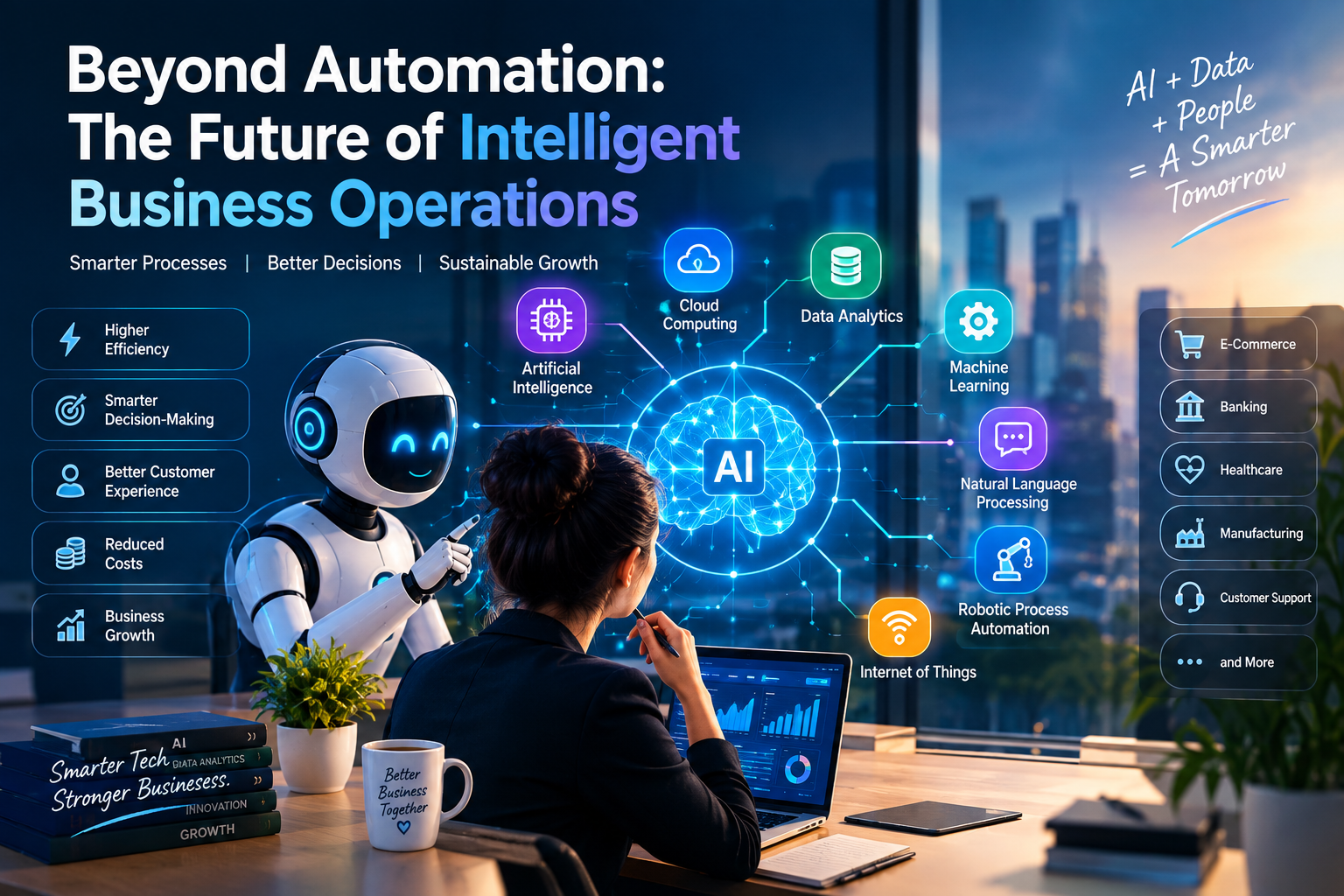
Businesses adopted AI because it makes them faster, cheaper, and often more accurate than human-only processes.
Automation is the most obvious application. AI handles invoice processing, customer service routing, inventory management, quality control, and fraud detection at a scale no human team could match. Companies in manufacturing, logistics, retail, and finance have rebuilt entire workflows around AI-powered automation systems.
Customer experience changed significantly too. AI chatbots handle millions of support tickets simultaneously, resolving common issues without wait times and escalating complex cases to human agents. The best implementations are hard to distinguish from a conversation with a knowledgeable person.
In marketing, AI analyzes customer behavior, segments audiences with precision, optimizes ad spend in real time, and personalizes messaging down to the individual level. Digital marketing teams that would once have taken weeks to run a campaign iteration can now test and refine in hours.
Sales teams use AI to score leads, predict which prospects are likely to convert, and draft personalized outreach at scale. It does not replace good salespeople — it gives them better information and more time for the conversations that actually matter.
For startups and small businesses, AI-powered tools have leveled the playing field significantly. Capabilities that once required large teams and large budgets are now accessible through affordable software subscriptions.
AI in Healthcare and Education
Healthcare: From Diagnostics to At-Home Care
Healthcare is one of the fields where AI's impact is most consequential — and most personal.
AI diagnostic tools now assist radiologists in reading scans, flag early indicators of conditions like diabetic retinopathy, and help pathologists identify abnormal tissue. These systems do not replace clinical judgment. They add a second layer of scrutiny that catches things a tired or overloaded clinician might miss.
How Future Healthcare Technology Is Elevating at Home Care
The shift toward remote and home-based care is one of the most significant changes in modern medicine, and AI is the technology making it work.
Wearable devices monitor heart rate, blood oxygen, sleep quality, glucose levels, and dozens of other metrics continuously. AI analyzes that data in real time, detecting anomalies that might signal a problem before symptoms appear. For elderly patients, chronic disease patients, and people recovering from surgery, this kind of continuous monitoring used to require a hospital stay. Now it happens at home.
AI-powered telemedicine platforms handle symptom triage, connect patients with the right specialist, and maintain longitudinal records that give physicians better context during appointments. Patients in rural areas or with limited mobility get access to care they previously could not reach.
Mental health applications use AI to provide round-the-clock support, mood tracking, and evidence-based therapeutic exercises. They are not a replacement for therapy, but they fill a gap that therapists simply cannot cover given the scale of unmet mental health need globally.
Drug discovery has also changed. AI models can analyze molecular interactions and predict how candidate compounds will behave at a speed that compresses years of early-stage research into months. Several drugs currently in clinical trials owe their discovery partly to AI-assisted research pipelines.
AI in Education
In education, AI adapts to individual learners in ways that traditional classroom instruction cannot. An AI tutoring system does not move on until a student actually understands the material. It identifies where a student is struggling, adjusts the difficulty, tries different explanations, and provides immediate feedback — without judgment, without impatience.
For teachers, AI handles grading of objective assessments, generates lesson plan materials, identifies students who may need additional support, and takes administrative work off their plates so they can focus on teaching.
Language learning platforms like Duolingo have used AI to create personalized curricula that adapt daily based on what you remember and what you forget. The result is more efficient learning with better retention.
Major Trends in Technology TogTechify Is Highlighting
The technology media landscape tracks AI developments constantly, and a few patterns keep coming up across every serious publication and analyst report.
Multimodal AI is one of the most-watched developments. Models that understand and generate text, images, audio, and video together — not separately — open entirely new categories of application. Creative tools, accessibility technology, and enterprise software are all being rebuilt around multimodal capabilities.
AI agents are another shift underway. Rather than responding to individual prompts, AI agents can pursue multi-step goals autonomously — browsing the web, writing and executing code, managing files, interacting with external services. Early versions are already used in software development, research, and business automation.
Edge AI — running AI models directly on devices rather than in the cloud — is growing quickly. Smartphones, laptops, smart speakers, and industrial sensors are increasingly capable of running AI inference locally. This reduces latency, improves privacy, and makes AI useful in situations where cloud connectivity is limited.
Personalization at scale remains a core trend across every sector. Whether it is a retail platform showing you the right product at the right time or a healthcare app tracking your specific health patterns, AI-driven personalization is becoming the standard expectation rather than a differentiator.
Examples of Low Tech Assistive Technology and How AI Is Extending Its Reach
Assistive technology has a long history of helping people with disabilities live more independently. Many of the most effective tools are surprisingly simple — and deliberately so.
Examples of Low Tech Assistive Technology
Low-tech assistive tools include devices that do not require electronics or power:
- Pencil grips and writing aids for people with fine motor difficulties
- Communication boards with pictures and symbols for people with speech impairments
- Large-print books and magnifying tools for people with low vision
- Adapted utensils for people with limited hand strength or dexterity
- Grab bars and non-slip mats that reduce fall risk for elderly or mobility-impaired individuals
- Color-coded organizers and tactile markers for people with cognitive or visual impairments
These tools work because they are reliable, affordable, and require no training to use. Their value is not in complexity but in removing specific friction points that would otherwise limit independence.
AI is building on this foundation rather than replacing it. Voice-controlled interfaces give people with mobility impairments full control of their devices without touching a screen. Real-time captioning makes conversations accessible to people who are deaf or hard of hearing. AI-powered screen readers describe visual content in natural language. Predictive text and communication aids help people with ALS, cerebral palsy, or speech impairments communicate faster and more expressively.
The combination of simple, reliable low-tech tools and AI-powered high-tech tools gives assistive technology a wider reach than either approach alone.
AI and the Future of Software Development
Software development is one of the fields AI has changed most visibly — partly because AI tools have been built by and for software developers, and partly because the results are immediately measurable.
AI coding assistants now suggest code completions, generate entire functions from a description, explain unfamiliar code, identify bugs, and write tests. Developers report spending more time on architecture, product decisions, and code review — and less time on boilerplate and syntax lookup.
What this means for software teams is a change in pace, not a change in the need for skilled engineers. AI does not understand business context, user needs, or system-level tradeoffs the way an experienced developer does. What it does is remove much of the mechanical friction from translating ideas into working code.
For non-technical founders and small teams, AI has lowered the barrier to building software products significantly. Prototypes that would once have taken weeks to build can be assembled in days. This changes what is economically viable to attempt.
AI is also transforming cybersecurity. Threat detection systems analyze network traffic in real time, identify unusual patterns, and flag potential breaches faster than any human security team could respond. On the other side, attackers are using AI to craft more sophisticated phishing attacks and probe systems for vulnerabilities — making AI-powered defense a necessity rather than an option.
Mobile app development has followed the same pattern. AI features — object recognition, natural language understanding, personalized recommendations, real-time translation — are now standard expectations in consumer apps, and the tools to build them are increasingly accessible.
The Future of AI Technology
The trajectory of AI development points toward a few clear directions.
AI models will become more capable across more domains simultaneously. The gap between what AI can do and what it cannot will continue to narrow, though it will not disappear — human judgment, creativity, and ethical reasoning will remain irreplaceable for a long time.
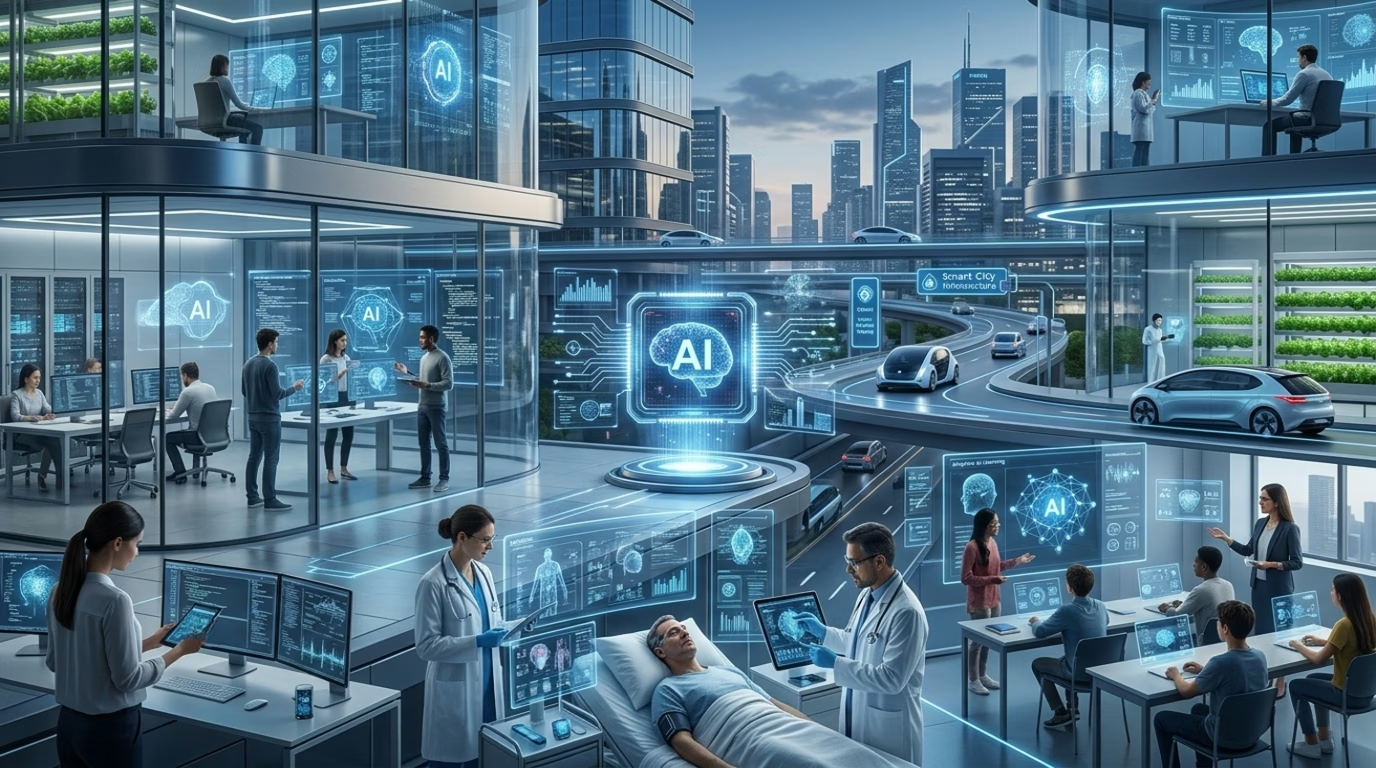
AI will become more integrated into physical environments. Smart city infrastructure, autonomous vehicles, industrial robotics, and agricultural technology are all being rebuilt around AI-powered systems. The digital and physical worlds are converging.
Customization will deepen. Rather than general-purpose AI tools, businesses will increasingly use AI models fine-tuned on their own data, trained to understand their specific industry, customers, and processes. The competitive advantage will come not from having access to AI — everyone will — but from deploying it more intelligently.
AI in content creation will continue to mature. Marketers, writers, designers, and video producers are already using AI as a creative collaborator. Tools like invideo make AI storyboard generation part of the pre-production process, helping teams plan video content before a single frame is shot. The question of what AI-generated content means for creativity, intellectual property, and professional work is still being worked out, both culturally and legally
The enterprise software market is being rebuilt from the ground up around AI. Nearly every major SaaS platform now has AI features, and the ones that do not are under pressure to add them. New AI-native applications are displacing incumbents in categories from customer relationship management to project management to business intelligence.
Challenges and Ethical Concerns of AI
Progress at this pace creates real problems alongside real benefits, and it is worth being direct about what those are.
Bias in AI systems is a genuine issue. When AI models are trained on historical data that reflects past discrimination, they can reproduce and sometimes amplify those patterns. Hiring tools, lending algorithms, and predictive policing systems have all shown evidence of this. It is not inevitable, but it requires deliberate attention to detect and correct.
Misinformation and synthetic media are growing concerns. AI makes it easier to generate convincing fake text, images, audio, and video at scale. Deepfakes are already used in scams, political manipulation, and harassment. The technology to detect synthetic media is improving, but it is a difficult problem.
Job displacement is a legitimate concern, particularly for workers in roles that involve repetitive, well-defined tasks. The historical pattern with automation is that it eliminates certain categories of work while creating new ones, but the transition is not painless — and the new jobs often require different skills than the ones being displaced.
Privacy is complicated by AI systems that need data to function well. The more personalized and effective an AI system is, the more it knows about the people using it. Getting that tradeoff right — useful personalization without surveillance — is an ongoing challenge for companies, regulators, and users.
Accountability is harder when AI is involved in decisions. When an algorithm denies someone a loan, a job, or bail, who is responsible? How do you appeal a decision made by a system nobody fully understands? These are legal and ethical questions that most jurisdictions are still figuring out.
None of these challenges argue against AI development. They argue for developing it with more care, more transparency, and more meaningful oversight than the industry has consistently applied so far.
Final Thoughts
AI becoming the world's dominant technology trend was not an accident of marketing or hype. It happened because AI genuinely does things that were not possible before — at a scale, speed, and cost that keeps improving.
The businesses, researchers, and developers who engage with it seriously — learning what it can do, understanding its limits, and building with both in mind — are the ones who will get the most out of it. Those who treat it as either an inevitable salvation or an overblown fad will find themselves behind.
The technology is real. The applications are real. The challenges are real. Working through all of it honestly is the only path forward that actually leads somewhere useful.
Ready to Build Something with AI? Work with LetDigitalFly
If your business is ready to move beyond evaluating AI and start building with it, the gap between a good idea and a working product is execution.
LetDigitalFly is a professional software and AI development company that works with startups, SMEs, and enterprises to build exactly what they need — without unnecessary complexity or overpromising.
Whether you are looking to build:
- An AI-powered application or custom AI tool
- A SaaS platform with intelligent automation built in
- A mobile app with AI features like personalization, computer vision, or NLP
- Automation software that reduces manual work across your operations
- A business website engineered for performance and conversion
- Custom software built around your specific workflow
LetDigitalFly has the technical depth and product thinking to take you from concept to launch.
If you are serious about building something, start the conversation here. The team works with clients globally and focuses on delivering software that actually solves the problem it was built to solve.