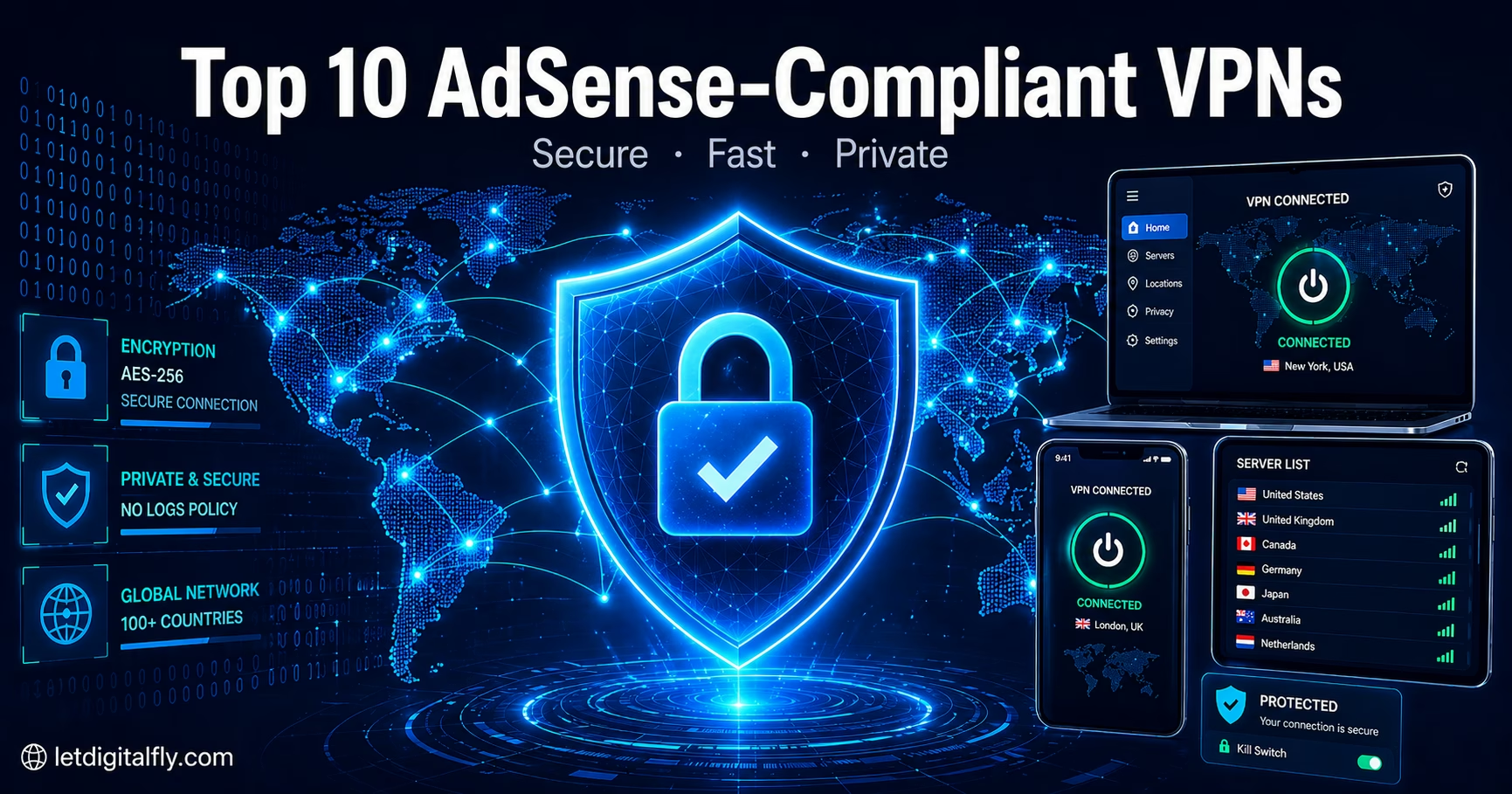
Top 10 AdSense-Compliant VPNs in 2026 for Secure, Fast, and Private Internet Access

Discover the top 10 AdSense-compliant VPNs in 2026 that offer fast speeds, strong encryption, and verified privacy policies — ideal for content creators, remote workers, and businesses.
1. Introduction
In 2026, online privacy is not a luxury — it is a necessity. Every time you connect to the internet, your data is exposed to potential threats: hackers, surveillance, data brokers, and even your own internet service provider. Whether you are a freelancer, a content creator, a remote worker, or a small business owner, protecting your digital activity has become a core part of operating safely online.
Virtual Private Networks, or VPNs, have become one of the most widely used tools for securing internet connections. They mask your real IP address, encrypt your traffic, and route your connection through secure servers across the globe. But not all VPNs are created equal, and choosing the wrong one can cause more problems than it solves — especially for users and businesses who rely on platforms like Google AdSense.
Many publishers and digital marketers specifically look for AdSense-compliant VPNs — tools that protect their privacy without triggering any policy violations or suspicious activity flags. This article breaks down the top 10 VPNs in 2026 that are safe, fast, legally compliant, and trusted by professionals worldwide.
2. What Is a VPN and How Does It Work?
A VPN, or Virtual Private Network, is a technology that creates a secure, encrypted tunnel between your device and the internet. Here is what happens when you connect through a VPN:
IP Masking: Your real IP address is hidden and replaced with the IP address of the VPN server you are connected to. This makes it difficult for websites, advertisers, or third parties to track your real location or identity.
Encryption: Your internet traffic is encrypted using advanced protocols. This means that even if someone intercepts your data, they cannot read it. Most reputable VPNs use AES-256-bit encryption, which is the same standard used by governments and military organizations.
Secure Tunneling: The VPN creates a private tunnel through which your data travels. Protocols like OpenVPN, WireGuard, and IKEv2 are commonly used to establish this secure path.
Server Routing: Your connection is routed through one of the VPN provider's servers, which can be located in dozens or even hundreds of countries. This allows you to appear as though you are browsing from a completely different location.
In simple terms, a VPN acts as a middleman between you and the internet — protecting your identity, encrypting your activity, and allowing you to browse more freely and safely.
3. What Makes a VPN "AdSense-Compliant"?
The term "AdSense-compliant" when applied to VPNs refers to using a VPN in a way that does not violate Google's AdSense policies or create any artificial or deceptive activity on your account.
Here is what that means in practice:
Legal and ethical usage: A compliant VPN is used for legitimate privacy protection, not to manipulate click data, fake traffic, or misrepresent user locations to generate fraudulent ad revenue.
No policy violations: Google AdSense prohibits invalid click activity and artificial traffic inflation. A VPN that routes traffic cleanly and transparently does not inherently violate these policies — the issue arises when VPNs are misused.
Transparent privacy protection: Reputable VPNs that maintain clear no-log policies and operate legally in their registered jurisdictions are considered trustworthy. They protect your data without engaging in shady practices that could put your AdSense account at risk.
Stable, clean IP addresses: Some low-quality or free VPNs share IP addresses that have been flagged by Google for suspicious activity. Premium VPNs offer dedicated or clean shared IPs that are not associated with spam or policy violations.
Using one of the VPNs listed below means you are choosing a tool built on transparency, strong security, and ethical operation — all qualities that align with AdSense's requirements for safe and legitimate usage.
4. Key Features to Look for in a Safe VPN
Before diving into the list, here are the most important features to evaluate when choosing a VPN in 2026:
- Strict no-log policy: The VPN should not store any records of your browsing activity, connection timestamps, or IP addresses.
- Strong encryption standards: Look for AES-256-bit encryption combined with secure protocols like WireGuard or OpenVPN.
- High connection speed: A good VPN should not significantly slow down your internet. Speed matters for streaming, remote work, and browsing.
- Global server network: More server locations mean more flexibility and better performance across different regions.
- Kill switch: This feature disconnects your internet if the VPN drops, preventing any accidental data exposure.
- DNS leak protection: Prevents your DNS queries from being exposed to your ISP even when connected to a VPN.
- Multi-device support: The ability to protect multiple devices simultaneously under one subscription.
- User-friendly interface: Easy to use for both technical and non-technical users.
- Transparent ownership and jurisdiction: Knowing where the company is based and what laws apply to it helps assess its trustworthiness.
- Affordable pricing: Good VPNs offer competitive plans without compromising on quality.
5. Top 10 AdSense-Compliant VPNs in 2026
1. NordVPN
NordVPN remains one of the most recognized and trusted names in the VPN industry. Based in Panama, a country with no mandatory data retention laws, NordVPN has built a strong reputation for privacy and performance.
Key Features:
- Over 6,300 servers in 111 countries
- AES-256-bit encryption with NordLynx protocol (based on WireGuard)
- Verified no-log policy through independent audits
- Threat Protection feature to block malware and ads
- Up to 10 simultaneous device connections
Pros: Extremely fast speeds, consistently reliable, strong security track record, user-friendly apps across all platforms.
Cons: Slightly higher pricing compared to some competitors on monthly plans.
Best Use Case: Remote professionals, content creators, and businesses that need reliable and fast secure browsing.
2. ExpressVPN
ExpressVPN is widely regarded as one of the fastest VPNs available. Based in the British Virgin Islands, it operates outside the 14-Eyes surveillance alliance and has a proven no-log policy.
Key Features:
- Servers in 105 countries
- Lightway protocol for exceptional speed
- TrustedServer technology — servers run on RAM only, meaning no data is written to disk
- MediaStreamer DNS feature for smart TVs and gaming consoles
- Up to 8 simultaneous connections
Pros: Outstanding speed, excellent security model, easy to use, strong track record of protecting user privacy.
Cons: One of the more expensive VPN options on the market.
Best Use Case: Users who prioritize speed and security above all else, especially for streaming and international browsing.
3. Surfshark
Surfshark offers one of the best value propositions in the VPN market. It provides premium features at a significantly lower price and allows unlimited simultaneous connections under one account.
Key Features:
- Over 3,200 servers in 100+ countries
- CleanWeb feature to block ads, trackers, and malware
- Camouflage Mode and NoBorders Mode for restrictive regions
- MultiHop (double VPN) for extra privacy layers
- Unlimited device connections
Pros: Affordable, feature-rich, unlimited devices, solid privacy policy, independent audits completed.
Cons: Speeds can vary depending on server load and location.
Best Use Case: Families, small teams, and budget-conscious users who need protection across many devices.
4. CyberGhost
CyberGhost is known for its beginner-friendly interface and a massive global server network. It is based in Romania, which has strong privacy protections and sits outside major surveillance alliances.
Key Features:
- Over 9,700 servers in 100 countries
- Dedicated streaming and gaming servers
- Automatic kill switch and DNS leak protection
- 45-day money-back guarantee (one of the longest in the industry)
- Up to 7 simultaneous connections
Pros: Easy to use, large server network, strong privacy jurisdiction, long refund window.
Cons: Desktop apps are more polished than mobile versions; some advanced features are limited.
Best Use Case: New VPN users, streamers, and casual browsers who want simplicity without sacrificing privacy.
5. Proton VPN
Proton VPN is developed by the team behind ProtonMail and is based in Switzerland — one of the strongest privacy jurisdictions in the world. It is the only premium VPN with a genuinely unlimited free tier.
Key Features:
- Servers in 100+ countries
- Secure Core architecture routes traffic through privacy-friendly countries before exiting
- NetShield for blocking ads and malware
- Open-source apps, independently audited
- Stealth protocol to bypass VPN blocks
Pros: Exceptional privacy focus, open-source transparency, strong ethics, free plan available.
Cons: Speeds on the free plan are limited; premium pricing is moderate to high.
Best Use Case: Privacy advocates, journalists, activists, and users in high-surveillance regions.
6. Private Internet Access (PIA)
Private Internet Access has been a trusted name in the VPN space for years. It is one of the few VPN providers that has proven its no-log policy in actual court proceedings.
Key Features:
- 35,000+ servers across 91 countries
- Highly customizable encryption settings
- Open-source applications
- MACE feature to block ads and trackers
- Up to 10 simultaneous connections
Pros: Proven no-log policy, very large server network, customizable settings for advanced users.
Cons: Interface may feel dated for some users; US-based jurisdiction.
Best Use Case: Tech-savvy users and those who want proven legal privacy protection.
7. Mullvad VPN
Mullvad takes a unique approach to privacy. It does not require an email address to sign up — you simply receive an account number. It also accepts anonymous payment methods including cash and cryptocurrency.
Key Features:
- Servers in 40+ countries
- WireGuard and OpenVPN support
- No personal data collected at sign-up
- Flat-rate pricing with no long-term commitments
- Port forwarding and IPv6 support
Pros: Maximum anonymity, simple pricing, strong ethical stance, independently audited.
Cons: Fewer servers than competitors; no free trial.
Best Use Case: Users who want the highest possible level of anonymity without any data linkage.
8. Windscribe
Windscribe is a Canadian-based VPN that offers a generous free plan and a strong feature set at an affordable price. It is a solid choice for content creators and privacy-conscious users.
Key Features:
- Servers in 69 countries
- R.O.B.E.R.T. tool to block ads, trackers, and malware
- Unlimited connections per account
- Firewall and split tunneling support
- Build-a-Plan pricing for flexibility
Pros: Flexible pricing, unlimited connections, strong free plan, good transparency practices.
Cons: Speed can be inconsistent; fewer servers than top-tier providers.
Best Use Case: Individual users who want flexibility and a good free-to-paid transition path.
9. IPVanish
IPVanish is a US-based VPN with a focus on speed and unlimited connections. It owns and manages its entire server infrastructure, which means no third-party servers handle your data.
Key Features:
- 2,400+ servers in 90+ locations
- Unlimited simultaneous connections
- SOCKS5 proxy included
- 30-day money-back guarantee
- Strong apps for all major platforms
Pros: Owns its server infrastructure, unlimited devices, fast and reliable connections.
Cons: US jurisdiction may be a concern for privacy purists; logging policy history requires user trust.
Best Use Case: Power users, households, and small businesses that need to connect many devices at once.
10. Hotspot Shield
Hotspot Shield rounds out the list with its proprietary Hydra protocol, which is built for speed. It is used by millions of users worldwide and offers both free and premium plans.
Key Features:
- Servers in 80+ countries
- Proprietary Hydra protocol for fast connections
- Malware protection built in
- Up to 5 simultaneous connections on premium plan
- Simple, clean user interface
Pros: Very fast connections, easy to use, trusted by a large user base.
Cons: Privacy policy is less strict than some competitors; free plan is ad-supported.
Best Use Case: Casual users who prioritize speed and ease of use for everyday browsing.
6. VPN Performance Comparison
When comparing these VPNs across key performance factors, here is a general overview:
Speed: NordVPN, ExpressVPN, and Hotspot Shield consistently rank highest for raw connection speed. Surfshark and CyberGhost also perform well in most regions.
Security: Proton VPN, Mullvad, and Private Internet Access lead on transparency and privacy standards. All ten VPNs listed use strong encryption and support modern protocols.
Pricing: Surfshark and Windscribe offer the most affordable options. Mullvad offers simple flat-rate pricing. ExpressVPN is the most premium in cost.
Usability: CyberGhost and Hotspot Shield are the easiest for beginners. NordVPN and ExpressVPN strike the best balance between power and usability.
7. Benefits of Using a Secure VPN
- Privacy protection: Your online activity remains private from ISPs, advertisers, and surveillance systems.
- Secure public Wi-Fi connections: VPNs encrypt your data on unsecured networks like coffee shop or airport Wi-Fi.
- Access flexibility: Connect to servers in different countries to access region-restricted content and services.
- Data safety for remote workers: Employees can securely access company systems from anywhere in the world.
- Protection from cyber threats: Many VPNs include built-in ad blockers, malware shields, and anti-tracking features.
- Reduced risk of identity theft: Masking your IP and encrypting your data lowers the risk of personal information being stolen.
8. Common Mistakes to Avoid When Choosing a VPN
Choosing free VPNs without research: Many free VPNs generate revenue by selling user data — the very thing a VPN is supposed to protect. Always verify the privacy policy before trusting any free service.
Ignoring jurisdiction: Where a VPN company is based determines which data retention laws apply to it. A VPN based in a country that is part of the 5, 9, or 14 Eyes intelligence-sharing alliance may be required to share user data with governments.
Overlooking audit history: Reputable VPNs regularly submit to independent audits to verify their no-log claims. Avoid providers that have never been independently verified.
Prioritizing price over security: Going with the cheapest option often means weaker encryption, slower speeds, and questionable data practices.
Not checking for IP or DNS leaks: Some VPNs claim to protect your identity but have technical vulnerabilities that expose your real IP or DNS queries. Always test a VPN before fully committing to it.
9. Business Perspective: Why VPN Technology Matters
For businesses in 2026, VPN technology is not just about individual privacy — it is a core part of digital infrastructure. Companies of all sizes rely on secure VPN systems to:
- Protect sensitive client data from breaches and interception
- Enable secure remote access for distributed teams
- Ensure compliance with data protection regulations like GDPR
- Safeguard internal communications and proprietary information
- Build trust with clients who expect their data to be handled securely
As cyber threats become more sophisticated and regulations more stringent, businesses that invest in strong network security — including VPN infrastructure — are better positioned to operate confidently in a digital-first environment.
10. How Custom VPN or Secure Software Solutions Can Be Built
For organizations with specific needs, off-the-shelf VPN solutions may not always be sufficient. Custom VPN and security software systems offer greater control, flexibility, and alignment with unique business requirements.
A custom-built solution typically involves:
Backend security architecture: Building secure server infrastructure with defined access controls, user authentication, and encrypted communication channels.
Custom encryption models: Implementing encryption tailored to the specific data types and threat models relevant to the business.
Network infrastructure design: Planning and deploying servers across strategic locations to ensure performance and redundancy.
User management and access control: Developing systems that define who can access what, under which conditions, and with what level of visibility.
Monitoring and compliance tools: Building dashboards and automated systems to detect anomalies, monitor performance, and ensure ongoing regulatory compliance.
Custom solutions give organizations complete ownership of their security stack, which is especially valuable in industries where data handling is heavily regulated — such as healthcare, finance, and legal services.
11. Professional Digital Security Solutions
For individuals and businesses that need more than a subscription-based VPN, working with a professional digital solutions team can make a significant difference. Whether you need a custom VPN setup, a secure web application, privacy-focused software, or a scalable digital security platform, having the right technical partner matters.
LetDigitalFly (https://www.letdigitalfly.com/) offers a range of services focused on building secure, scalable, and performance-driven digital systems. Their team works with businesses to design and implement solutions that prioritize data privacy, operational security, and long-term digital resilience. From custom software development to secure infrastructure planning, they approach each project with a focus on practical results and client trust.
If your current tools are not meeting your security or privacy needs, partnering with a team that understands modern digital security standards is a smart and forward-thinking move.
Essential Publisher FAQ
If you are looking to monetize your website or blog, Google AdSense remains one of the most reliable ad networks available. Below are quick, direct answers to the most common questions publishers face today.
Has Google AdSense approval become stricter?
Yes. Google has significantly raised the bar, strictly enforcing its E-E-A-T (Experience, Expertise, Authoritativeness, Trustworthiness) guidelines. The most common rejection is "Low-Value Content." To get approved, your site must feature highly original articles, clear navigation, an SSL certificate (HTTPS), and essential pages like a Privacy Policy. Generic or unedited AI content is routinely denied.
What is a good site URL with "tommy" in AdSense?
Google doesn't favor specific words, but it does favor professional, branded domains. If you want to use "tommy," choose a URL that targets a clear niche and uses a reputable extension like .com.
-
Good examples:
tommystechtips.com,tommyskitchen.com, orbytommy.com -
Avoid: Hyphenated words, long strings of numbers, or sketchy free domain extensions.
Can a person born in 2000 use AdSense?
Yes, absolutely. The minimum age requirement to own an AdSense account is 18 years old. Anyone born in the year 2000 is well over the legal age limit and fully eligible to sign up, manage an account, and receive legal payouts.
How do you use AdSense to make money?
AdSense monetization boils down to a straightforward process:
-
Build a Site: Create a blog or tool focused on a specific niche.
-
Drive Traffic: Regularly publish high-quality content that ranks well on search engines.
-
Place Ads: Insert the AdSense code onto your site (or enable Auto Ads).
-
Earn Revenue: You get paid via CPC (when users click ads) and CPM (when users view ads).
What is a Google AdSense PIN?
The AdSense PIN is a physical 6-digit verification code that Google mails to your home address. Once your earnings reach the local verification threshold (typically $10), Google posts this number to verify your identity. You must enter this code into your dashboard to unlock future payouts.
How do you close an AdSense account?
To permanently shut down your account, follow these steps:
-
Log in to Google AdSense.
-
Go to Account $\rightarrow$ Settings $\rightarrow$ Account information.
-
Click Close account in the "Account status" section.
-
Select your reason for leaving, check the authorization box, and confirm.
Note: If your remaining balance is over the cancellation threshold—typically $10—Google will issue a final payment within 90 days.
Conclusion
Online privacy and security are no longer optional — they are fundamental to how we operate in the digital world. Whether you are an individual protecting your personal data, a content creator managing your AdSense account responsibly, or a business securing sensitive communications, a reliable VPN is one of the most practical tools available.
The ten VPNs covered in this article — NordVPN, ExpressVPN, Surfshark, CyberGhost, Proton VPN, Private Internet Access, Mullvad, Windscribe, IPVanish, and Hotspot Shield — each bring a distinct combination of speed, security, privacy, and value to the table. Choosing the right one depends on your specific needs, usage patterns, and budget.
The key takeaway is this: use a VPN that is transparent, independently verified, and built on strong security principles. Avoid cutting corners with unverified free tools that may compromise the very privacy they claim to protect.
If you are looking to build your own VPN solution or any kind of secure software system, you can contact our team through the Contact page: https://www.letdigitalfly.com/contact/
Investing in the right digital security tools today is the smartest decision you can make for a safer, more private, and more resilient online presence in 2026 and beyond.