YouTube, YouTube TV, YouTube Music, and StreamEast: How Modern Digital Streaming Platforms Work, Generate Revenue, and Shape the Future of Online Entertainment

Discover how YouTube, YouTube TV, YouTube Music, and StreamEast work, generate revenue, and reshape the future of digital entertainment — from CDN infrastructure to monetization models.
Introduction:
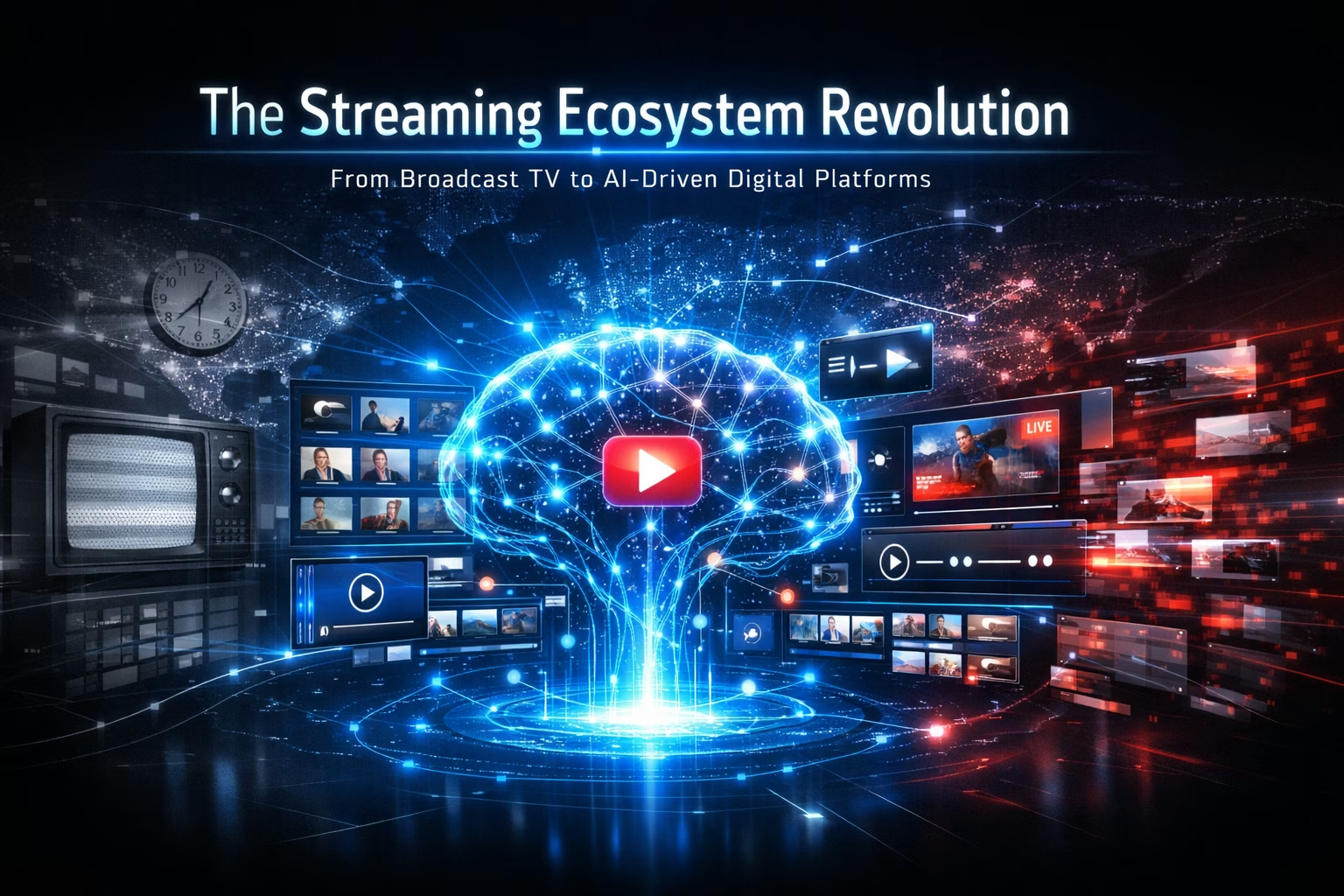
Not long ago, people planned their evenings around television schedules. You waited for your favorite show to air, sat through commercials you had no interest in, and accepted whatever the broadcaster decided to put in front of you. That model no longer reflects how most people consume content today.
The global digital streaming industry crossed $500 billion in value in recent years and continues expanding at a pace that makes traditional broadcast media look obsolete. What drove this shift was not just better internet speed or smarter devices. It was a fundamental change in how people relate to content. Viewers now expect content on demand, personalized to their taste, available across every screen they own, and accessible the moment they want it.
YouTube became the first platform to truly democratize video publishing at scale. What started as a place to upload home videos in 2005 grew into the world's second-largest search engine, a content economy supporting millions of creators, and the backbone of a broader digital entertainment ecosystem that now includes live TV, music streaming, and premium subscription tiers.
Alongside the official, subscription-based giants, free streaming platforms like StreamEast have emerged to capture audiences who either cannot afford paid services or simply prefer not to pay. Understanding why these platforms exist, how they operate, and what they represent analytically is important for anyone studying the modern digital media landscape.
This article breaks down all of these systems — from the technology behind them to their revenue models, user experience design, and what they mean for businesses looking to enter the streaming space.
The YouTube Ecosystem: One Brand, Multiple Products
Most people think of YouTube as a single product. In reality, it is a family of interconnected platforms, each targeting a different use case but sharing the same core infrastructure, data systems, and user base.
YouTube (Main Platform)
The core YouTube platform is a video hosting and discovery engine. Over 500 hours of video are uploaded to it every minute. Its strength is not storage — it is discovery. The recommendation algorithm determines what content surfaces for each user based on watch history, engagement patterns, search behavior, time spent on videos, and dozens of other signals.
Creators upload content, optimize it for search, build audiences, and earn revenue through advertising and channel memberships. Viewers consume content, interact through comments and likes, subscribe to channels, and feed the algorithm data that makes future recommendations more accurate. This cycle of creation, discovery, and engagement is the engine that keeps YouTube growing.
YouTube TV
YouTube TV is a separate subscription product offering live television streaming over the internet. It packages traditional broadcast channels — news networks, sports channels, entertainment networks — and delivers them through an internet connection rather than a cable or satellite signal. Subscribers pay a monthly fee, roughly $73 in the US market, and receive access to dozens of live channels with unlimited cloud DVR storage.
This product directly competes with traditional cable TV. It targets cord-cutters: people who want access to live content, particularly live sports and news, without a physical cable subscription.
YouTube Music
YouTube Music is the platform's audio streaming service. It competes with Spotify, Apple Music, and Amazon Music by offering both on-demand music streaming and access to music videos, live performances, and covers that exist only on YouTube. The platform uses Google's vast music licensing agreements and the YouTube library to provide a deeper catalog than most competitors.
Users can access it for free with ads or subscribe to YouTube Music Premium for ad-free listening, background playback, and offline downloads. YouTube Premium, a higher tier, bundles YouTube Music with an ad-free experience across the main YouTube platform.
How They Work Together
These three products share user accounts, payment infrastructure, and recommendation data. A user who watches a lot of music content on YouTube is likely to see YouTube Music promotions. A YouTube TV subscriber can access their subscription through the same Google account. This integration creates a unified ecosystem where each product feeds engagement back into the others, increasing overall retention and lifetime customer value.
How Streaming Platforms Work: The Technical Foundation
To understand why streaming platforms are complex and expensive to build, it helps to understand what actually happens when you press play on a video.
Content Delivery Networks (CDN)
When you watch a video on YouTube, the file does not travel from a single server in California to your device. That would be too slow and too unreliable. Instead, YouTube uses a global Content Delivery Network — a system of servers distributed across cities and countries worldwide. The video is cached on the server closest to your physical location. When you hit play, the data travels the shortest possible distance, reducing buffering and improving quality.
Google operates one of the largest CDN infrastructures on the planet, which gives YouTube a speed and reliability advantage that smaller platforms struggle to match.
Video Encoding and Adaptive Streaming
When a creator uploads a video, YouTube does not store it as a single file. It encodes the video into multiple quality levels — 144p, 360p, 720p, 1080p, 4K — using efficient compression formats like VP9 and AV1. The streaming player on your device monitors your internet speed in real time. If your connection slows down, it automatically switches to a lower quality version to prevent buffering. This technology is called adaptive bitrate streaming, and it is the reason YouTube videos rarely freeze even on inconsistent connections.
Cloud Infrastructure
YouTube runs on Google Cloud, which provides the computing power, storage, and database systems needed to handle billions of daily video views. Cloud infrastructure means platforms can scale up instantly during traffic spikes — a major sporting event or viral video — without building physical server capacity that sits idle most of the time.
Real-Time Data Processing
Every interaction on YouTube generates data: what you watched, how long, whether you skipped an ad, what you searched for. This data flows into machine learning systems that continuously update recommendation models and advertising targeting. The technical infrastructure handling this real-time data processing is as complex as the video delivery system itself.
YouTube TV and the Live Streaming Model
Live streaming at scale is technically more demanding than on-demand video. With recorded content, platforms can pre-process and cache files in advance. With live content, data must be captured, encoded, and delivered to millions of viewers with minimal delay — all at once.
YouTube TV addresses this through a combination of low-latency streaming protocols and distributed cloud encoding. A live news broadcast, for example, is ingested from the broadcaster's feed, encoded in real time across multiple quality levels, and pushed to CDN nodes globally so viewers in different locations all receive a smooth signal.
Compared to traditional cable, YouTube TV offers several advantages: no physical infrastructure required, access from any internet-connected device, and features like cloud DVR that cable companies have historically charged extra for. The limitations are also real — internet outages affect the service in a way that cable is less vulnerable to, and live sports streaming rights remain complicated and expensive to acquire.
The subscription model for YouTube TV is straightforward. A single monthly fee provides access to the full channel package. There are no contracts, which lowers the barrier to sign up and also to cancel. This flexibility is part of what makes the product attractive to a younger demographic that resists long-term commitments to service providers.
YouTube Music and the Audio Streaming Economy
Music streaming operates on a different economic model than video. The content — individual songs — is shorter, consumed repeatedly, and governed by licensing agreements with record labels rather than direct creator relationships.
YouTube Music pays rights holders based on a combination of premium subscription revenue and advertising revenue from free-tier users. The per-stream payout is a fraction of a cent, which makes scale critical. A platform needs hundreds of millions of active listeners to generate meaningful royalty payments.
The recommendation system in YouTube Music analyzes listening history, skips, replays, playlist additions, and time-of-day patterns to build a personalized music profile. The more a user listens, the more accurate the recommendations become. This is intentional — deeper personalization increases retention and reduces the likelihood a user will switch to a competitor.
The freemium model is central to the platform's growth strategy. Free users generate ad revenue and, more importantly, experience the product well enough to eventually convert to paid subscriptions. YouTube Music's advantage over pure-audio competitors is the YouTube library itself: live performances, rare recordings, and fan-uploaded content that cannot be found on Spotify or Apple Music.
Artists benefit from both streams and video views on the underlying YouTube platform, creating a dual-revenue path that does not exist on audio-only services. However, payout rates remain a point of tension between streaming platforms and musicians, with many independent artists arguing that the current model favors established labels over emerging creators.
StreamEast: Understanding Free Streaming Platforms Analytically
StreamEast is a free streaming site known primarily for broadcasting live sports. It operates without the licensing agreements that legitimate platforms like YouTube TV maintain, which raises significant legal and ethical concerns. This section addresses the platform from a purely analytical perspective — not to endorse its use, but to understand why such platforms exist and what user behavior drives their traffic.
The demand for free sports streaming reflects a gap in the paid market. Live sports rights are fragmented across multiple paid services, meaning a fan who wants to watch football, basketball, and international soccer may need three or four separate subscriptions. The total cost becomes significant, and a portion of the audience — particularly in lower-income markets or regions where licensed services are unavailable — turns to unauthorized platforms as a result.
StreamEast and similar platforms typically generate revenue through aggressive advertising, often from ad networks that serve lower-quality or potentially harmful ads. The user experience is generally poor: frequent pop-ups, unreliable streams, and no customer support. The platforms themselves carry legal risk and can be taken down or blocked by internet service providers under copyright enforcement actions.
From a market analysis perspective, the existence of these platforms is a signal. When significant audiences turn to unauthorized services, it usually means licensed alternatives are either too expensive, too fragmented, or unavailable in certain regions. The long-term industry response has been to improve accessibility, reduce price points, and expand geographic availability — which is the more sustainable solution.
Monetization Models: How Streaming Platforms Generate Revenue
Modern streaming platforms use multiple revenue streams simultaneously. No single model is sufficient at scale.
Advertising Revenue YouTube's primary revenue source is advertising. Advertisers pay to show pre-roll ads, mid-roll ads, display ads, and sponsored cards alongside content. YouTube uses detailed audience targeting based on user data, which makes its ad inventory significantly more valuable than traditional broadcast advertising. Creators receive approximately 55% of the ad revenue generated on their content.
Subscription Models YouTube Premium, YouTube TV, and YouTube Music all operate on recurring subscription revenue. This model provides predictable income and higher lifetime customer value than ad-supported users. Subscription revenue also reduces dependence on advertiser spending cycles, which can be volatile during economic downturns.
Premium Content and Paid Features Super Chats during live streams, channel memberships, and merchandise shelves are creator-driven monetization tools that YouTube takes a percentage of. These features deepen the financial relationship between creators and their most dedicated audiences.
Data-Driven Monetization While not always visible to users, the data that streaming platforms collect has enormous commercial value. Audience insights, behavioral analytics, and consumption pattern data inform advertising products, content investment decisions, and partnership deals. This data layer is a monetization asset in itself.
Licensing and Partnerships YouTube TV's channel packages involve complex licensing deals with broadcasters. YouTube Music operates under licensing agreements with major and independent labels. These deals represent costs but also create barriers to entry for competitors who cannot afford similar arrangements.
User Experience: Why Design and Personalization Drive Retention
Technology alone does not determine a streaming platform's success. User experience design — how the platform feels to use — directly affects how long people stay and whether they return.
YouTube's interface is optimized for discovery. The homepage is not a catalog; it is a personalized feed. The autoplay feature keeps users watching by eliminating the friction of choosing the next video. Mobile apps are built for one-handed use, with vertical scrolling and large thumbnails. The design language is intentionally minimal to keep attention on the content rather than the interface.
Recommendation systems are where the most significant UX decisions happen. What appears in the sidebar, what plays next, and what surfaces in search results are all products of algorithmic decisions. These systems are designed to maximize watch time, which correlates with ad revenue. Critics have argued that this optimization can sometimes surface sensational or low-quality content — a known tension that YouTube continues to work on through policy and algorithm adjustments.
Multi-device consistency is another key UX priority. A user might discover content on mobile, continue watching on a smart TV, and check back through a desktop browser. The platform maintains watch history, subscriptions, and preferences across all devices through account synchronization, creating a seamless cross-device experience that users have come to expect.
The Business Case for Streaming Platform Investment
Streaming is not just a consumer product category — it is one of the most active areas of technology investment globally. The reasons are structural.
Content consumption is moving entirely to digital. Traditional TV audiences are declining across every demographic. Advertising budgets follow audiences, which means digital video advertising will continue growing as broadcast advertising shrinks. Companies that own streaming infrastructure are positioned to capture this shift.
The data advantage of streaming platforms creates compounding value over time. The longer a platform operates, the more it knows about its users, and the more effective its recommendations and ad targeting become. This creates a defensible competitive position that is difficult for new entrants to replicate quickly.
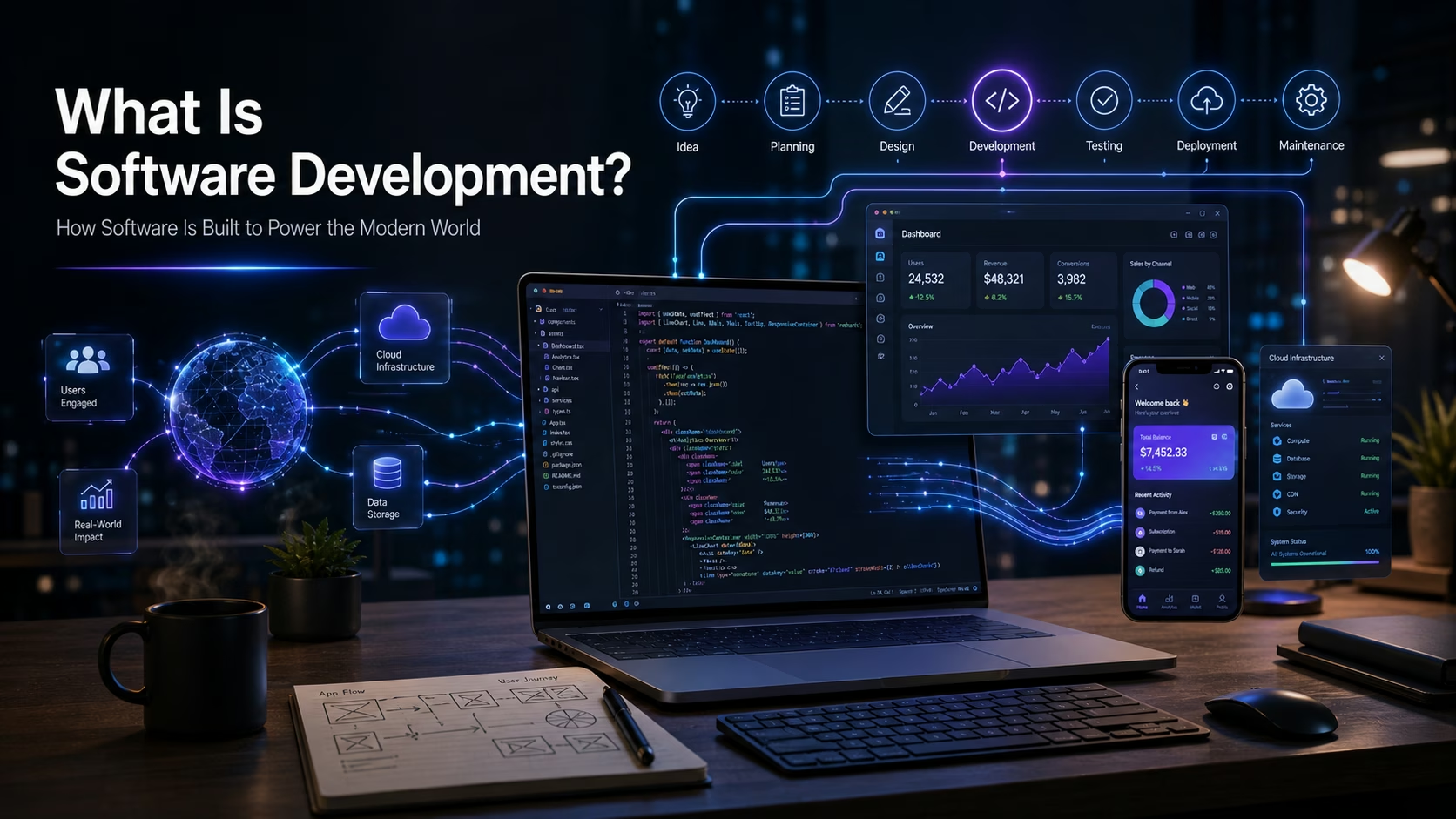
For businesses outside the entertainment industry, streaming technology is increasingly relevant. Corporate training platforms, online education providers, fitness companies, religious organizations, and news publishers all operate streaming infrastructure at various scales. The tools and infrastructure that power YouTube are available in modular form through cloud providers, making it feasible for organizations to build custom streaming solutions tailored to their specific audiences.
How Businesses Can Build Streaming Platforms
Building a streaming platform requires decisions across several technical and business dimensions.
On the backend, platforms need video ingestion systems that accept uploads, transcoding pipelines that convert source files into multiple quality levels, object storage for video files, and CDN integration for delivery. Database systems manage user accounts, viewing history, and content metadata. Real-time analytics systems track engagement and feed recommendation models.
Payment infrastructure is required for subscription and pay-per-view models. This involves integrating with payment processors, managing subscription billing cycles, handling refunds, and maintaining compliance with financial regulations across different markets.
The front end — the application that users actually interact with — needs to be built for web, iOS, and Android at minimum. Smart TV apps are increasingly expected. Each platform has different design guidelines and performance constraints. A consistent, high-quality experience across all of these surfaces requires significant design and engineering investment.
Content moderation, rights management, and compliance with local regulations are operational requirements that do not appear in the technical architecture but represent ongoing costs and organizational complexity.
Building Your Streaming Vision with the Right Development Partner
Understanding how YouTube, YouTube TV, and YouTube Music work is valuable. Translating that understanding into a functional product requires both technical expertise and strategic clarity.
This is where specialized development partners become important. LetDigitalFly (https://www.letdigitalfly.com/) works with businesses that want to build streaming platforms, OTT solutions, music streaming applications, and live TV systems. Whether the goal is a YouTube-style video platform, a subscription-based music service, or a live broadcasting application for a specific niche market, the technical and design foundations are the same — and they require the same careful architecture decisions.
Businesses looking to enter the streaming space often underestimate the complexity of building scalable video infrastructure. Working with an experienced development team that understands CDN integration, adaptive streaming, user experience design, and monetization system architecture reduces risk and accelerates time to market.
Conclusion: Streaming Is the Infrastructure of Digital Culture
YouTube did not just build a video platform. It built the infrastructure through which a significant portion of global media culture now flows. YouTube TV extended that infrastructure into live broadcasting. YouTube Music extended it into audio. Together, they represent a model for how integrated digital entertainment ecosystems generate value — for the company, for creators, and for advertisers.
StreamEast's existence, despite its legal ambiguity, tells us something important: demand for accessible streaming always exceeds what the formal market provides. The long-term response from the industry is not enforcement alone — it is building better, more accessible, and more affordable licensed alternatives.
For businesses, the streaming landscape represents both a reference model and an opportunity. The technology is more accessible than ever. The audience demand is clear and growing. The question is whether organizations can build the right product for the right audience with the right experience — and that is an execution challenge as much as a technical one.
If you are ready to build a streaming platform, a music service, a live TV application, or any digital product inspired by the systems described in this article, the next step is a conversation with a team that understands both the technology and the business.
You can reach out directly through the Contact Us page at https://www.letdigitalfly.com/contact-us — and start turning your streaming concept into a working product.