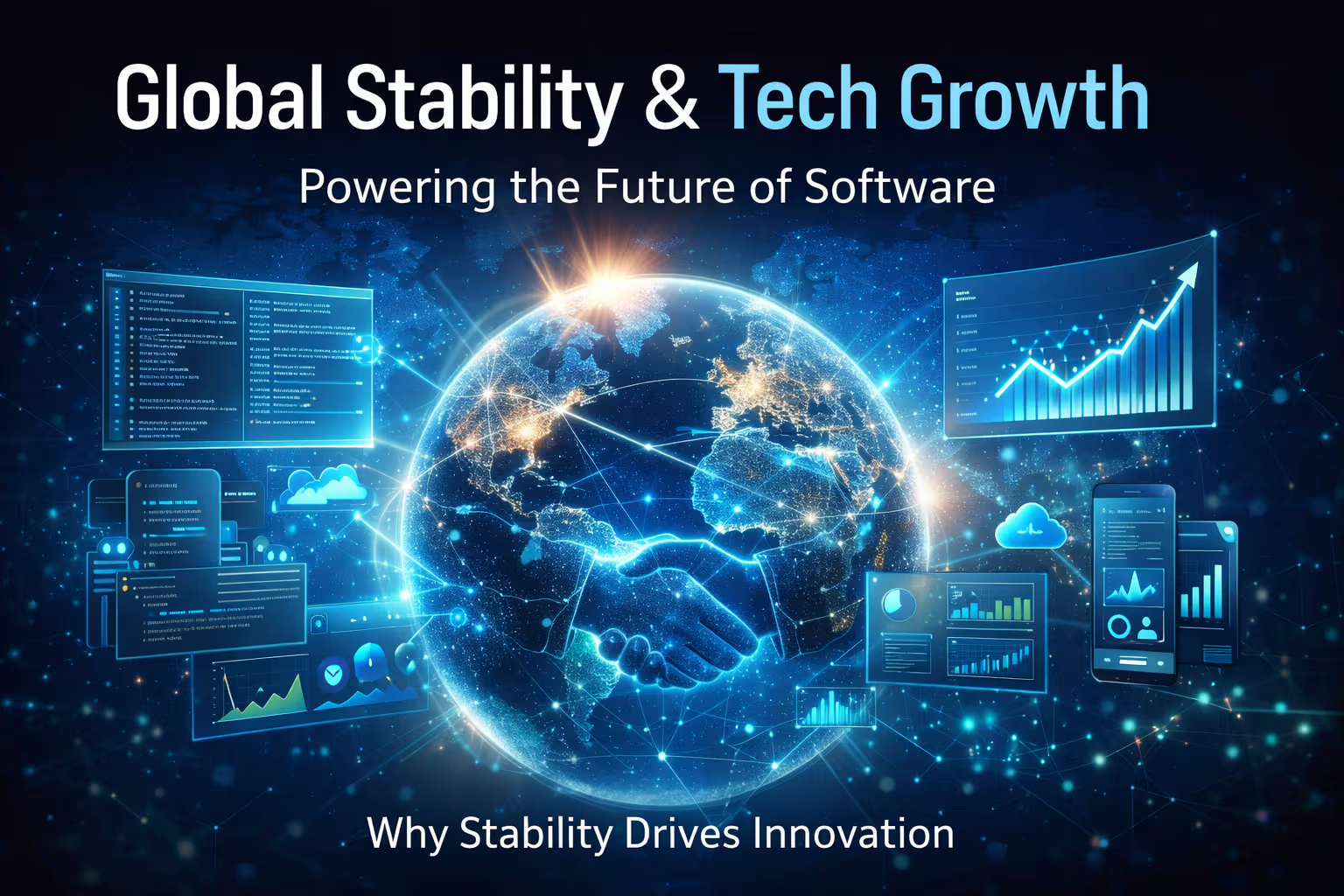
Global Stability & Its Impact on Software Development Growth

Explore how global stability is reshaping software development in 2026. From increased tech investment and startup funding to cross-border collaboration and AI adoption, discover what a more stable world means for businesses, entrepreneurs, and IT service providers — and how to position your company for growth.
What if the biggest factor shaping the future of technology isn't code, capital, or computing power — but peace?
Over the past few years, the world has experienced significant economic turbulence, geopolitical tensions, and supply chain disruptions. But as we move through 2026, a shift is underway. Ceasefires are being negotiated, trade relationships are stabilizing, and markets are regaining confidence. For businesses, startups, and tech companies, this matters enormously.
Global stability and software development are more connected than most people realize. When the world is stable, economies grow, investors open their wallets, and technology thrives. In this article, we'll explore how global stability impacts the IT industry, what software development trends are shaping 2026, and how businesses can position themselves to benefit from this powerful wave.
What Is Global Stability — And Why Does It Matter for Business?
Global stability refers to a state in which political, economic, and social conditions across countries are relatively calm, predictable, and conducive to growth. It doesn't mean the absence of all conflict or challenge — it means the world is operating in a way that allows businesses, governments, and individuals to plan for the future with reasonable confidence.
There are three key pillars of global stability that directly affect technology and business:
- Political Stability: Predictable governance, functioning institutions, and reduced international conflict.
- Economic Stability: Consistent GDP growth, controlled inflation, stable currencies, and reliable trade relationships.
- Market Stability: Investor confidence, accessible funding, and steady consumer demand.
When these three elements align, the environment for business investment — especially in technology — becomes highly favorable.
Overview of the Software Development Industry
The global software development market has experienced remarkable resilience and growth. According to industry forecasts, the global software market is expected to surpass $1 trillion in value by 2026, driven by rapid digital transformation across every sector.
From healthcare to finance, education to retail — nearly every industry is undergoing a digital overhaul. This has created unprecedented demand for software development services, mobile applications, cloud platforms, and AI-powered solutions.
Key Growth Drivers:
- Accelerated digital transformation post-pandemic
- Rising smartphone penetration in developing markets
- Remote work infrastructure needs
- Growing reliance on e-commerce and digital payments
- Widespread adoption of cloud computing
The software industry is no longer a niche sector — it is the backbone of the global economy. And global stability acts as jet fuel for this already roaring engine.
How Global Stability Impacts Software Development (Core Analysis)
This is the heart of the matter. Here's how a more stable global environment directly accelerates the growth of software development:
1. Increased Investment in Technology
When geopolitical risks decrease and economies stabilize, investors become more willing to commit capital. Venture capital flows into tech startups, infrastructure spending increases, and large enterprises greenlight digital transformation projects that were previously on hold.
A stable world means fewer 'wait and see' decisions. Businesses invest, expand, and build — and that always begins with software.
2. Lower Operational Risks for IT Companies
Software companies operating globally face risks like currency volatility, trade restrictions, and regional instability. In a stable environment, these risks diminish significantly.
IT firms can confidently set up development centers in new regions, expand client relationships internationally, and hire talent across borders — all without the fear of sudden disruptions.
3. Better Funding for Startups
Startups are particularly sensitive to instability. When economic conditions are uncertain, funding dries up. But in stable markets, angel investors, VCs, and even government grants become more accessible.
For tech startups in 2026, a more stable global landscape means shorter fundraising cycles, more favorable valuations, and greater appetite from investors for innovative ideas.
4. Expansion of IT Services Globally
Global stability opens trade corridors and strengthens international partnerships. Software development companies can now offer their services across new geographies with fewer barriers.
Countries like Pakistan, India, Ukraine, and the Philippines — which are major hubs for software outsourcing — benefit enormously when the global environment stabilizes, as more Western companies are willing to engage with international vendors.
5. Greater Collaboration Across Borders
Technology has always thrived on collaboration, but geopolitical tensions often restrict it. Stable international relations enable cross-border partnerships, open-source contributions, and joint ventures that accelerate innovation.
Think of global R&D partnerships, international cloud infrastructure projects, and collaborative AI research — all of these require a stable world to flourish.
The Impact of Ceasefires and Reduced Conflicts on the IT Industry
One of the most tangible examples of stability's impact on technology is the relationship between conflict reduction and market behavior.
Peace Boosts Markets Directly
When conflicts de-escalate or ceasefires are reached, we typically see:
- Immediate stock market rallies — tech stocks included
- Oil price stabilization, reducing logistics and energy costs
- Resurgence in business confidence and consumer spending
- Renewed interest from foreign investors
Oil Price Stability and Its Indirect Effect on Tech
Stable oil prices reduce the cost of running data centers, shipping hardware, and powering cloud infrastructure. This lowers operating costs for software companies and passes savings on to their clients — making digital solutions more accessible.
Growth in Outsourcing and Remote Work
In conflict-affected or politically unstable regions, outsourcing contracts are difficult to sustain. But as peace returns, outsourcing hubs come alive. Remote work models become viable, distributed teams become practical, and the global talent pool expands dramatically.
For businesses seeking to build or scale software products, this means access to world-class developers at competitive rates — a major competitive advantage.
Benefits for Businesses and Startups in a Stable Environment
Whether you're a Fortune 500 company or a two-person startup, global stability opens doors. Here's how:
- Faster Scaling: With reliable funding and reduced risk, businesses can grow their teams, infrastructure, and customer base more quickly.
- Easier Access to Funding: Investors are more active in stable environments, making it easier to secure seed rounds, Series A, and beyond.
- More Room for Innovation: When survival isn't the priority, companies invest in R&D, explore emerging technologies, and build long-term products.
- Higher Demand for Digital Solutions: Economic growth drives demand for apps, websites, AI tools, automation software, and digital marketing — all requiring software development services.
- Stronger Customer Confidence: When consumers and businesses feel secure, they spend more — including on technology.
Key Software Development Trends to Watch
As the environment stabilizes and investment flows, several key trends are shaping the software development landscape :
Artificial Intelligence Integration
AI is no longer optional — it's expected. From chatbots to predictive analytics, AI features are now standard in modern software. Businesses that don't integrate AI risk being left behind.
Cloud-First and Multi-Cloud Architecture
Cloud adoption continues to accelerate. In 2026, most new software is being built cloud-native, offering scalability, reliability, and lower infrastructure costs.
Mobile-First Development
With global smartphone usage surpassing 6.5 billion users, mobile-first design is non-negotiable. Apps that don't work flawlessly on mobile lose customers.
Automation and Low-Code/No-Code Tools
The rise of automation tools and low-code platforms is enabling businesses to deploy software faster and at lower cost. This democratizes technology for non-technical founders and SMBs.
Cybersecurity as a Core Priority
With digital expansion comes digital risk. Cybersecurity demand is surging, and software development companies are increasingly embedding security into every layer of their products.
Opportunities for IT Service Providers: The Market Is Ready
For IT service providers, 2026 represents a golden window of opportunity. Here's why:
- The demand for custom software development is at an all-time high.
- Businesses across industries are prioritizing digital transformation to stay competitive.
- SMBs that previously couldn't afford custom software are now investing due to stable markets.
- Enterprises are looking for reliable partners to build AI and automation solutions.
- Global expansion means new clients in new markets — for every IT firm willing to reach them.
At LetDigitalFly, we understand this moment better than most. We provide modern software development solutions — from custom web and mobile applications to AI integrations and automation tools — helping businesses of all sizes navigate their digital transformation journey.
Whether you're a startup looking to build your MVP or an enterprise ready to modernize your systems, the right technology partner makes all the difference. And in a stable, growth-oriented market, there's never been a better time to invest in your digital future.
Challenges That Remain Even in Stable Times
It's important to stay grounded. Even in a stable global environment, the software industry faces persistent challenges:
- Intense Competition: The low barrier to entry in software development means fierce competition for both talent and clients.
- Rapid Technological Change: The pace of innovation means that skills and platforms can become outdated quickly. Continuous learning is essential.
- Skill Gaps: Despite a large global talent pool, specialized skills in AI, blockchain, and cybersecurity remain in short supply.
- Data Security and Privacy Risks: As software becomes more integrated into daily life, the risk of breaches increases. Compliance requirements grow more complex.
Understanding these challenges is part of building a resilient digital strategy — one that is built to last, not just to launch.
How Businesses Should Prepare for the Digital Wave Ahead
The opportunity is real — but preparation is key. Here's how businesses can position themselves to benefit from this growth environment:
- Invest in Digital Solutions Now: Don't wait for perfect conditions. The best time to build your digital infrastructure is before your competitors do.
- Build Scalable Systems: Design your software with growth in mind. Scalable architecture saves time and money as your business expands.
- Hire or Partner with IT Experts: Whether you build an in-house team or work with a trusted development partner, access to skilled talent is non-negotiable.
- Embrace Automation and AI: These technologies dramatically increase efficiency and reduce costs. Start integrating them now to gain a competitive edge.
- Focus on Mobile and Cloud: Ensure your digital presence is optimized for mobile and hosted on reliable, scalable cloud infrastructure.
- Prioritize Cybersecurity: Build security into every phase of your software development lifecycle — not as an afterthought.
Future Outlook:
The trajectory is clear: technology will only become more central to how we live, work, and do business. As global stability improves, the conditions for tech growth become even more powerful.
Here's what we can anticipate in the coming years:
- AI-Driven Economy: Artificial intelligence will move from a tool to a fundamental layer of all business operations.
- Global Tech Expansion: Emerging markets will see explosive growth in tech adoption, opening vast new opportunities.
- Rise of Smart Businesses: Organizations that integrate digital-first thinking across every department will outperform those that don't.
- Greater Cross-Border Collaboration: International partnerships in tech will become more common, accelerating innovation globally.
- Sustainability-Focused Software: Environmental considerations will shape how software products are designed and deployed.
The businesses that act today — by investing in robust digital solutions and forming the right tech partnerships — will be the ones that lead tomorrow.
Ready to Grow? Let LetDigitalFly Take You There.
The global environment is shifting in your favor. Markets are stabilizing, investment is flowing, and the demand for digital solutions is growing faster than ever. This is your moment.
LetDigitalFly helps businesses grow with modern software, mobile apps, and AI solutions tailored to your specific goals. Whether you're launching a new product, upgrading legacy systems, or scaling your operations — we have the expertise to make it happen.
Free Consultation: Contact us today to start your digital transformation journey. Our team of experts is ready to help you build, grow, and lead in the digital age.
Visit us at LetDigitalFly.com — or reach out directly for a free, no-obligation consultation. Your digital future starts now.
Conclusion
The relationship between global stability and software development growth is undeniable. When the world is more peaceful, economies grow, investors act, businesses expand, and technology flourishes.
In 2026, we are entering a pivotal period — one where reduced global tensions, stabilizing markets, and advancing technology are converging to create extraordinary opportunities for businesses of all sizes.
Whether you're a startup founder, a business owner, or a tech entrepreneur, the message is clear: now is the time to invest in your digital capabilities, build scalable software solutions, and partner with experts who understand both the technology and the global landscape.
The world is stabilizing. The tech wave is rising. Position yourself to ride it.
Frequently Asked Questions (FAQ)
1. What is global stability in the context of technology?
Global stability in tech refers to a world environment where political, economic, and market conditions are predictable and conducive to investment. It enables tech companies to plan, expand, and innovate without fear of sudden disruptions.
2. How does global stability impact software development?
Global stability directly boosts software development by increasing investor confidence, lowering operational risks, enabling cross-border collaboration, and driving higher demand for digital solutions across all industries.
3. Why do tech companies grow faster during peaceful times?
Peaceful conditions reduce geopolitical risk, stabilize currencies, lower energy costs, and open international markets — all of which make it easier and more profitable to build, sell, and scale technology products.
4. What are the key software development trends?
The major trends include AI integration, cloud-native development, mobile-first design, automation and low-code platforms, and an intensified focus on cybersecurity.
5. How can businesses benefit from IT growth in a stable market?
Businesses can benefit by investing in custom software, embracing digital transformation, building scalable applications, and partnering with experienced IT service providers to accelerate their growth.
6. Is global stability really important for tech startups?
Absolutely. Startups depend on investor funding, which is directly tied to market confidence. In stable conditions, more capital flows to early-stage companies, enabling innovation, faster growth, and better survival rates.
7. What should businesses do right now to prepare for digital growth?
Start by auditing your current digital infrastructure, identifying gaps, and working with a reliable software development partner to build scalable, AI-ready solutions. The time to act is now — before the competition catches up.